Is The National Zoo's Parking Free?
No, parking at the Smithsonian's National Zoo is paid, even though zoo admission is free. Here is what the lots cost, how the passes work, and the free ways to get there instead.
Is The National Zoo's Parking Free?
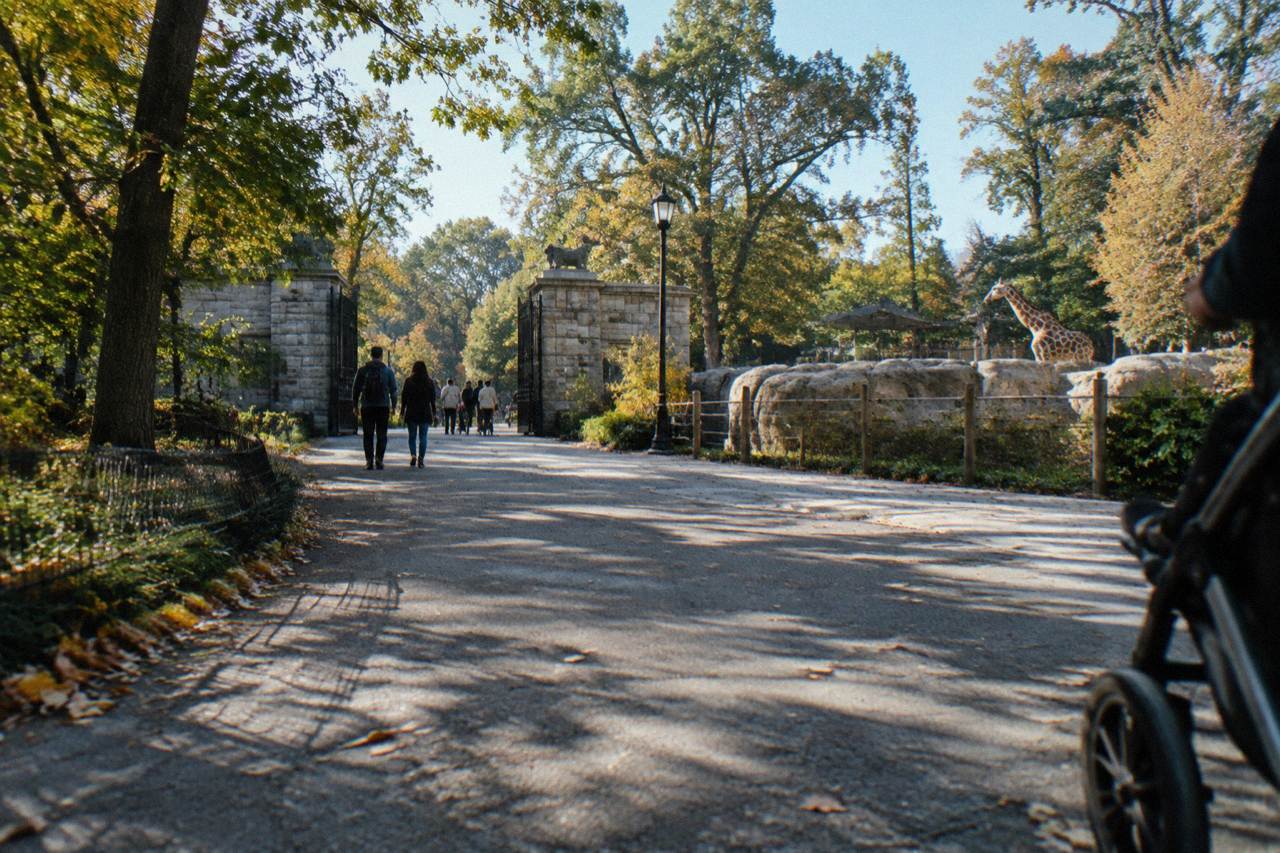
No, parking at the Smithsonian's National Zoo is not free. Admission to the zoo costs nothing, but the on-site lots are paid: $30 per vehicle if you book online in advance, or $40 if you pay on the day. The zoo is one of the clearest examples in Washington DC of an attraction that is free to enter but expensive to drive to, and the parking charge is what catches most visitors out.
The distinction matters because the zoo's reputation runs ahead of the reality. People read that the Smithsonian's National Zoo is free, which is true, and assume the whole visit will cost nothing. Entry does cost nothing. The lots surrounding the zoo in Woodley Park and Cleveland Park, however, are run as a paid operation, and at $40 for a day-of arrival the parking can easily cost more than a family's entire food budget for the outing.
There is a logic to it, even if it stings. The zoo sits in a residential neighbourhood with narrow streets and very little street parking of its own. If the lots were free, they would fill by mid-morning and stay locked all day, and the surrounding blocks would be jammed with circling cars. Charging for parking turns the lots over and funds the zoo at the same time. That does not make the fee pleasant, but it explains why it exists and why it is unlikely to disappear.
The fee structure is simple: a flat rate per vehicle per day, cheaper if you commit in advance online, more expensive if you roll up and pay at the gate. If you are determined to drive, booking ahead is the only decision that saves real money. If you are flexible, the better answer is to skip the car entirely, and the sections below cover both routes in detail.
For anyone building a full free day in the capital rather than a single zoo trip, this site's directory of Free Things To Do In Washington DC collects the attractions that genuinely cost nothing, including the monuments and memorials that sit an easy Metro ride from the zoo. The zoo question is answered in more depth in the companion piece on whether the Smithsonian National Zoo is free, which covers the admission side of the visit.
How Much Does Parking At The National Zoo Cost?
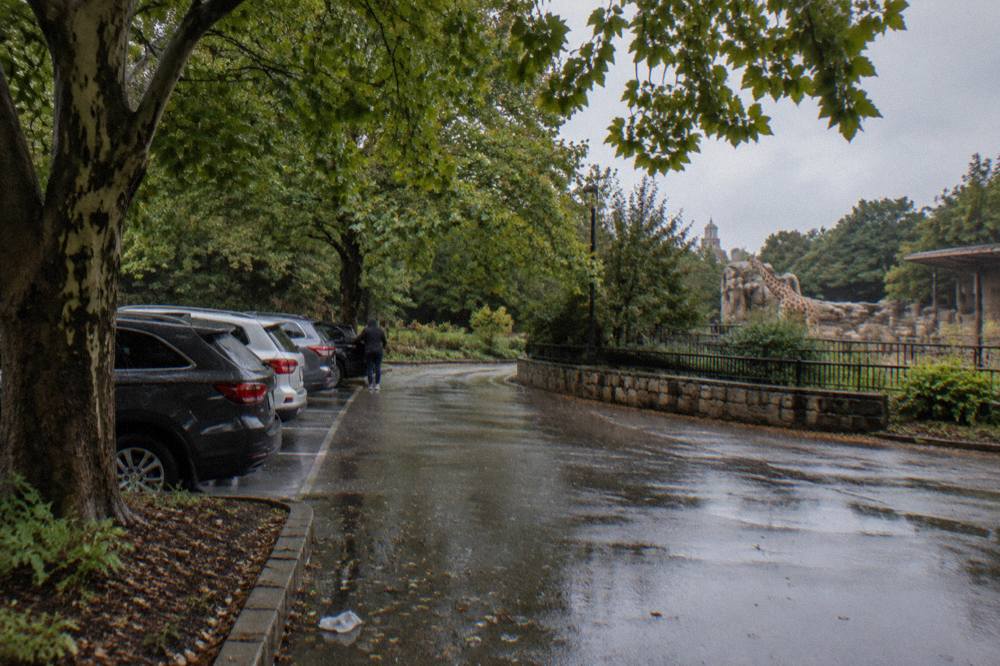
Parking at the National Zoo costs $30 per vehicle per day when reserved in advance online, or $40 per vehicle when paid on arrival at the lot. Both rates are flat day rates, so there is no hourly option and no short-stay discount. The advance booking is the only way to pay the lower figure, and it is worth doing on any weekend or holiday visit.
The gap between the two prices is the whole game. Ten dollars is not a fortune, but it is the difference between a planned trip and an improvised one, and the advance rate also guarantees you a space on days when the lots hit capacity. Spring weekends, cherry blossom season, and any federal holiday see the lots fill early, and a family that drives in without a reservation can end up paying the higher rate for a spot several blocks from the entrance they wanted.
The practical mechanics are straightforward. You book online, receive a pass tied to your vehicle, and display or scan it on arrival. The lots sit on both sides of the zoo, with the main entrance on Connecticut Avenue, so the pass you buy determines which lot you head for. Arrive early if you want a space near the Asia Trail or the panda habitat; the lots nearest the entrances go first, and the walk from the far end of a full lot adds real minutes with small children in tow.
Here is how the zoo's parking picture compares with the other costs that surround a DC visit:
| Cost at the National Zoo | Amount | Notes |
|---|---|---|
| Zoo admission, all visitors | Free | No ticket needed, walk in during opening hours |
| Parking, booked in advance | $30 per vehicle | Flat day rate, guarantees a space |
| Parking, paid on the day | $40 per vehicle | Flat day rate, subject to capacity |
| Metro to Woodley Park station | Standard fare | About a 10 minute uphill walk to the entrance |
| Street parking nearby | Metered / permit zones | Scarce and time-limited, not a reliable plan |
One point worth repeating: the parking fee attaches to the car, not to the visit. A family of five arriving by Metro pays nothing for the zoo and nothing for the journey beyond ordinary transit fares, while the same family in an SUV pays $30 or $40 for the privilege of parking. That asymmetry is why the free alternatives section below exists.
If the zoo is the morning half of a wider free day, the afternoon half is already solved. The See this free tour link points to the Daytime Monuments Walk, National Mall, a pay-what-you-want walking tour run by a guide named Lisa on GuruWalk, rated 4.4 across 324 GuruWalk reviews, meeting at the World War II Memorial and running about 2 hours. A zoo morning followed by a monuments afternoon is one of the best free day structures in the city.
Is The National Zoo Itself Free To Enter?
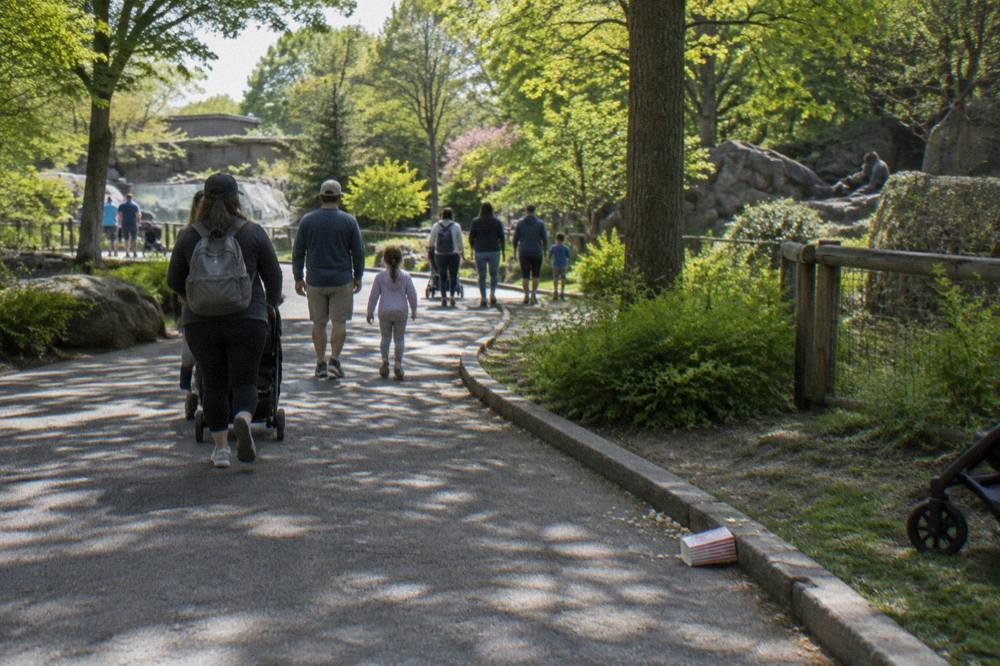
Yes, admission to the Smithsonian's National Zoo is completely free, with no ticket, no timed pass, and no reservation required for general entry. The zoo is part of the Smithsonian Institution, whose 20 museums and the National Zoological Park are free to the public. The parking fee and the admission policy are entirely separate, which is exactly why the confusion persists.
Walk-up entry is the rule here. Unlike the National Museum of African American History and Culture or the Air and Space Museum's DC building, both of which are also Smithsonian but require a free timed-entry pass, the zoo imposes no pass system for general admission. You arrive during opening hours, you walk in. That makes it one of the most accessible of all the Smithsonian properties, especially for families who cannot plan weeks ahead.
The zoo's free status is part of a much larger pattern. The Smithsonian Institution comprises 20 museums plus the zoo itself, according to the institution's own published factsheet, with ten museums sitting directly on the National Mall and six more within about a mile and a half of it. Destination DC counted a record 27.2 million visitors to the capital in 2025, and the free federal and Smithsonian attractions carry a large share of that traffic. The zoo's own page in that system is covered in the guide to free museums in Washington DC.
What the free admission does not cover is everything inside the fence that is not an animal. Food, the carousel, the simulator rides, and the gift shops all charge, and those costs add up faster than the parking if you are not careful. The standard workaround is the oldest one in the book: bring your own lunch. The zoo's grounds are a pleasant place to eat, and a picnic from home keeps the entire day at the cost of a Metro fare.
The parking question also connects to the wider question of what "free" means at the Smithsonian, which has its own history and its own answer in why the Smithsonian is free. The short version is that the institution was founded on a bequest intended for the public good, and free admission has been policy ever since. Parking was never part of that promise, and the zoo's lots are the place where the policy's edge shows.
The zoo's location rewards combining it with other free things. It sits at the top of Rock Creek Park, and the National Mall corridor, where most of the monuments live, is a short Metro ride down the Red Line. The Daytime Monuments Walk, National Mall covers exactly that corridor: a free, pay-what-you-want walk run by guide Lisa on GuruWalk, rated 4.4 across 324 GuruWalk reviews, meeting at the World War II Memorial for roughly 2 hours of English-language guiding. For a fuller treatment of the zoo-versus-parking question as it applies to the whole Smithsonian system, see whether there is free parking at the Smithsonian.
What Are The Free Alternatives To Driving To The Zoo?
The free alternative to zoo parking is the Metro. Woodley Park station on the Red Line sits about a 10 minute uphill walk from the zoo's Connecticut Avenue entrance, and Cleveland Park station is a flatter walk of similar length on the same line. Standard transit fares replace the $30 or $40 parking fee entirely, and both stations keep the visit genuinely free.
Woodley Park is the station most people name, and it is the one the zoo itself points to, but the geography deserves a word. From Woodley Park you walk uphill to the zoo, which is fine on the way out and worth remembering on the way back with tired children. Cleveland Park, one stop further north, is at a similar elevation to the entrance, so the walk is flatter in both directions. Either works; Cleveland Park is the quieter choice in summer heat.
The bus network adds another layer. Several Metrobus routes run along Connecticut Avenue and stop directly outside the zoo, which removes even the short walk from the equation. For visitors staying downtown, a bus up Connecticut Avenue is often a single seat ride from a hotel area to the zoo gates, and it costs the same as any other local bus trip. The Destination DC visitor statistics underline why transit matters here: with 27.2 million annual visitors, the roads around the zoo's neighbourhood are under pressure no matter the season.
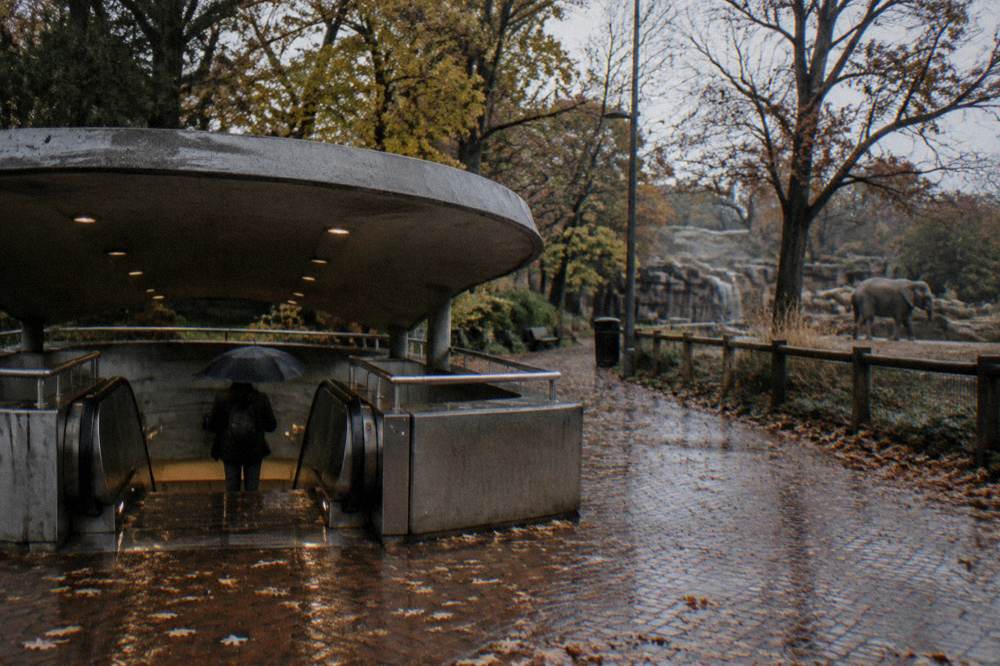
Cycling is the third option, and one of the best. Rock Creek Park's trail network runs close to the zoo, and the park's car-free sections on weekends make a bike ride to the zoo a destination in itself rather than just transport. Bike parking at the zoo is free where the car parking is not, which is the entire argument in one sentence. The trail also connects down toward the Mall, so a cyclist can build a loop: zoo in the morning, ride south through the park, monuments in the afternoon.
Walking is free too, though it is a commitment. The zoo is roughly 2 miles from the National Mall as the crow flies, and the walk from Dupont Circle or Adams Morgan takes about 40 minutes through pleasant neighbourhoods. It is not the plan for a family with small children, but for a solo visitor or a couple it turns the journey into part of the day, and it costs precisely nothing.
The pattern to notice is that the parking fee is the only part of the zoo trip that is not already free. Admission is free, the animals are free, the grounds are free, and the surrounding park is free. Removing the car from the equation removes the entire cost of the visit, which is a rare thing to be able to say about a major attraction in any capital city.
Is It Worth Driving To The National Zoo At All?
Driving to the National Zoo is worth it in a small number of cases: with very young children or mobility needs that make Metro impractical, on a day when you are combining the zoo with somewhere transit does not reach, or when bad weather makes a door-to-door trip worth $30. For everyone else, the Metro beats the car on cost, on reliability, and on the stress of hunting for a space.
The honest case for driving is the accessibility case. The zoo sits on a hill, and the walk up from Woodley Park station, while short, is a steady climb that is harder with a stroller, a wheelchair on uneven pavement, or a toddler who has already walked several miles. A car drops you at the lot nearest the entrance and removes that climb entirely. If that describes your group, the $30 advance rate is money well spent, and there is no need to feel defeated about paying it.
The case against driving is everything else. The advance rate requires commitment before you know the weather. The day-of rate is $40, which is more than a family of four spends on Metro fares for a round trip from almost anywhere in the city. The lots fill on peak days regardless of what you paid. And once the car is parked, it is parked: a zoo visit that turns into a zoo-plus-Mall day requires either moving the car and paying again somewhere else, or leaving it sitting in a paid space while you ride transit anyway.
The hybrid plan is the one that works for most visitors. Take Metro to the zoo in the morning, spend three or four hours there, then ride the Red Line toward the Mall and spend the afternoon with the monuments. That second half costs nothing at all if you join a pay-what-you-want walk. The Daytime Monuments Walk, National Mall, run by guide Lisa on GuruWalk and rated 4.4 across 324 GuruWalk reviews, covers the World War II Memorial, the Lincoln Memorial and the West Mall corridor in about 2 hours, meeting at the World War II Memorial. In the evening the same ground gets a different treatment on Monuments By Moonlight, a 1 hour and 30 minute walk rated 4.26 across 65 GuruWalk reviews, meeting at the Albert Einstein Statue, where the lit memorials run quieter and cooler than the afternoon version.
Both walks are free to join and tipped at the end, pay what you think the guiding was worth. The etiquette around that is its own subject, covered in how free walking tours and tipping work in Washington DC, and it is worth reading before a first walk so the tip moment at the end does not come as a surprise.
How Does Zoo Parking Compare To Other Paid Costs In DC?
Zoo parking is one of the few unavoidable paid costs in a city built around free attractions, and at $30 to $40 per vehicle it sits in the same range as DC's paid museums charge per adult. Mount Vernon charges $30 per adult, and the Museum of the Bible charges $34.99, so a single car at the zoo can cost roughly what one adult pays at a paid attraction elsewhere in the city.
The comparison is instructive because it shows what the parking fee really is: the zoo's only significant revenue gate. The animals, the habitats, and the conservation work are all funded without a ticket price at the door, and the lots are where the driving public contributes. A visitor who arrives by transit pays nothing and contributes nothing on the day, which is a perfectly acceptable way to visit, and one the zoo's free admission policy explicitly allows.
It also puts the zoo's fee in context against the genuinely paid attractions. The International Spy Museum uses dynamic, date-based pricing with no static figure published, and Washington National Cathedral's sightseeing tickets are listed as "Prices Vary" on its own page, so neither can be quoted as a flat number. Mount Vernon's $30 adult ticket and the Museum of the Bible's $34.99 are the fixed points, and the zoo's $40 day-of parking rate lands right among them. The difference is that the zoo's fee is per car, not per person, so a full vehicle splits it four or five ways.
For a family of four, the arithmetic looks like this: parking at $30 advance, or $8 per person for the day, against a completely free zoo visit. That is cheaper per head than almost any paid attraction in the city, and it is the argument for driving when transit is genuinely impractical. Booked on the day at $40 with a car carrying two people, the same fee becomes $20 per head, and the Metro wins outright.
The zoo is not the only Smithsonian property where the parking is the catch. The wider pattern, including the National Mall's own parking situation and which Smithsonian buildings sit where, is laid out in the guide to free things near the National Mall, and the Smithsonian's own museum listing at si.edu maps all 20 properties plus the zoo.
The evening version of a zoo-plus-monuments day is covered in free things to do in Washington DC at night, where the moonlight walk above fits alongside the Kennedy Center's free performances and the monuments after dark.
The short version of the whole page: the zoo is free, the parking is not, and the Metro makes the question irrelevant. Plan the transit, book nothing, and spend the saved $40 on lunch.
Common Questions About National Zoo Parking
Is The National Zoo's Parking Free?
No. Parking costs $30 per vehicle per day when booked in advance online, or $40 when paid on arrival. Zoo admission itself is free, but the lots are a separate paid operation on both sides of the Connecticut Avenue entrance.
Is the National Zoo free to enter?
Yes. The zoo is part of the Smithsonian Institution and admission is free, with no timed pass or reservation required for general entry. This is different from NMAAHC and the Air and Space Museum's DC building, which are also Smithsonian but do require free timed passes.
Which Metro station is closest to the National Zoo?
Woodley Park on the Red Line is the closest, about a 10 minute uphill walk from the main entrance. Cleveland Park, one stop further north, is a flatter walk of similar length and is often the easier choice in hot weather or with a stroller.
Can I park on the street near the zoo for free?
Not reliably. The surrounding neighbourhoods of Woodley Park and Cleveland Park are mostly metered or residential permit zones, and free street parking is scarce and time-limited. It is not a dependable plan for a multi-hour zoo visit.
Is it cheaper to book zoo parking in advance?
Yes. The advance online rate is $30 per vehicle against $40 on the day, a flat $10 saving. Advance booking also guarantees a space on peak days, when the lots can fill by mid-morning.
Do I need a ticket for the National Zoo?
No, general admission requires no ticket at all. You walk in during opening hours. Only the parking, food, rides, and gift shops inside carry charges.