Is There Free Parking At The Smithsonian?
Is there free parking at the Smithsonian? The honest answer for the Mall museums, the National Zoo's paid parking, and the alternatives that cost nothing at all.
Is There Free Parking At The Smithsonian?
No. The Smithsonian does not operate free visitor parking at its National Mall museums, and the National Zoo, which is also Smithsonian, charges for its parking lots even though zoo admission itself is free. The gap between "free museum" and "free parking" catches almost every first-time visitor, and it is the single most common rude awakening in DC trip planning. The museums cost nothing to enter, but the city around them absolutely does not.
The distinction matters because the Smithsonian's reputation precedes it. People hear "all the Smithsonian museums are free" and reasonably assume the whole visit will be free, car included. It is not. The ten museums that sit directly on the National Mall, from 15th to 3rd Streets between Constitution and Independence Avenues, according to the Smithsonian's own museums directory, have no Smithsonian-run visitor lots attached to them. What surrounds them instead is Washington DC street parking: limited, metered, and heavily restricted during weekday business hours and rush hours.
The one place where the Smithsonian does run parking is the National Zoo, and there it is explicitly paid. Zoo admission is free, but the lots are not, at $30 if booked in advance and $40 on the day itself. That is the clearest illustration of the pattern this site exists to document: a genuinely free attraction whose parking tier quietly is not. The same pattern repeats elsewhere in the city, at Arlington National Cemetery where entry is free but the tram tour and the parking are separately paid, and it is worth learning to spot it before you build an itinerary around a false assumption.
If your plan was to drive to the Mall, park for nothing, and walk into a museum, that plan needs revising. The good news is that the revision is easy, and the second half of this article lays out the options that actually work, including the ones that cost nothing at all. The city was designed, in a very literal sense, around the assumption that visitors to its monumental core would arrive on foot or by transit, and once you accept that design the visit gets simpler rather than harder.
One more framing note before the detail. The three walks this site features are all free, pay-what-you-want walking tours, which means they inherit the same question this article answers: how do you get to the meeting point without a parking headache? The Daytime Monuments Walk, National Mall meets at the World War II Memorial, and the Monuments By Moonlight evening walk meets at the Albert Einstein Statue. The third, Blue Umbrella's Mall Walk run through freetour.com, covers the Mall corridor as well. None of them has a parking lot, for the same reason the museums do not: they all operate on parkland that was never built around the car. Everything below about the Mall applies to those meeting points too.
Where Can You Park Near The National Mall Museums?
Realistically, you park in a paid garage or garage-adjacent lot in the blocks north and south of the Mall, or on a metered street space if you arrive early and get lucky. There is no free Smithsonian lot to fall back on, and the streets closest to the museums are the most contested parking in the city. Visitors who insist on driving should budget for a garage and treat any street space as a bonus, not a plan. One of the free walking routes passes through here: Daytime Monuments Walk, National Mall.
The geography works against the driver. The National Mall is a long strip of parkland, roughly two miles from the Capitol end to the Lincoln Memorial end, with the museum cluster concentrated on the eastern half. Constitution and Independence Avenues flank it, and both are major commuter arteries with rush-hour restrictions. The side streets in the surrounding neighbourhoods, Penn Quarter and the Capitol Riverfront side, Federal Triangle and Foggy Bottom on the other, mix metered spaces with residential permit zones. A permit zone looks like any other parking space if you do not read the sign carefully, and DC's parking enforcement is not forgiving about it. The ticket that results from a misread sign can cost more than a full day in a garage would have.
Metered street parking does exist within walking distance of the Mall museums, and on weekends and evenings the meters are in effect for fewer hours or not at all. That is the honest version of the "free parking near the Smithsonian" claim you sometimes see online: it is not a lot, it is a street space, it is scarce, and whether it costs anything depends on when you are there. Arriving before the museums open meaningfully raises your odds, because the same spaces are being hunted by commuters, tour buses, and every other visitor with the same idea. By mid-morning on a pleasant Saturday, the realistic outcome is a circuit of the same few blocks that every other circling car is also driving, followed by a garage anyway.
The practical alternative that most locals use is to not bring the car into the core at all. DC's Metro system has stations that serve the Mall corridor directly, and the Smithsonian station sits under the Mall itself. Parking at a suburban Metro station and riding in converts the parking problem from "scarce and metered downtown" into "a park-and-ride lot designed for exactly this," and on weekends those station lots are often free. If you are staying anywhere inside the city, the honest advice is simpler still: the walks and the museums are close enough together that a car is a liability for this part of your trip. It sits in a garage accruing hourly charges while you spend the day on foot.
| Option | What it actually is | Best for |
|---|---|---|
| Metered street space | Scarce on-street parking, restricted hours, permit zones mixed in | Early arrivals, weekends, short visits |
| Commercial garage | Paid hourly or daily parking in blocks around the Mall | Certainty, bad weather, luggage |
| Suburban Metro park-and-ride | Free or low-cost station lot plus a train ride | Day trips from outside the city |
| No car at all | Walking, Metro, bus | Almost everyone staying in DC proper |
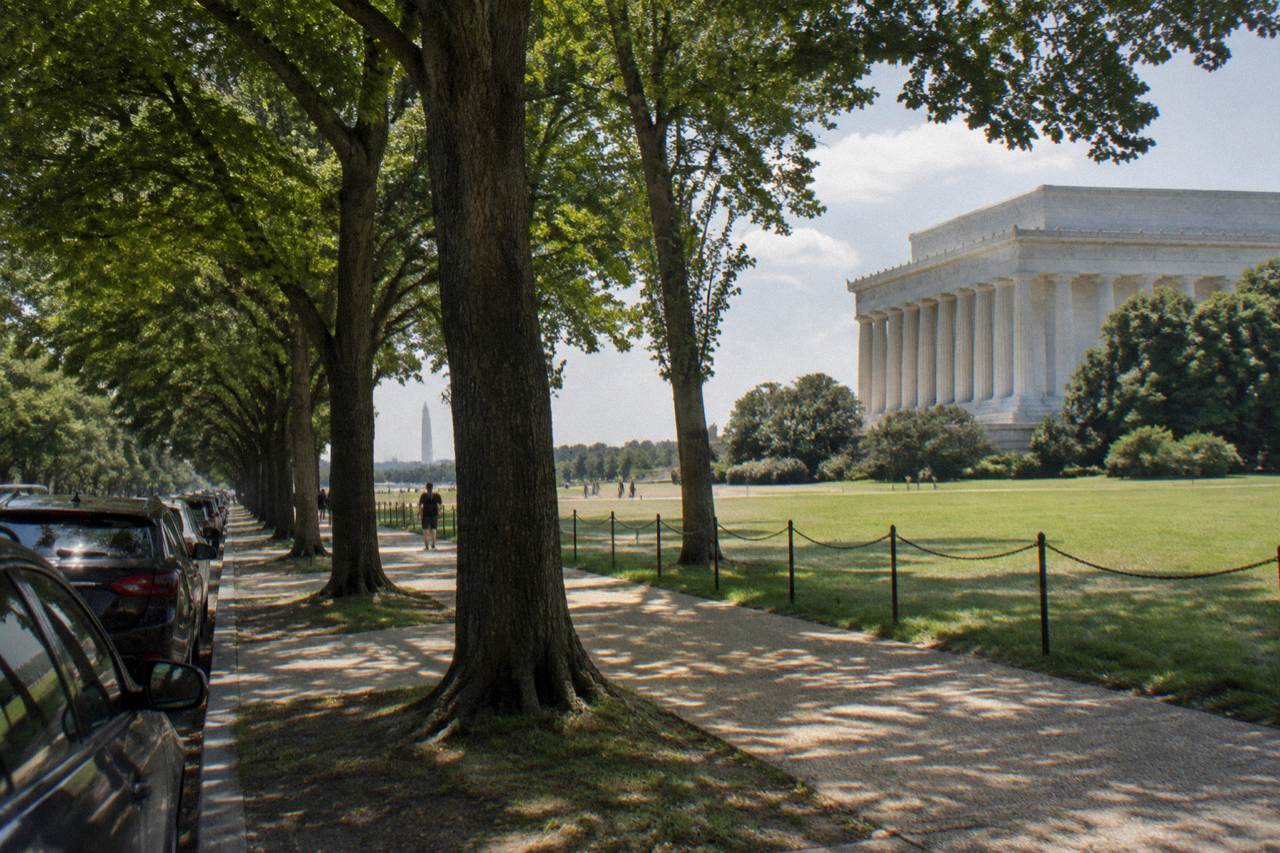
The West Mall corridor is where the memorials concentrate, and it is the part of the Mall with the least parking of all. The Lincoln Memorial, the World War II Memorial, the Korean War Veterans Memorial and the Vietnam Veterans Memorial sit in parkland where there is essentially nothing but restricted roadway. That stretch is the meeting ground of the Daytime Monuments Walk, National Mall, a free, pay-what-you-want GuruWalk run by a guide named Lisa, rated 4.4 across 324 GuruWalk reviews, which covers exactly this corridor over about 2 hours starting from the World War II Memorial. If parking near the museum cluster is hard, parking near the memorial cluster is functionally not a thing, and a walk that starts at one end and moves through the whole corridor is the most car-free-friendly way to see it. The walk's route and what it covers are laid out in the site's National Mall walking tour guide.
Is Parking Free At The Smithsonian National Zoo?
No. The National Zoo's admission is free, but its parking is paid: $30 per vehicle if you book in advance and $40 if you pay on the day. This is the one Smithsonian property that operates its own lots, and it charges for them, which makes the zoo the clearest case of the free-attraction, paid-parking pattern in the entire city.
The zoo sits in Woodley Park, in Northwest DC, well away from the Mall cluster, and it is not walkable from the museum district in any reasonable sense. That geography is why the zoo runs parking at all: most of its visitors arrive by car or by Metro, and the Metro option, the Woodley Park station, involves a walk up a hill. The lots are run by the zoo itself, and the advance-versus-day-of price split rewards planning. Show up on a busy spring Saturday without a booking and you will pay the higher rate, assuming a space is still there. On peak days, the lots do fill, and the overflow situation is not one you want to be improvising in with children in the back seat. More of these guides are collected on Free Things To Do In Washington DC.
What softens this considerably is that everything inside the gate costs nothing. The zoo is one of the few major zoos in the United States with free admission, a fact covered in detail in the Smithsonian zoo's free status explained, and the animals, the trails, and the programs are all included. A family of four paying $40 to park has still spent dramatically less than the same family would at almost any comparable zoo, where admission alone would run into the hundreds. The parking fee is real, but the overall visit remains one of the best value days in the city. It is also the only fee in the entire zoo visit, which is rarer than it sounds: many "free" attractions quietly accumulate costs once you are inside, and this one does not.
The Metro alternative is worth taking seriously. Woodley Park station and Cleveland Park station both serve the zoo, and arriving by train means the parking question disappears entirely. For a household where the $40 day rate stings, the train fare for the whole group will usually come in well under it, and the walk from Cleveland Park is the gentler, downhill approach on the way in. If you do drive, booking the cheaper advance rate is the single easiest saving available, and it takes about a minute to do. The zoo's own parking and directions page is the place to confirm current rates and lot status before you go, since rates and availability are the zoo's to change.
Does Any Smithsonian Museum Have Its Own Parking?
No Mall museum does. The Smithsonian Institution operates 20 museums plus the National Zoo, and its parking facilities are concentrated at the zoo and at the Udvar-Hazy Center, the Air and Space Museum's giant hangar site in Virginia. The downtown museums, including the Air and Space Museum's DC building, have no Smithsonian-run visitor lots, so every driver is pushed onto the same metered streets and commercial garages.
The Udvar-Hazy Center is the exception people forget. It sits next to Washington Dulles International Airport in Chantilly, Virginia, it is technically part of the Smithsonian's Air and Space holdings, and it has a large surface lot because it is in the suburbs, where land works differently. That lot is paid, but it exists, which already separates it from every downtown property. Visitors sometimes conflate the two Air and Space sites, and the parking situation is one of several practical differences between them: the DC building requires a free timed-entry pass and has no museum parking, while the Virginia hangar has parking and a different ticketing situation. The conditional-free rules for the DC building are covered in is the Smithsonian Air and Space Museum free.
Downtown, the pattern is uniform. The National Museum of Natural History, the National Museum of American History, the American Indian Museum, the Freer and the other Asian art galleries, the Hirshhorn, the American Art Museum and Portrait Gallery in the Penn Quarter building: none of them operates a lot. The museums were built as pedestrian destinations on parkland, decades before modern visitor parking was a design expectation, and the National Mall's official factsheet counts ten of them sitting directly on that strip of parkland. The city grew up around them assuming arrival on foot or by transit, and that assumption still shapes the traffic, the signage, and the scarcity you feel behind the wheel.
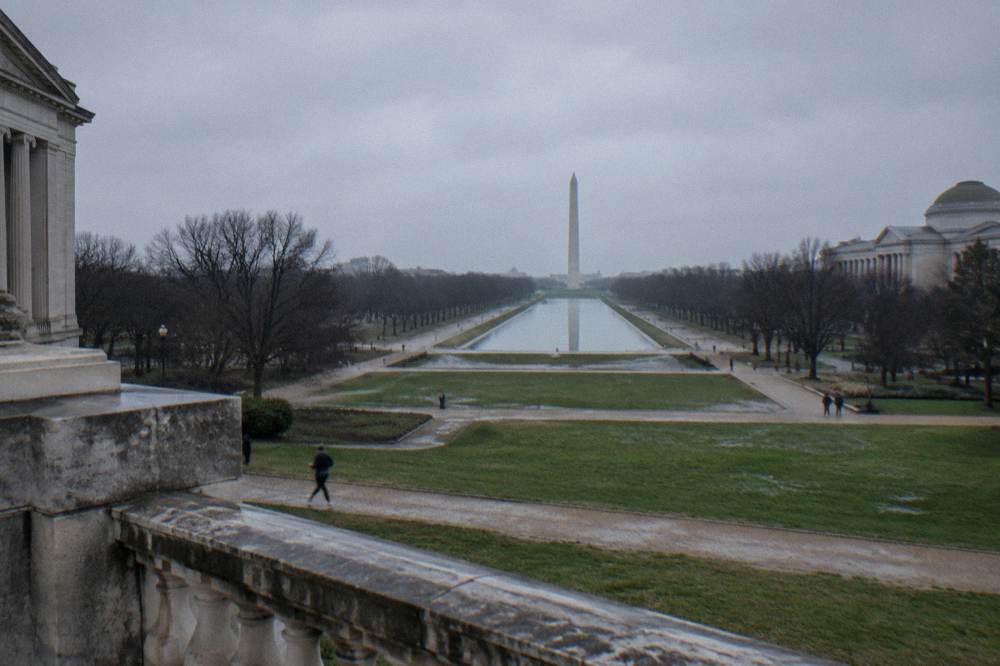
There is a planning consequence worth stating plainly. If your itinerary strings together several Smithsonian museums in one day, driving between them is slower than walking, because the museums cluster within a fifteen-to-twenty-minute walk of each other and the car would need to be re-parked at every stop. The Mall is built for the pedestrian loop. A visitor who parks once in a garage on the edge of the cluster, or arrives by Metro, and then moves on foot for the rest of the day has both the cheaper plan and the faster one. The hours spent circling for a second and third space are hours not spent inside a museum that costs nothing to enter, which is the trade nobody makes on purpose.
For the evening stretch of a Mall day, the same logic holds. The Einstein Memorial, where the Monuments By Moonlight evening walk meets, sits near the Vietnam Veterans Memorial end of the corridor, and the walk covers the West Mall's lit memorials over about an hour and a half. It is a free, pay-what-you-want GuruWalk, also guided by Lisa, rated 4.26 across 65 GuruWalk reviews, and like everything else on the Mall it has no parking of its own. Arriving by Metro for an evening walk also removes the question of whether your daytime garage is still open and what the overnight rate is, a question that has ended more DC evenings early than any museum closing time. The evening side of the Mall has its own character, and the site's guide to free things to do in Washington DC at night covers the rest of it.
Is It Cheaper To Skip The Car And Use Metro?
For most visitors, yes, and it is not close. A Metro fare is a few dollars per person per ride, while downtown DC garage parking for a full museum day can exceed the cost of Metro fares for an entire family, and the zoo's day-of parking rate alone would cover a group's round-trip trains with change left over. The car only wins if you are traveling with a large group, carrying gear, or staying far from a station.
The arithmetic depends on party size, and the honest framing is that Metro wins for solo travelers, couples, and families up to a certain size, while a full car of five or six people can tip the balance back toward driving, especially to the zoo, where one parking fee covers everyone. The break-even point moves with gas, tolls, and how many rides you would otherwise take, so rather than quote a universal number, the useful planning rule is this: count your Metro rides for the day, multiply by your party size, and compare it against one day of downtown parking. In most realistic cases the train comes out ahead before you have even factored in the time spent hunting for a space.
There is also a reliability argument that no price comparison captures. A garage space reserved or found early is a certainty; a metered street space near the Mall is a coin flip on weekends and a losing one during cherry blossom season, when the whole city converges on the Tidal Basin. The crowds that come with the bloom are a phenomenon in themselves, and the timing questions around them are covered in the site's guide to free things to do in Washington DC in cherry blossom season. During that window, transit is not just cheaper than driving, it is the only plan that actually works. The same applies to holiday weekends and any day with a major event on the Mall, when road closures layered on top of the usual scarcity make the car a genuine burden.
The walking-tour layer of a DC visit is where the car-free case becomes overwhelming. All three walks this site features meet at Mall-corridor landmarks, run two to two and a half hours, and cost nothing upfront. The Daytime Monuments Walk, National Mall, rated 4.4 across 324 GuruWalk reviews, is the natural daytime anchor, and it is covered in detail in the site's guide to free walking tours in Washington DC. Pairing a morning walk with an afternoon museum loop, all on foot from a single arrival point, is the itinerary shape the Mall was built for, and it is the shape that makes the parking question moot. You arrive once, by train, and the entire day unfolds from there without a single curb, meter, or garage gate between you and anything you came to see.
Common Questions About Free Parking At The Smithsonian
Is There Free Parking At The Smithsonian?
No. The National Mall museums have no Smithsonian-run visitor parking at all, and the National Zoo charges $30 in advance or $40 on the day for its lots even though zoo admission is free. Free street parking near the Mall exists only as scarce metered spaces outside enforcement hours, not as a reliable option.
Is the National Zoo's parking really paid if the zoo is free?
Yes. Admission to the zoo costs nothing, but the parking lots are a separate, paid operation at $30 per vehicle booked in advance and $40 on the day. The lots are the zoo's own, which makes it the one Smithsonian property where the institution runs the parking you would use.
Can I find free street parking near the National Mall?
Sometimes, but it should never be the plan. Metered spaces exist in the blocks around the Mall, and some are unrestricted on weekends and evenings, but demand is extreme, permit zones are mixed in, and rush-hour restrictions clear the avenues. Treat a found space as luck, and budget for a garage as the baseline.
Does the Air and Space Museum have parking?
Not at its DC building, which sits on the Mall with the rest of the downtown cluster and also requires a free timed-entry pass. The Udvar-Hazy Center in Virginia, the museum's hangar site, does have a paid surface lot, which is one of the practical differences between the two locations.
Is Metro cheaper than parking for a Smithsonian day?
For most party sizes, yes. A family's round-trip Metro fares generally come in below a full day of downtown garage parking, and the zoo's day-of parking rate alone would cover a group's train fares. Driving only wins for a full car staying far from a station.
Do the free walking tours have parking?
No. The walks meet at Mall-corridor landmarks, the World War II Memorial for the Daytime Monuments Walk and the Albert Einstein Statue for Monuments By Moonlight, and those memorials sit in parkland with no visitor lots. Arriving by Metro or on foot is the standard approach.