Is The Smithsonian Air And Space Museum Free?
Yes, the Smithsonian Air and Space Museum is free, but the DC building requires a free timed-entry pass. Here is how the pass system works, what you can see, and how to plan the visit.
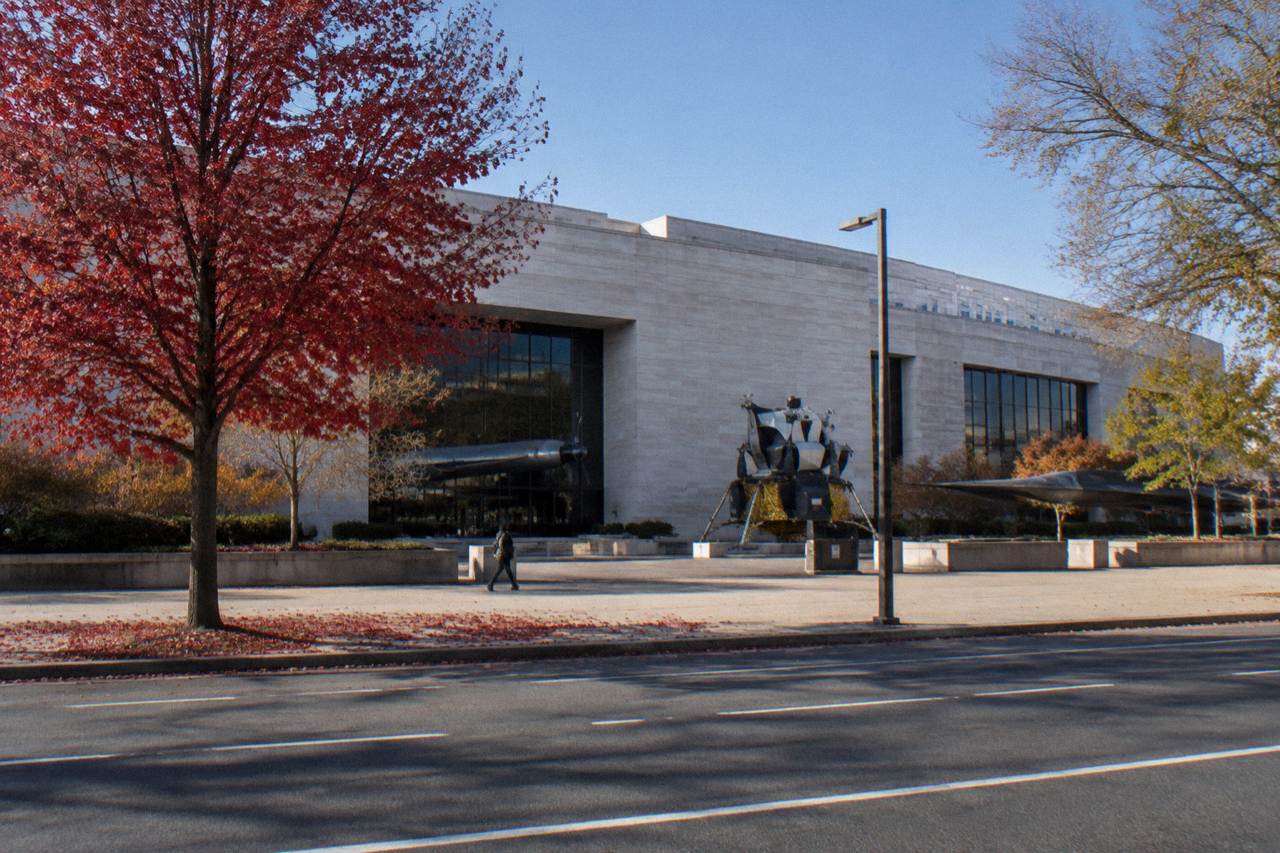
The Smithsonian National Air and Space Museum holds the largest collection of historic aircraft and spacecraft in the world, and unlike almost every other museum of that stature, it does not charge admission. That single fact surprises people, and the second fact surprises them more: even though it is free, you cannot simply walk in. The Washington DC building on the National Mall requires a timed-entry pass for every visitor, a rule that is easy to miss if you assume all Smithsonian museums work the same way.
This page answers the question directly, then goes through everything that follows from it: how the pass system works, how far ahead you need to book, what happens if you show up without one, what the museum's Virginia counterpart does differently, and how the free museums around it fit into the same day. It also covers the free walking tours that run through the Mall corridor outside its front door, because the museum sits in the middle of the densest concentration of free attractions in the United States.
Is The Smithsonian Air And Space Museum Free?
Yes, the Smithsonian National Air and Space Museum is free. Admission costs nothing, and there is no paid tier that gets you a better version of the same galleries. The catch is entry logistics, not money: the DC building requires every visitor to hold a free timed-entry pass, including children, and walk-up entry without one is not offered. The museum's second location, the Udvar-Hazy Center in Virginia, is also free and does not require a pass.
The free admission is not a promotion or a seasonal deal. It is the standing policy of the Smithsonian Institution, which runs 20 museums plus the National Zoo, and whose funding model keeps the doors of its core collection open at no charge. The Smithsonian's own factsheet counts ten museums sitting directly on the National Mall, with six more within about a mile and a half of it, and the Air and Space Museum is one of the anchors of that cluster.
What trips visitors up is that the timed-pass rule makes the museum behave, from a planning standpoint, like a ticketed attraction. You need a date, a time slot, and a booking before you leave your hotel. The pass itself costs nothing, but the museum's own visit pages are the authority on how the passes are released, and the mechanics matter enough that this guide gives them a full section below.
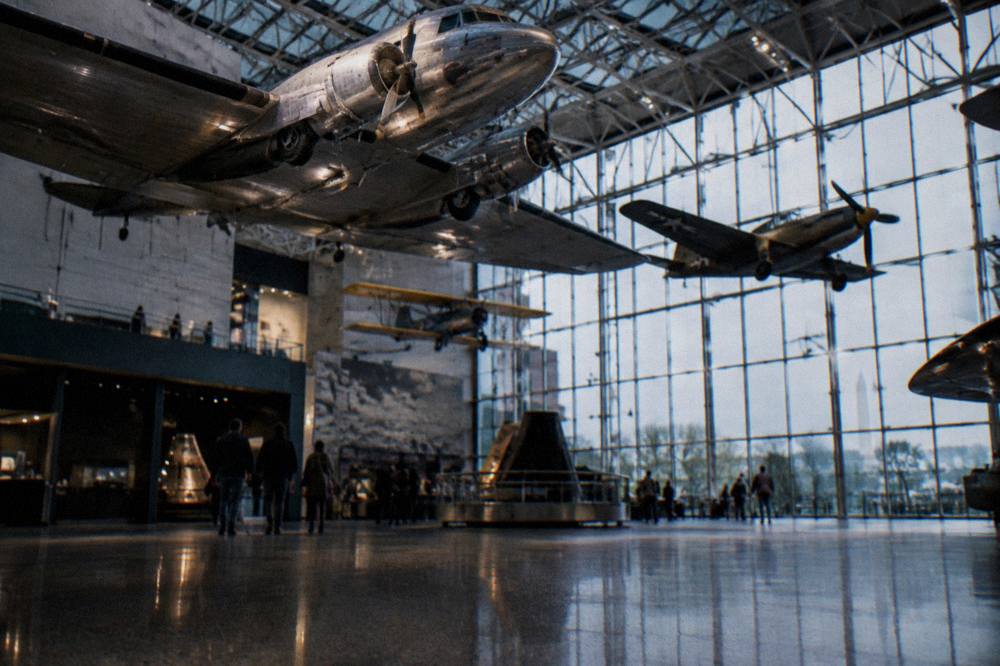
It is also worth being precise about what "free" covers, because the museum sells things that are not the visit itself. The IMAX-style films, the planetarium shows, and the flight simulator attractions inside the building carry separate charges, and the gift shop is a gift shop. None of that is required. The permanent galleries, including the ones holding the Wright brothers' original Flyer, the Apollo lunar module, and the Mercury and Gemini capsules, are all included in the free pass.
If your plan is a DC trip built around free things to do, this museum belongs near the top of the list, alongside the monuments and memorials on the Mall it sits beside. A good companion read is the site's roundup of free museums in Washington DC, which sorts the whole collection by which ones need passes and which ones you can genuinely walk into.
Do You Need A Timed Pass For The Air And Space Museum?
Yes, you need a timed-entry pass for the Air and Space Museum's DC building, and so does everyone in your group, with no age exemptions. The pass is free and is booked online through the Smithsonian's ticketing system. This rule is specific: most Smithsonian museums on the Mall do not require any pass at all, so do not assume the Air and Space policy applies to its neighbors, or that its neighbors' walk-in policy applies to it.
The museum adopted timed entry as a crowd-management measure, and it has kept it. The practical effect is that the museum has a controlled, predictable flow of visitors rather than the shoulder-to-shoulder floors that free museums on the Mall can otherwise reach, particularly in spring and summer. Destination DC counted a record 27.2 million visitors to the city in 2025, and a large share of those visitors funnel through the Mall's museum corridor, so the pass system is doing real work.
The rule is not uniform across the Smithsonian, and this is where general travel advice goes wrong. The National Museum of African American History and Culture also requires a free timed pass, released through tickets.si.edu up to 30 days in advance. The National Museum of Natural History, the American History Museum, the American Indian Museum, the Hirshhorn, the Freer, and the American Art Museum do not. Treating "Smithsonian" as one policy is the single most common planning error on the Mall.
| Smithsonian venue | Admission | Pass required to enter |
|---|---|---|
| Air and Space Museum (DC building) | Free | Yes, free timed-entry pass for all visitors |
| National Museum of African American History and Culture | Free | Yes, free timed-entry pass for all visitors |
| National Museum of Natural History | Free | No, walk in |
| National Museum of American History | Free | No, walk in |
| National Gallery of Art | Free | No, walk in |
| Udvar-Hazy Center (Virginia) | Free | No, walk in, but parking is paid |
The parking row in that table deserves its own sentence: the Udvar-Hazy Center is free to enter but charges for parking, which is the mirror image of the National Zoo, where admission is free and parking costs $30 booked in advance or $40 on the day. Free attractions in the DC area repeatedly split this way, and the honest planning advice is always to check the specific condition rather than the brand.
If the timed-pass requirement makes you want a day that needs no booking at all, the Mall outside the museum's doors is exactly that. The National Mall walking tour covers the open-air stretch of memorials that never asks for a ticket, and the free guided walks below run through the same corridor.
How Do You Get Air And Space Museum Timed Passes?
Passes are released through the Smithsonian's online ticketing system, and the practical advice is to book as soon as your travel dates are fixed. Passes are free, tied to a specific date and entry window, and each visitor needs one. Same-day passes are sometimes available but are not something to build a trip around, because spring and summer days can be fully allocated well before the morning of.
The booking itself takes a few minutes. You choose your date, pick an entry window, and the passes are delivered electronically. Bring them on your phone or printed. Arrive within your window, because the whole point of a timed system is that entry is anchored to the slot, and a pass for a 2 p.m. arrival is not a pass for a 10 a.m. arrival.
A few planning realities shape how far ahead you should book. The peak bloom window matters more than most visitors realize: the National Park Service recorded peak bloom on March 26, 2026, and the last week of March through the first week of April is the single most crowded stretch on the Mall every year. If your trip overlaps cherry blossom season, book museum passes first and build the rest of the day around them. The same applies to summer weekends and any school holiday stretch.
If you cannot get a pass for your first-choice day, two fallbacks exist. The first is the Udvar-Hazy Center near Washington Dulles airport, which holds the objects too large for the Mall building, including a space shuttle orbiter, and needs no pass at all. The second is to flip your day: spend the morning on the outdoor memorials, which never sell out, and aim for a pass in the afternoon when the first wave of school groups has cleared.
The outdoor option is genuinely good, not a consolation prize. The Mall corridor from the Capitol to the Lincoln Memorial is a walk of about two miles, and the monuments along it are all free with no booking. The daytime free walking tour that covers this ground is the Daytime Monuments Walk, National Mall, a pay-what-you-want walk run by guide Lisa on GuruWalk, rated 4.4 across 324 GuruWalk reviews, running two hours in English and meeting at the World War II Memorial. It is an easy fit before or after a museum slot, and the free monuments and memorials guide maps the same ground if you would rather walk it yourself.
Is The Udvar-Hazy Center Free Too?
Yes, the Steven F. Udvar-Hazy Center in Chantilly, Virginia is also free to enter, and unlike the DC building it requires no timed pass at all. The cost that does exist is parking, which is charged per vehicle and adds up for a family. The trade is straightforward: no pass, no crowds at the door, but a drive out to the Dulles airport area from downtown DC and a parking fee in place of the booking hassle.
The Udvar-Hazy Center exists because the Mall building cannot hold the collection. The aviation hangar there is the size of several football fields, and it holds objects that would never fit in the galleries downtown: the space shuttle Discovery, a Concorde, a B-29 Superfortress, and a Blackbird reconnaissance aircraft among them. For visitors whose main interest is seeing the largest aircraft in the collection, the Virginia building is arguably the better of the two, and it is the one with zero entry friction.
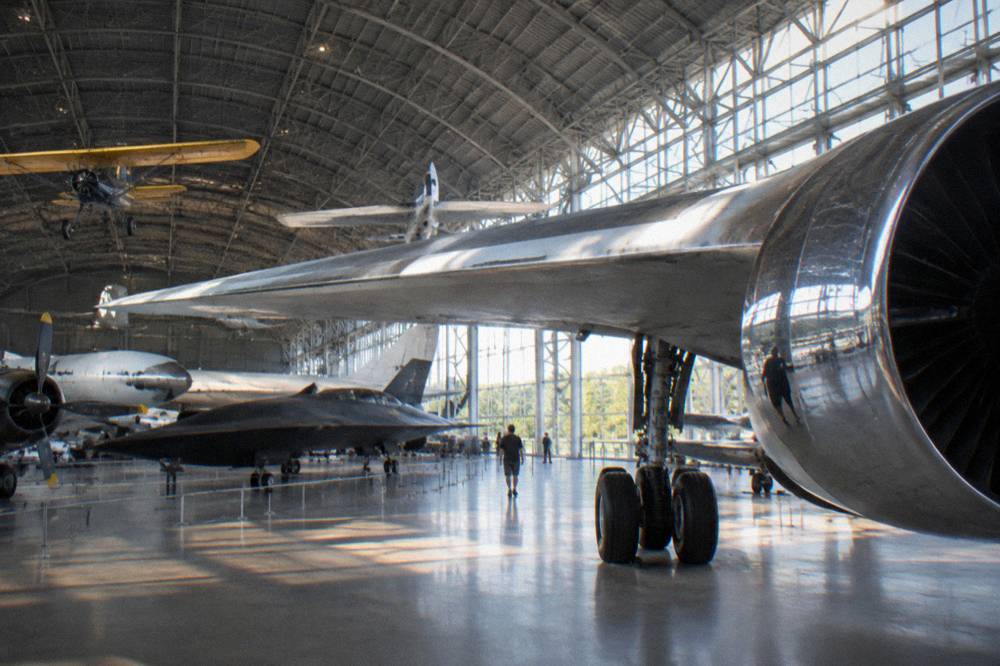
The honest comparison for a visitor with limited time is this. The Mall building gives you the icons of the story, the Wright Flyer, the lunar module, and the Mercury capsule, plus the rest of the National Mall outside the door. Udvar-Hazy gives you the scale of the machines themselves, in a suburban hangar with an observation tower where you can watch planes leave Dulles. If your trip is DC-focused without a car, the Mall building plus the monuments is the obvious plan. If you are driving in or out via Dulles, Udvar-Hazy is a stop that costs you nothing at the door.
One caution that applies to both buildings: the Smithsonian's two New York City museums and the Udvar-Hazy Center are the only parts of the institution outside the DC area, and general articles frequently blur the pass rules between the two Air and Space locations. The DC building needs a pass. Udvar-Hazy does not. That is the whole distinction, and it is stable, but it is always worth a glance at the museum's own pages before a trip, because timed-entry policies are the kind of thing institutions adjust after high-demand seasons.
What Can You See Inside For Free?
The permanent galleries are all included with the free pass: the Wright brothers' original Flyer, the Apollo lunar module, the Mercury and Gemini spacecraft, the planetary science galleries, and the "America by Air" commercial aviation hall among them. What costs extra inside the building are the add-on experiences, the planetarium shows and flight simulators, which are sold separately and are entirely optional. The free visit is the full museum, not a teaser version.
After a multi-year renovation, the Mall building reopened its galleries in phases, and the renewed space reorganized the collection around themed halls: flight, space, planetary science, and the history of aviation innovation. The result is a museum where the famous objects are no longer the whole story. The Wright brothers gallery places the original Flyer in the context of the workshop that produced it, and the lunar exploration galleries carry both the hardware and the argument for why the program existed. The wider set of guides lives on Free Things To Do In Washington DC.
For families, the free tier is unusually generous. Most children's museum experiences in other cities sit behind a hefty per-person ticket, and here the equivalent, several floors of aircraft, spacecraft, and interactive displays, costs nothing beyond the effort of booking a pass. The site's guide to free things to do in DC with kids places the museum in a full day's plan for exactly this reason.
The add-ons deserve a plain sentence rather than a warning. The planetarium and film presentations are good, they are priced like a cinema ticket rather than a museum admission, and nothing in the free galleries depends on them. If your budget is zero, you lose nothing. If you have a rainy afternoon and a fascinated eight-year-old, the planetarium is where a small spend makes sense.
A realistic visit runs two to three hours for the Mall building. That matters for planning, because the museum is one stop in a corridor where the free attractions are dense enough that you can walk between five of them in an afternoon. The National Gallery of Art, the Natural History Museum, the American History Museum, and the American Indian Museum are all within a short walk, none of the four requires a pass, and all are free.
How Does The Air And Space Museum Compare To Other Smithsonian Museums?
The Air and Space Museum is one of two Smithsonian museums on the Mall that require a timed pass, the other being the National Museum of African American History and Culture. Every other Mall museum in the Smithsonian family is walk-in free. That makes the Air and Space Museum the least flexible museum in the most flexible museum district in the country: same price as its neighbors, less spontaneity.
The comparison matters for sequencing a day. If you have a 1 p.m. Air and Space pass, the morning belongs to the walk-in museums or the outdoor memorials, and the afternoon is anchored. If you arrive on the Mall at 11 a.m. hoping to see the Wright Flyer on a whim, you may find the day's passes gone in peak season, while the Natural History Museum next door will simply let you in.
| Smithsonian museum on the Mall | Entry | Best pairing with an Air and Space pass |
|---|---|---|
| Air and Space Museum | Free, timed pass required | The anchor of the day, book first |
| African American History and Culture Museum | Free, timed pass required | Book separately, passes do not cross-book |
| Natural History Museum | Free, walk in | Same side of the Mall, easy add-on |
| American History Museum | Free, walk in | Adjacent, pairs with any pass time |
| American Indian Museum | Free, walk in | East end, pairs with a Capitol-area morning |
The two-pass museums do not share a booking system, which is a detail that catches people. A pass for one is not a pass for the other, and if your plan includes both, you book twice, through the Smithsonian's ticketing site each time. For a deeper look at why the Institution charges nothing at all, the site's piece on why the Smithsonian is free covers the funding model behind every row in that table.
Against the city's paid attractions, the value gap is stark. The International Spy Museum uses dynamic date-based pricing with no static figure on its own site, the Museum of the Bible charges $34.99 for adults except on its free Tuesdays, and George Washington's Mount Vernon charges $30 for visitors 12 and up. A family of four can spend more at a single paid museum in this city than at an entire day of the free ones, including the Air and Space Museum, for the cost of a free pass and a Metro fare.
Can You Pair The Museum With A Free Walking Tour?
Yes, and the pairing is one of the best free days in the city: a pay-what-you-want walking tour of the Mall monuments in the morning, an Air and Space timed pass in the afternoon. The tours meet on the Mall the museum sits on, need no booking friction beyond a reservation, and cost nothing up front. This site's directory lists three free walks in DC, and all three run through or beside the same corridor.
The daytime option is the Daytime Monuments Walk, National Mall, already covered above: two hours, English, meeting at the World War II Memorial, run by guide Lisa on GuruWalk and rated 4.4 across 324 GuruWalk reviews. The evening version is Monuments By Moonlight, the same guide's hour-and-a-half walk meeting at the Albert Einstein Statue, rated 4.26 across 65 GuruWalk reviews, which works as the after-dark half of a museum day once the galleries close.
The third walk is run by a different operator entirely. Blue Umbrella's Mall Walk, Another Operator is a free, tip-based tour listed on freetour.com, rated 8.7 out of 10 across 143 freetour.com reviews, running two and a half hours in English. It covers the same monumental core, and because it is a separate company with its own guide and its own booking page, it is worth reading both listings before choosing rather than assuming the walks are interchangeable. The site's GuruWalk vs freetour.com comparison lays out the differences in how the two platforms handle bookings and tips.
A note on honesty, because free walking tours invite a specific misunderstanding. The tours are free to book and free to walk, but they run on tips, and the guides are working. The site's tipping guide for free walking tours gives the standard ranges. Nobody checks whether you tipped. The walk happens either way, and the pay-what-you-want model is exactly what it says.
The sequencing question is the only real decision. A morning walk followed by an afternoon museum pass is the natural order, because the walks run at set times and the museum passes run at set times, and the two are easy to align. In summer, the reverse also works: an 11 a.m. museum slot to hide from the heat, then the moonlight walk in the evening when the stones of the Lincoln Memorial have cooled. For more on the after-dark options, see free things to do in DC at night.
What Should You Know Before You Go?
Book the pass before you book anything else for that day, check the museum's own pages the week you travel, and plan around the pass rather than around the museum. The building sits on the Mall between the Capitol and the Washington Monument, Metro's L'Enfant Plaza and Smithsonian stations both serve it, and the free visit covers every permanent gallery. The one mistake that ruins the plan is treating the museum like its walk-in neighbors.
Security screening applies at the door, so travel light. The museum's own guidance on prohibited items is the authority, and the line moves faster than airport screening but is still a line. Once inside, the galleries flow over two floors, and the most crowded objects, the Wright Flyer and the lunar module, sit in the halls nearest the Mall-side entrance, so walking to the far end first and working back is the standard trick for beating the crowd.

Food deserves a sentence. The museum has a cafe, and like every museum cafe in a tourist corridor it is priced accordingly. The food trucks lined along the Mall a few minutes' walk away are the cheaper lunch, and in good weather the Mall itself is the better table. Neither option is free, but both beat the cafe for cost, and the site's broader directory of free things to do in Washington DC exists for filling the rest of the day once the museum is handled.
Accessibility is well covered: the museum is wheelchair accessible, passes accommodate visitors with disabilities and their companions, and the Smithsonian's visit pages detail current services. If anyone in your group needs specific accommodations, the booking process is the place to note it rather than the door.
Finally, the timing rule that applies to every timed attraction in this city: DC's crowds are seasonal and predictable. Cherry blossom week, summer weekends, and school holidays are the crunch periods, and a pass booked a month out is painless while a pass hunted the day before is a gamble. Book early, walk the Mall after, and tip your guide.
Common Questions About The Smithsonian Air And Space Museum
Is The Smithsonian Air And Space Museum Free?
Yes. Admission is free, but the Washington DC building requires every visitor to hold a free timed-entry pass, including children. The Udvar-Hazy Center in Virginia is also free and needs no pass, though it charges for parking.
Do you need tickets for the Air and Space Museum in DC?
You need a free timed-entry pass, not a paid ticket. The pass is booked online through the Smithsonian's ticketing system for a specific date and entry window. Without one, entry is not offered at the DC building.
How far in advance should you book an Air and Space pass?
As soon as your dates are fixed, especially for cherry blossom season, summer weekends, and school holidays. Same-day passes are sometimes released but should not be the plan for a trip built around the museum.
Is the Udvar-Hazy Center free too?
Yes, entry is free and no pass is required. The cost is parking, charged per vehicle. It holds the largest objects in the collection, including a space shuttle orbiter, and sits near Dulles airport, a drive from downtown DC.
Which other Smithsonian museums require a pass?
On the Mall, only the National Museum of African American History and Culture shares the timed-pass rule with Air and Space. Most other Smithsonian museums, including Natural History and American History, are walk-in free with no pass at all.
Can you visit the Air and Space Museum and the monuments in one day?
Yes, easily. A free walking tour of the Mall monuments in the morning pairs naturally with an afternoon timed pass, and the museum sits directly on that corridor. This site's directory lists three free walks covering the same ground.