Is The US Botanic Garden Free?
Yes, the US Botanic Garden is free to enter, with no tickets or reservations needed. Here is what to expect inside, when to go, and how to pair it with free walks on the National Mall.
Is The US Botanic Garden Free?
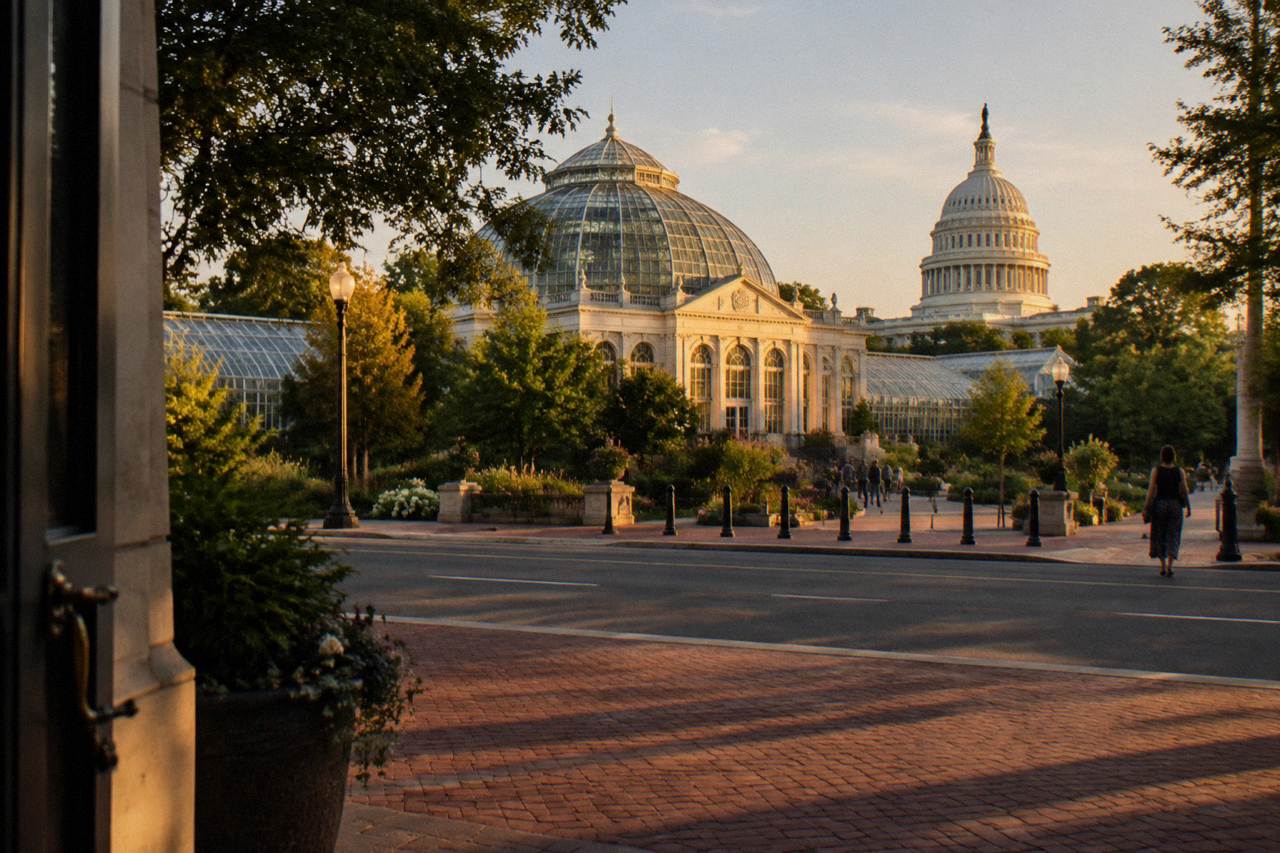
Yes, the US Botanic Garden is free, and unlike several of its neighbours it is free without conditions. There is no ticket, no timed pass, no reservation system and no suggested donation at the door. The garden sits at the foot of Capitol Hill, and its Conservatory, Bartholdi Park and the adjacent National Garden all cost nothing to enter, any day it is open.
That unconditional status is rarer in Washington than visitors expect. The Smithsonian's reputation suggests everything in this city is walk-in free, but two Smithsonian venues, the National Museum of African American History and Culture and the Air and Space Museum's DC building, both require a free timed-entry pass. The Washington Monument's grounds are free but going up needs a ticket. The US Botanic Garden has none of that friction: you arrive, you walk in, you look at plants.
The garden is run not by the Smithsonian but by Congress itself, through the Architect of the Capitol, which is why it shares a campus with the Capitol Visitor Center rather than a museum cluster. Its own visit information states plainly that admission is free, and that has been the standing policy for as long as the current Conservatory has stood on Independence Avenue.
Because the garden is genuinely free, it earns a place on any zero-dollar DC itinerary without the caveats that follow so many other listings. If you are building a day around the Capitol end of the Mall, the garden slots neatly between the Capitol Visitor Center and the memorials to the west, and it is one of the few stops that works equally well in January heat-dodging or July rain.
There is a second, quieter advantage to the garden's free status that budget travellers notice quickly: it is a free attraction you can enter and leave freely. A museum visit tends to feel like a commitment once you are inside, partly because the buildings are large and partly because the security line makes re-entry a chore. The garden's scale means you can duck in for twenty minutes between other stops, treat it as a rest stop with better scenery, or spend a full morning there, and none of those choices costs anything or requires a plan. That flexibility is worth more than it sounds on a hot day when the Mall's unshaded stretches become hard going.
If you want to stretch that free day further, the National Mall corridor west of the garden carries a pay-what-you-want walking tour, and the trio below covers the three walks this site tracks.
The Daytime Monuments Walk, National Mall is the closest of those to the garden's front gate. It meets at the World War II Memorial, rated 4.4 across 324 GuruWalk reviews, and runs for about two hours in English. Guide Lisa, who runs both of the GuruWalk listings this site tracks, covers the West Mall corridor that the garden's visitors almost always end up walking anyway.
What Can You See Inside The US Botanic Garden?
The garden's centrepiece is the Conservatory, a glasshouse split into distinct climate zones, from a tropical rainforest under the Conservatory's great dome to desert rooms and a Hawaiian collection. Outside, the National Garden holds a rose garden, a butterfly garden and a regional native plant section, while Bartholdi Park across the street displays its fountain and demonstration plantings. All three cost nothing.
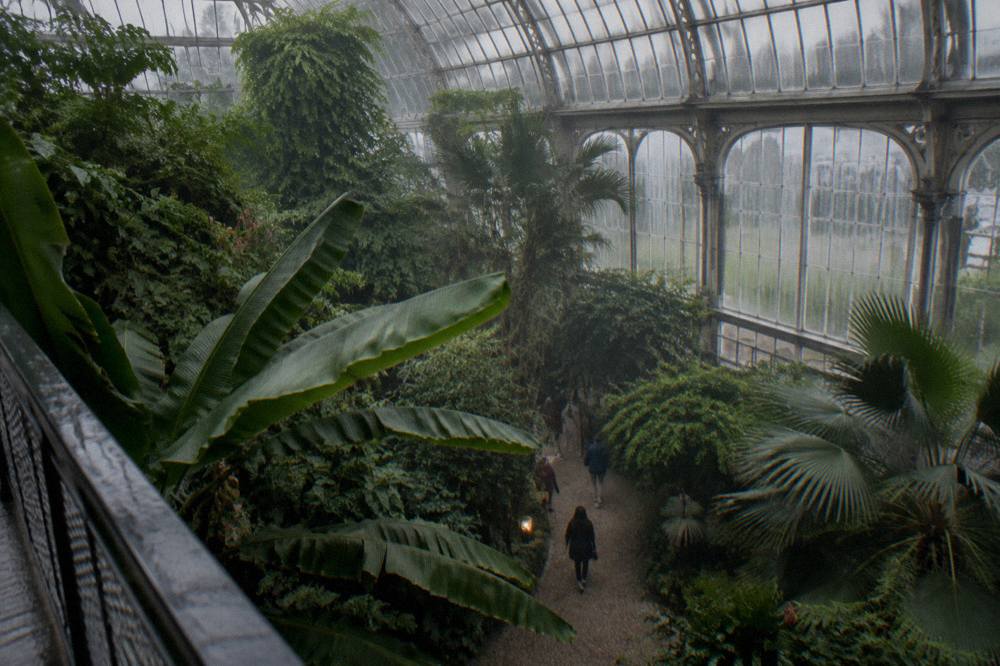
The Conservatory is the part most visitors come for, and it earns the visit on its own. The central jungle room rises to a walkway level where you can look down through the canopy, and the rooms radiating off it shift climate every few steps: Mediterranean, orchid, medicinal plant, and a rare and endangered species collection that includes plants you will not see in most botanic gardens anywhere. The seasonal displays rotate through the year, and the winter holiday show, with model trains and landmark buildings built from plant materials, is the one stretch when the queues form.
The National Garden, on the Conservatory's west side, is the outdoor companion, built on what was formerly a parking lot. Its three acres hold the Mid-Atlantic native plants section that is genuinely useful if you want to know what grows wild within a hundred miles of where you are standing, alongside the rose garden and the butterfly garden that give the space its colour through the warmer months. Bartholdi Park, directly across Independence Avenue, is older and quieter, built around the three-tiered Fountain of Light and Water that Frederick Auguste Bartholdi designed before his Statue of Liberty made him famous. It functions as a neighbourhood park as much as an attraction, and office workers eat lunch there on fine days.
A practical note on scale: this is a compact garden, not an all-day destination. Most visitors spend between one and two hours across the three parts, which is exactly why it pairs so well with a walking day. You are a ten-minute walk from the Capitol Visitor Center, fifteen from the Air and Space Museum's building, and twenty-five from the Lincoln Memorial at a steady pace.
That Capitol-to-Lincoln stretch is the ground the Daytime Monuments Walk, National Mall covers. The walk is free with a pay-what-you-want tip at the end, it runs about two hours in English, and it is rated 4.4 across 324 GuruWalk reviews on GuruWalk. Meeting at the World War II Memorial puts the garden at one end of the walk's route and the memorials at the other, so a natural plan is the garden in the morning, lunch, then the walk in the afternoon.
Because the walk and the garden sit at opposite ends of the same corridor, you can treat the stretch between them as a free sightseeing route in its own right. The walk east from the World War II Memorial passes the Washington Monument's grounds, the Smithsonian museums and the Capitol before it reaches the garden's gate, and every step of it is public, open and uncharged. Doing the walk first and the garden afterwards works just as well, especially in summer, when the Conservatory makes a cool finale to a hot afternoon on the Mall.
Do You Need A Ticket Or Reservation For The US Botanic Garden?
No. There is no timed-entry pass, no advance booking and no same-day ticket release for any part of the US Botanic Garden. This distinguishes it from the National Museum of African American History and Culture and the Air and Space Museum's DC building, both of which are also free but require passes booked through the Smithsonian's ticketing system.
The contrast matters for planning. If your DC day includes the African American History museum, you need to be watching the pass release windows, up to 30 days ahead or the same-day morning drop. The Botanic Garden asks for nothing. You can decide to go while standing on the Mall, and nothing about the visit needs to be arranged before you leave home.
| Attraction | Free entry? | Pass or ticket needed? |
|---|---|---|
| US Botanic Garden (Conservatory, National Garden, Bartholdi Park) | Yes, unconditionally | None |
| Smithsonian Air and Space Museum, DC building | Yes | Free timed-entry pass required |
| National Museum of African American History and Culture | Yes | Free timed-entry pass required |
| U.S. Capitol Visitor Center | Yes | Reservation recommended for tours |
| Washington Monument ascent | Grounds free | Timed ticket, free at the Lodge or a $1 advance fee |
| U.S. Holocaust Memorial Museum | Yes | Timed pass required year-round |
The pattern in that table is the one this site exists to explain: "free" in Washington usually is free, but the conditions vary attraction by attraction, and they cannot be generalised across institutions that look similar. The Botanic Garden is the simplest case in the table, which is worth knowing precisely because its neighbours on Capitol Hill are among the more complicated ones.
One genuine caveat: the garden is a living collection in a federal facility, so individual rooms occasionally close for maintenance or event setup, and the whole site closes on federal holidays. That is a schedule matter, not a fee matter, and the garden's own site posts current hours before any visit.
The lack of a ticketing system also has a knock-on effect on how the garden handles busy days. At a timed-pass museum, capacity is capped by the pass release, so a popular day is fully booked weeks ahead. At the garden, capacity is managed by the door, and the queue at the Conservatory entrance on a peak day moves continuously because there is nothing to scan and nothing to check. If you arrive during the holiday show's busiest stretch, you may wait, but the wait is measured in minutes rather than in booking windows missed.
When Is The US Botanic Garden Open, And When Should You Go?
The Conservatory is open daily except federal holidays, generally from 10 a.m., with the outdoor National Garden opening earlier and Bartholdi Park open around the clock. Weekday mornings are the quiet window; the holiday display season draws the biggest crowds of the year. Check the garden's own site for the current day's hours before you go.
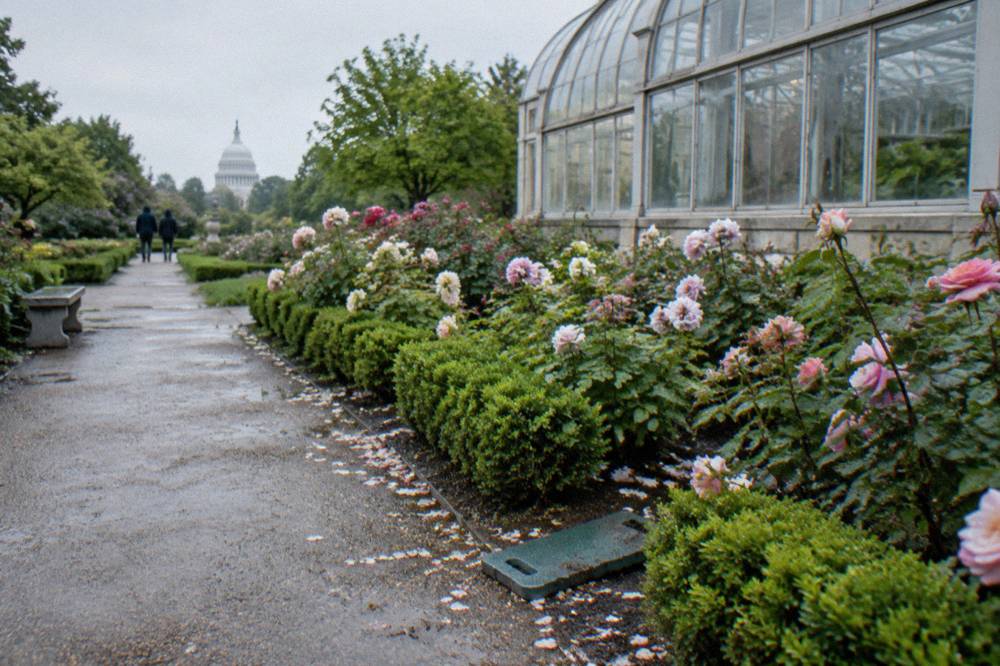
Timing advice for the garden is simple. The Conservatory is an indoor attraction, so it works on days when the outdoor Mall is unbearable, which in Washington means July afternoons and rainy spring Saturdays in roughly equal measure. The glasshouse holds its heat, though, so a midsummer day makes the jungle dome feel like the jungle; the desert rooms and the orchid room are the more comfortable stops in that weather. In winter, the Conservatory is one of the best warm rooms in the city, and the holiday show gives you a reason to be inside looking at plants in December. More of these guides are collected on Free Things To Do In Washington DC.
For photographers, the outdoor National Garden catches the best light in the first two hours after opening, and Bartholdi Park's fountain photographs well in late afternoon. For plant enthusiasts, the seasonal rotation means no two months look the same: the spring display, the summer natives in bloom, and the autumn chrysanthemum tradition each justify a repeat visit, all for the same zero dollars.
Crowds follow the school calendar and the weather. Weekday mornings outside the holiday season are genuinely quiet, while weekends during the holiday show can mean a short queue at the Conservatory door. Because entry is free and unticketed, the queue moves fast; there is no pass scanning, just a door.
The garden's position at the eastern end of the Mall also shapes the timing question. Most visitors arrive at the Mall from the Smithsonian metro stations in the middle and work outward, which means the Capitol end, where the garden sits, is often the last stop of a tiring day and gets a rushed twenty minutes. Reversing the order fixes that: start at the Capitol or Union Station, do the garden while your legs are fresh, and let the walk westward through the museums and memorials carry you back toward the middle. You see the garden properly and you finish your day at a metro stop instead of a dead end.
How Does The Garden Compare With DC's Other Free Attractions?
The Botanic Garden sits in the middle tier of DC's free attractions by size but near the top by distinctiveness. It is smaller than the Smithsonian museums, more contained than the National Mall's memorials, and one of only a handful of free attractions in the city that is fundamentally an outdoor-and-glasshouse experience rather than a museum or a monument.
That distinctiveness is the argument for including it. Most free DC itineraries stack museums and memorials until every day looks the same. The garden changes the texture of a day without changing its budget, and it does so in a location that costs you no extra travel: it is on the walk between the Capitol and the Air and Space Museum, on ground you were probably going to cross anyway.
For scale, the Smithsonian Institution runs 20 museums plus the National Zoo, with ten museums sitting directly on the Mall and six more nearby, according to the Institution's own visit pages. Against that, one botanic garden can look small. But the garden's audience is different: it is a stop for people who have seen enough dioramas, and it is one of the few free attractions that rewards simply sitting down, which the museums, for all their quality, do not.
If you are planning the wider free day, our guide to free things to do near the National Mall covers the surrounding blocks, and the question is the National Mall free? answers the corridor itself. The Mall, like the garden, charges nothing, and the two together form the spine of a no-spend day in the city.
The Mall corridor is also where the other free walks run. The Monuments By Moonlight evening walk, rated 4.26 across 65 GuruWalk reviews, meets at the Albert Einstein Statue and runs about an hour and a half, which pairs naturally with a garden-and-memorials day: plants in the morning, memorials in daylight, the same memorials again by floodlight after dark. Guide Lisa runs both GuruWalk walks this site tracks, and the evening one suits visitors whose daylight hours are already full.
The third walk in the roster comes from a different operator entirely. Blue Umbrella's Mall Walk, run through freetour.com and rated 8.7 out of 10 across 143 freetour.com reviews, covers the Mall in about two and a half hours, the longest of the three. It is a same-corridor alternative rather than a different product, and its listing is the only one of the three not on GuruWalk.
How Should You Pair The Garden With A Free Walking Tour?
The cleanest plan is the garden in the morning, the memorials in the afternoon, and the evening walk after dark. All three walks this site tracks are free or pay-what-you-want, so the pairing adds nothing to the day's cost. The Daytime Monuments Walk meets at the World War II Memorial, about twenty-five minutes on foot from the garden's gate, and the evening walk starts from the Albert Einstein Statue near the same corridor.
The mechanics of a pay-what-you-want walk are worth knowing before your first one. There is no upfront charge and no booking fee; you reserve a spot, you show up, and you tip the guide at the end based on what the walk was worth to you. Our explanation of how free walking tours and tipping work in DC covers the etiquette in detail, but the short version is that these are professional guides earning their living from tips, not volunteers.
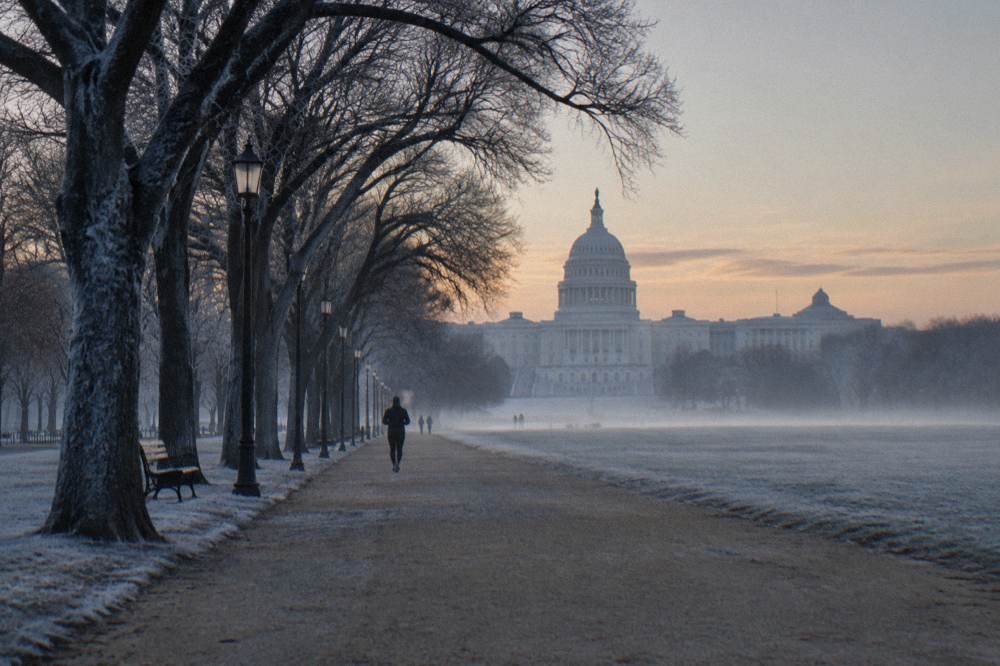
For the garden pairing specifically, the geography does the work. The garden's gate is at First Street and Independence Avenue SW, at the far eastern end of the Mall. Walking west from there you pass the Capitol, the Smithsonian museums, the Washington Monument and then the memorial corridor, which is the exact ground the daytime walk covers. Doing the garden first means you arrive at the World War II Memorial meeting point having already seen the eastern half of the Mall on foot, and the walk then covers the western half with a guide who can tell you what you are looking at.
Families get a particular benefit from the pairing, because the garden and the memorials suit different attention spans. The Conservatory's compact rooms and the outdoor garden's short loops work for children whose patience would not survive a two-hour museum, and the walk gives older kids the stories that make stone interesting. Our family guide to free things to do in DC for families builds on the same principle.
One honest limitation: the walks are of the Mall and its memorials, not of the garden. None of the three passes through the Botanic Garden or interprets its collection, so if plants are your main interest, the garden's own volunteer-led tours, announced on its site, are the deeper option. The walks cover everything else.
Those numbers frame why the garden matters in a free itinerary. A city that draws 27.2 million visitors and offers twenty Smithsonian museums, an uncharged Mall and a no-ticket botanic garden is close to unique in the United States, and the walks this site tracks are the cheapest way to have the corridor explained rather than just walked. Every element of the day described in this article, from the garden's gate to the last floodlit memorial, costs nothing but the tip you choose to give.
Common Questions About The US Botanic Garden
Is The US Botanic Garden Free?
Yes, completely. Entry to the Conservatory, the National Garden and Bartholdi Park costs nothing, with no timed pass, reservation or ticket required for any part of the garden.
Do you need a ticket for the US Botanic Garden?
No. Unlike the Air and Space Museum's DC building and the National Museum of African American History and Culture, both of which require free timed passes, the Botanic Garden has no ticketing system at all.
Is the US Botanic Garden part of the Smithsonian?
No. The garden is administered by the Architect of the Capitol, which is why it sits on Capitol Hill next to the Capitol Visitor Center rather than among the Smithsonian museums on the Mall.
How long does a visit to the US Botanic Garden take?
Most visitors spend one to two hours across the Conservatory, the National Garden and Bartholdi Park, which makes it an easy half-day stop to pair with a walking tour of the Mall.
Can you visit the US Botanic Garden with kids?
Yes, and it suits children better than most museums. The compact glasshouse rooms, the outdoor butterfly garden and the short loops of the National Garden fit short attention spans, and the winter holiday show with its plant-material landmark buildings is a reliable family draw.
What is near the US Botanic Garden?
The Capitol and its Visitor Center are a few minutes north, the Air and Space Museum's DC building and the rest of the Smithsonian cluster are a short walk west, and the memorial corridor from the Washington Monument to the Lincoln Memorial stretches beyond them.