What Are Some Hidden Gem Free Museums In DC?
Beyond the Air and Space and Natural History crowds, DC hides a Postal Museum, the Renwick, the Hirshhorn and more, all free. Here is where to find them.
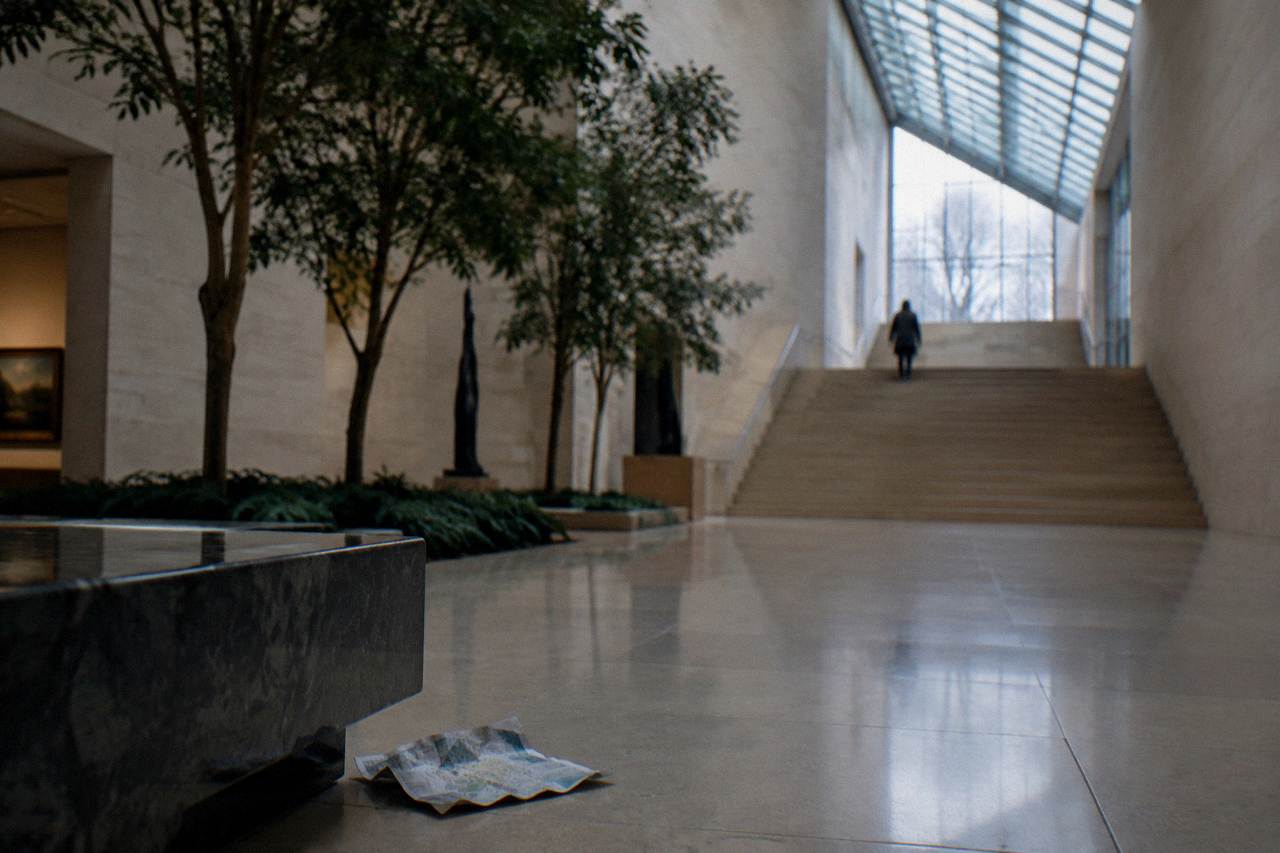
The Smithsonian Institution runs 20 museums plus the National Zoo, and only a handful of them ever appear on a first-time visitor's itinerary. The rest sit in plain sight, free to enter, and often half empty on a Saturday when the Natural History Museum is a shoulder-to-shoulder shuffle. That gap is where DC's hidden gems live.
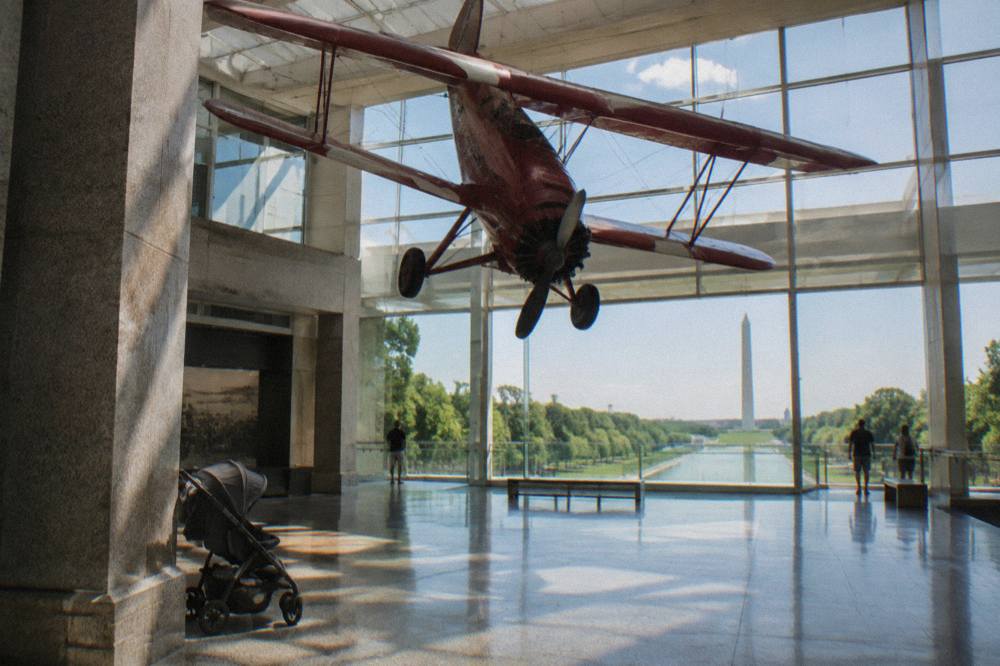
What Are Some Hidden Gem Free Museums In DC?
The strongest hidden gems are the Smithsonian Postal Museum near Union Station, the Renwick Gallery by the White House, the Hirshhorn's sculpture garden on the Mall, the National Museum of the American Indian, and the Freer Gallery of Asian Art. All five are unconditionally free, no timed pass required, which sets them apart from the crowded Air and Space building and NMAAHC, both of which need a pass even though they are also free.
That last point matters more than most guides admit. The Smithsonian's walk-in-free reputation does not extend evenly across its own buildings, so a visitor who plans around the pass-free venues saves themselves a morning of ticket refreshes. The free museums guide covers the full landscape, including which buildings need passes. This page is about the ones people walk past.
Hidden gem is doing real work in that sentence, too. The National Gallery of Art is free and magnificent, but nobody has ever called it hidden. The National Archives and the Library of Congress are free, but they are on every itinerary ever printed. What follows are museums where you can usually walk straight in, find a bench, and hear the building breathe.
The distinction is worth spelling out because DC's free ecosystem is large enough to hide its own best rooms. With 20 Smithsonian museums plus the zoo, and a set of non-Smithsonian free institutions on top, the city has more free gallery space than any single trip can absorb. Every hour spent queueing at a headline museum is an hour a quieter one would have given back with interest.
Which Smithsonian Museums Do Tourists Walk Right Past?
Four Smithsonian venues top the walk-past list: the National Postal Museum, the Renwick Gallery, the Hirshhorn Museum, and the National Museum of the American Indian. Each is free with no timed pass, each sits within about 1.5 miles of the National Mall, and each routinely has open gallery space on days when the headline museums are at capacity. The Postal Museum is the most extreme case, sitting near Union Station, a short walk from the Capitol crowds.
The Smithsonian's own count puts ten museums directly on the Mall and six more nearby, per its official museums directory. The nearby six are where the crowds thin out, and the Postal Museum is the clearest example. It occupies the old Post Office Department headquarters building next to Union Station, a marble landmark in its own right, and its collection spans airmail aviation, railway mail sorting, the Pony Express era, and one of the world's great stamp collections, including the rarest stamp on earth displayed in a vaulted hall. Admission costs nothing. On a weekday afternoon you can stand in front of a historic mail stagecoach in near silence, three blocks from the line snaking into the Capitol Visitor Center.
The Renwick Gallery is the other extreme: centrally located on Pennsylvania Avenue across from the White House grounds, dedicated entirely to contemporary craft and decorative art. Its Grand Salon is a gilded ballroom hung with modern works, and its rotating installations are the kind of thing people photograph and then fail to name. It is the Smithsonian American Art Museum's craft branch, and it is free. Because it sits at the opposite end of the tourist spine from the Mall's museum row, it draws a fraction of the foot traffic its quality deserves.
The Hirshhorn and the American Indian museum round out the four, and both sit on the Mall itself, which makes their quietness stranger. The Hirshhorn's drum shape hides its entrance from the sidewalk flow, and the American Indian museum's east-end position puts it past the point where most walking tours turn around. Geography, in DC, is curation.
Is The National Postal Museum Really Worth Visiting?
Yes, and it is arguably the best museum value in the city given that entry is free and attendance is low. The building itself, a former Post Office Department headquarters, is a marble landmark, and the collection spans airmail aviation, railway mail sorting, the Pony Express era, and one of the world's great stamp holdings. Most visitors spend an hour or more there, often with galleries largely to themselves.
The airmail gallery is the anchor. Early airmail flying was staggeringly dangerous work, and the museum does not soften that history: pilots navigated by railroad tracks and landmarks in open cockpits, and the casualty rate among early airmail crews was grim. The museum displays period aircraft and recovered wreckage alongside the machines that succeeded them, and the exhibit text does justice to how improvised the whole enterprise was.
For families it is the easiest free museum in DC to actually enjoy with children. There is a sorting-car exhibit kids can climb into, postal uniforms to try on, and enough buttons and levers to justify a full circuit. The museum sits directly at the Union Station Metro stop on the Red Line, which makes it the natural first or last stop of a museum day that starts or ends at a train. Union Station itself gives you food courts, restrooms, and luggage storage, none of which the Mall offers in abundance.
Pair it with the Capitol grounds or the free government tours guide, since the Library of Congress's Jefferson Building is a short walk down First Street and also costs nothing. That pairing, a postal museum and a library, sounds like a school field trip. In practice it is two of the most beautiful interiors in the city, back to back, for zero dollars.
Are The Hirshhorn And Its Sculpture Garden Actually Free?
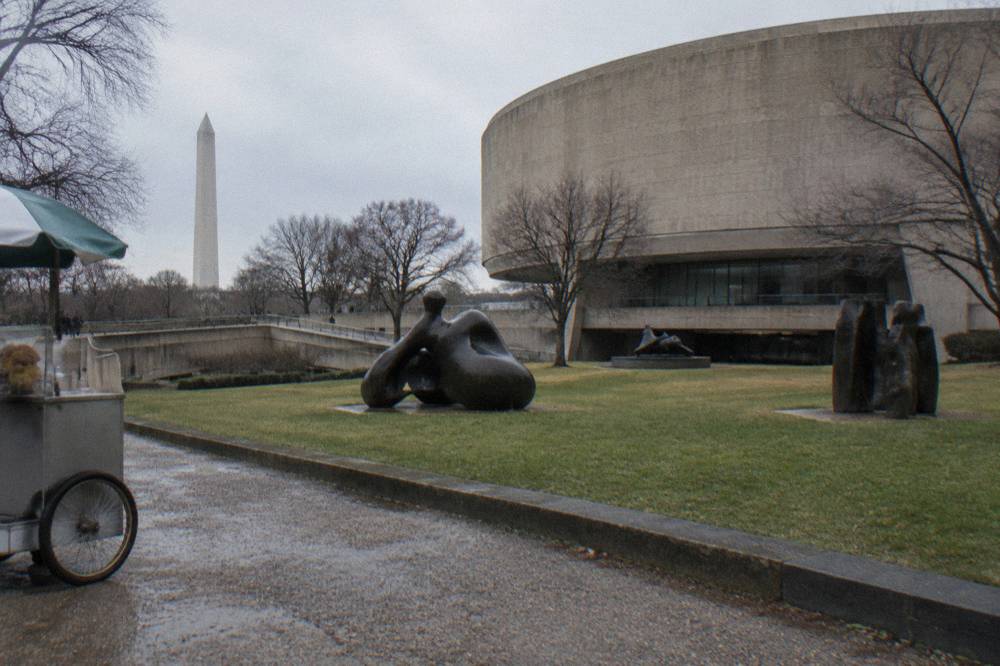
Yes, both. The Hirshhorn Museum's galleries and its sunken sculpture garden across Jefferson Drive are free with no pass, which surprises visitors who assume the pass rules at the Air and Space building apply across the Mall. The sculpture garden holds major modern sculptors' work in an open-air bowl that is itself one of the best-designed public spaces in DC.
The building is a drum, a Brutalist cylinder raised on stilts, and it reads as either the Mall's best or worst piece of architecture depending on who you ask. Inside, the collection skews contemporary and international, and the upper galleries ring an open center void that gives even a crowded day some air. The special exhibitions rotate constantly, so a repeat visit rarely repeats.
The sculpture garden is the hidden half of the hidden gem. It sits below street level, so people walk over it without knowing it exists, and it contains a serious grouping of figurative bronzes and abstract steel on a lawn that functions as a public garden. On a weekday it is one of the quietest places on the Mall's southern edge. Entry is free and the garden's own entrances sit steps from the Smithsonian Metro stop, which makes it a legitimate lunch-break destination for people who work nearby.
What About The National Museum Of The American Indian And The Freer?
Both are free, unconditionally, and both are chronically under-visited. The American Indian museum sits at the Mall's eastern end in a golden limestone building designed to look carved by wind and water, and the Freer Gallery sits on Independence Avenue holding one of the world's great Asian art collections. Neither requires a timed pass, and both are a short walk from the Capitol end of the Mall.
The American Indian museum is the more dramatic building, a curving Kasota stone structure that looks like nothing else in the federal city. Its Mitsitam Cafe, which is paid, not free, is nonetheless widely considered the best food on the Mall, serving fry bread, bison, and Peruvian dishes organized by native region. The galleries themselves are free and quiet, and the building's Potomac atrium, a five-story rotunda, is worth entering even if you only have ten minutes. The museum's presentation is built around native voices rather than a collector's framing, which changes the reading of every object on display.
The Freer, which together with the Sackler forms the National Museum of Asian Art, is the opposite temperament: dark, hushed, and dense with Chinese bronzes, Japanese screens, and Whistler's Peacock Room, an interior the artist designed whole. The Peacock Room alone justifies the visit. It is a gilded dining room lined with blue-and-white porcelain, and it is free to stand in, usually with a handful of other people present. The Freer's subterranean corridors connect it to the Sackler side, so a rainy day can be spent entirely indoors between the two.
Are Folger Shakespeare Library And Planet Word Free?
Neither claim can be stated flatly. Folger Shakespeare Library and Planet Word are both commonly described as free in travel content, but a direct check could not pin a specific, current, sourced admission policy for either, so their status is unresolved here. Until a fresh check against their own visit pages confirms it, treat both as unverified rather than free, and check the operator's page before planning around them.
This is an honesty point, not a hedge. Travel content routinely lists both as free, and that may well be right, but a site that names itself after free things cannot publish a free claim it cannot source. The Folger's own visit page and the museum's own visit page are the places to confirm before you go, and both are a minute's check.
Folger, on Capitol Hill, holds the world's largest Shakespeare collection and reopens periodically after renovation cycles. Planet Word, in the former Franklin School on Franklin Square, is a language museum with interactive galleries built around speaking, listening, and reading. Both are genuinely interesting venues that belong on a curious visitor's shortlist. The free claim is the only part in question, and it is a question worth thirty seconds of your time rather than a surprise at the door.
Is The Museum Of The Bible Ever Free?
Yes, conditionally. Museum of the Bible charges $34.99 for adults aged 18 to 64, but it runs free admission every Tuesday through May 18, 2027, plus a half-price walk-up window late in the day. It is the clearest conditional-free museum in the city: paid by default, free if you time it, per the museum's own plan-your-visit page.
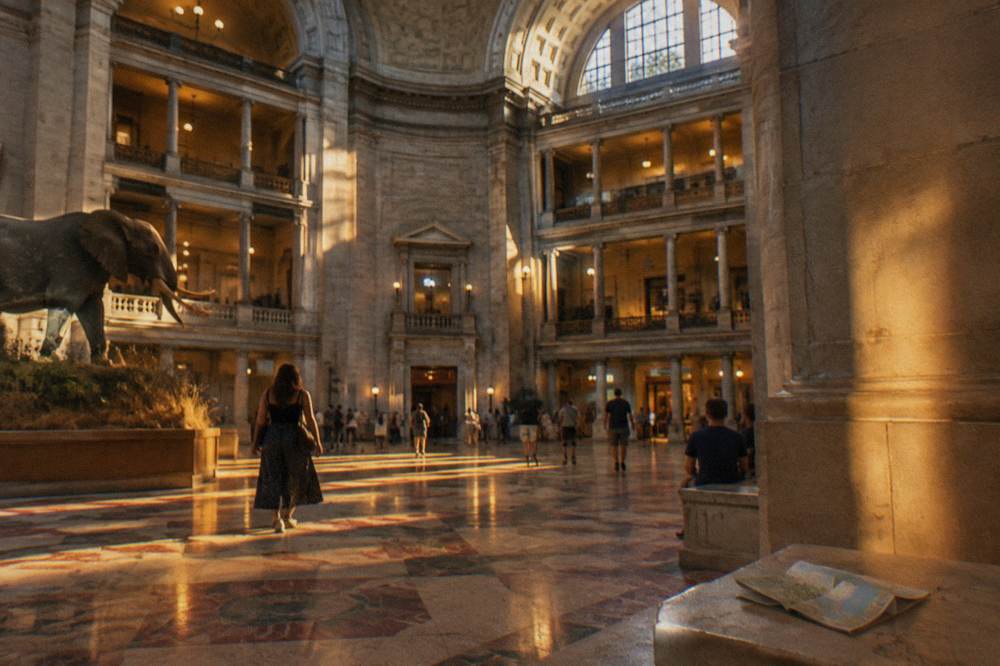
The Tuesday exception is the kind of fact most visitors never hear. The building, a converted refrigeration warehouse south of the Mall, is enormous, and its exhibits run from ancient manuscripts to working scribe demonstrations. Whether the content suits you is a separate question from the price, but on a Tuesday the price is settled.
Two DC neighbors sit at the other end of the spectrum. The International Spy Museum uses dynamic date-based pricing with no static figure published, so no honest dollar amount can be quoted here. Washington National Cathedral's own visit page says prices vary for sightseeing, though worship services are free. Neither should be assumed free, and neither should be assumed cheap.
Which Hidden Gem Museums Pair Well With A Free Walking Tour?
The Postal Museum pairs with the Capitol end of the Mall, and the Renwick, Hirshhorn, and Freer all sit within or beside the WWII Memorial to Capitol corridor that the Daytime Monuments Walk covers. The walk meets at the World War II Memorial, runs about two hours in English, and is free or pay what you want. It is rated 4.4 across 324 GuruWalk reviews, and its ground overlaps directly with several museums on this list.
That is an on-route pairing, not a coincidence of geography. The Daytime Monuments Walk, National Mall run by guide Lisa on GuruWalk moves through the memorial core where the Hirshhorn, the Freer, the American Indian museum, and the Renwick all cluster, so the natural day is the walk first, then a museum chosen by whichever door was nearest when the walk ended. The walk's two-hour runtime leaves an afternoon free, which is exactly when the quieter galleries are at their calmest.
For readers who want a second opinion on the format, the is a free walking tour worth it piece covers the pay-what-you-want mechanics, and the how free walking tours work guide covers tipping in detail.
A different operator covers the same ground at a different pace. Blue Umbrella's Mall Walk, run through freetour.com, is a 2 hour and 30 minute free tour rated 8.7 out of 10 across 143 freetour.com reviews, and its longer runtime leaves room for more Mall-side context between stops. For a museum-heavy day it is a reasonable alternative spine, since everything on this page sits within walking distance of its route.
How Do You Build A Full Free Day Around These Museums?
Start at the Postal Museum near Union Station in the morning, walk down through the Capitol grounds to the American Indian museum or the Freer, cross the Mall to the Hirshhorn and its sculpture garden, and finish at the Renwick before it closes. Every venue on that route is free with no pass, the full walk is roughly two miles end to end, and the only unavoidable costs are food and Metro fare.
A realistic version of that day budgets about an hour per museum. The Freer rewards patience more than speed, the Hirshhorn rewards a loop, and the Renwick rewards arriving before the last-entry cutoff. Check each museum's hours on its own page before committing to the order, since a few Smithsonian venues close earlier than visitors expect and the Renwick occasionally closes for installation changes.
| Museum | Neighborhood | Entry | Pass needed | Realistic visit |
|---|---|---|---|---|
| National Postal Museum | Union Station area | Free | No | About an hour |
| Renwick Gallery | Pennsylvania Ave, near White House | Free | No | Under an hour |
| Hirshhorn Museum and sculpture garden | National Mall, south side | Free | No | About an hour |
| National Museum of the American Indian | Mall, east end | Free | No | About an hour |
| Freer Gallery of Asian Art | Independence Ave | Free | No | Under an hour |
| Museum of the Bible | South of the Mall | Paid, free Tuesdays through May 18, 2027 | No | About an hour |
The pattern in that table is the whole point of this page. Every genuinely hidden gem in DC is pass-free, while the two most famous free museums on the Mall, the Air and Space building and NMAAHC, are the ones that need advance planning. The is the Smithsonian free question has a yes answer with asterisks, and the asterisks are exactly the crowded buildings.
For evening, the city keeps giving. The free things to do at night guide covers the monuments after dark, which is where the Monuments By Moonlight walk comes in: a 1 hour and 30 minute evening walk meeting at the Albert Einstein Statue, rated 4.26 across 65 GuruWalk reviews. A museum day followed by a moonlit memorial walk is about the best free day DC offers, and the two halves of it cost nothing but shoe leather.
A final planning note: the U.S. Botanic Garden sits at the Mall's northeast corner and is another pass-free stop worth folding into the Postal Museum leg of the day, per the garden's own site. And for anyone using Free Things To Do In Washington DC as a planning base, the weekend and today guides collect the same free venues by timeframe, so the hidden gems here slot into whatever version of the trip you are building.
Common Questions About Hidden Gem Free Museums In DC
What Are Some Hidden Gem Free Museums In DC?
The National Postal Museum, the Renwick Gallery, the Hirshhorn and its sculpture garden, the National Museum of the American Indian, and the Freer Gallery of Asian Art. All five are unconditionally free with no timed pass required.
Do any hidden gem museums in DC require timed passes?
No. The pass requirement applies to the Air and Space Museum's DC building and NMAAHC, both of which are famous rather than hidden. Every museum on this page's hidden gem list is walk-in free.
Is the Museum of the Bible free?
Not by default. Adult admission is $34.99 for ages 18 to 64, but the museum runs free admission every Tuesday through May 18, 2027, plus a half-price late-day walk-up window.
Are Folger Shakespeare Library and Planet Word free?
Both are commonly described as free, but their admission status is unresolved here because a direct check could not confirm a current sourced policy. Check each venue's own visit page before planning around free entry.
Which hidden gem museum is best for kids?
The National Postal Museum. It has a walk-through railway mail car, dress-up uniforms, and interactive sorting exhibits, it sits directly at the Union Station Metro stop, and admission is free.
How far are the hidden gem museums from the National Mall?
All of them sit on or within about 1.5 miles of the Mall, per the Smithsonian's own directory. The Postal Museum is the farthest outlier, a short walk from the Capitol.