Is It Free To Tour The White House?
Yes, a White House tour is free, but you cannot just show up: requests go through your member of Congress well ahead of your trip. Here is exactly how the process works, what you see inside, and what to do if the answer comes back no.
Is It Free To Tour The White House?
Yes, touring the White House is completely free, and there is no paid shortcut or ticket tier that gets you in faster. The only currency the White House accepts is advance planning: tours are arranged exclusively through a request to your member of Congress, submitted well before your trip, and the tour itself is a self-guided walk through the public rooms.
That combination, genuinely free but genuinely hard to arrange, makes the White House the most misunderstood "free thing" in Washington DC. Visitors read that it costs nothing, assume that means it is easy, and arrive expecting to queue at a gate. There is no such queue. There is no on-site box office, no same-day line, and no commercial operator licensed to sell you a way in. Anyone offering to sell you White House tour access is not offering anything they can actually deliver, because access flows through congressional offices on a first-come, first-served basis for constituents.
The free part is real and it is deliberate. The White House is not a commercial attraction; it is a working residence and office, opened to the public as a civic gesture rather than a revenue line. What that means in practice is a trade: you pay nothing in dollars, and you pay a great deal in lead time and paperwork. Tour slots are limited, demand is heavy, and congressional offices distribute them to the people they represent.
For a sense of scale, Washington DC drew a record 27.2 million visitors in 2025, generating a record $11.9 billion in visitor spending, and only a small fraction of those people will ever stand inside the White House. The ones who do almost always asked months ahead. If your dates are fixed and your trip is close, the realistic answer is that you will see the building from outside, and the second half of this article covers how to do that well, including a free guided walk that covers the nearby monument corridor.
The official tour information lives on the White House's own visitor page at whitehouse.gov, and it is the one source worth checking directly, because tour availability can shift with the presidential schedule.
How Do You Actually Request A White House Tour?
Every request goes through the office of your representative or one of your two senators, typically submitted through an online form on that office's website. You submit your preferred dates, the names and details of everyone in your group, and identification information, then the office forwards the request and you wait for a confirmation. There is no fee at any step, and no way to apply except through Congress.
The process is simpler than it sounds once you know the shape of it, but it does have a few practical realities worth spelling out.
First, timing matters more than anything else. Congressional offices generally advise submitting tour requests as far ahead of your visit as you can manage, and many recommend reaching out up to several months in advance, because slots for a given date are allocated on a rolling basis and popular periods, spring break, cherry blossom season, summer, go first. A request submitted two weeks before a trip is close to hopeless; a request submitted three to six months out has a real chance. Dates are also constrained by the White House's own operations: tours can be cancelled or curtailed without notice when official business demands it, which is why a confirmed date still deserves a re-check before you travel.
Second, you do not need to know which office to pick. Your representative and both senators serve the same district or state, and any of the three can submit a tour request for you. Some travelers submit through all three to raise their odds, which is allowed, though you should accept the first confirmation you get and decline the others rather than holding duplicate slots.
Third, international visitors are not excluded, but the route is different. If you are not a United States resident, you request a tour through your country's embassy in Washington DC, which channels the request through the same system. The tour is still free; the paperwork simply passes through diplomatic channels instead of a congressional office.
Here is the whole process in one view:
| Step | What you do | What it costs | Realistic timing |
|---|---|---|---|
| Pick your dates | Choose a window of several possible tour days, not one fixed day | Nothing | As early as possible |
| Find your member of Congress | Use your representative's or a senator's website; international visitors go through their embassy | Nothing | Same day |
| Submit the request | Fill the online tour form with names, IDs, and dates for your whole group | Nothing | 15 to 30 minutes |
| Wait | The office forwards the request; you hear back by email | Nothing | Weeks, sometimes longer |
| Confirm and plan | On approval you receive tour details and security rules; re-check before traveling | Nothing | A few days before the trip |
The one thing the table cannot capture is that a "no" is common and it is not personal. Slots are limited, congressional offices juggle thousands of constituent requests, and the calendar simply runs out. Plan the request early, but plan the rest of the trip assuming the answer might be no, because the backup options around the White House are excellent and cost nothing.
What Do You See On The White House Tour?
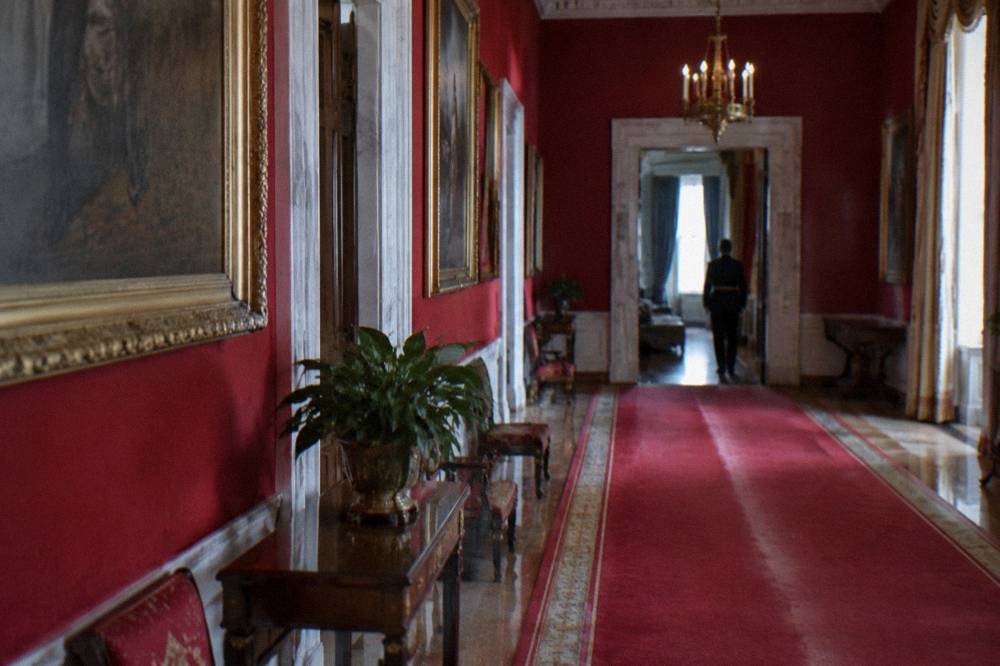
The public tour walks you through the state rooms on the ground floor and the main residence floor: the East Room, the Green, Blue, and Red Rooms, the State Dining Room, and the connecting cross halls. It is self-guided, moves at your own pace, and takes roughly 30 to 45 minutes. You do not see the private residence, the Oval Office, or the working West Wing.
What surprises most visitors is how much of the ceremonial heart of the building you do pass through. The East Room alone is the largest room in the house, the site of press conferences, weddings, and state receptions, and it is genuinely grand rather than a letdown after the photographs. The color rooms, Green, Blue, and Red, are smaller, furnished as formal parlors, and each holds pieces from different administrations, so the tour doubles as a compressed history of the presidency told through objects.
The tour is self-guided in the sense that no docent walks you room to room, but Secret Service officers are stationed throughout the route and they are, by wide reputation, a highlight of the experience: knowledgeable about the rooms, willing to answer questions, and occasionally very funny. Photography is permitted in the tour areas, though the rules can change, so confirm the current policy when your confirmation arrives rather than relying on older accounts.
Security is the other practical reality. Everyone in your group needs government-issued photo identification, the list of prohibited items is long and strictly enforced, and there is no storage for anything you cannot bring in, so travel light on tour day. The entrance process itself, screening, lining up, moving through, can take longer than the tour. Build a half day around it rather than squeezing it between other bookings.
If the request comes back approved, treat it as the anchor of that day and build around it. The White House sits inside a neighborhood that is unusually dense with free sights, which is exactly where the rest of this article goes.
What If You Cannot Get In? Seeing The White House From Outside
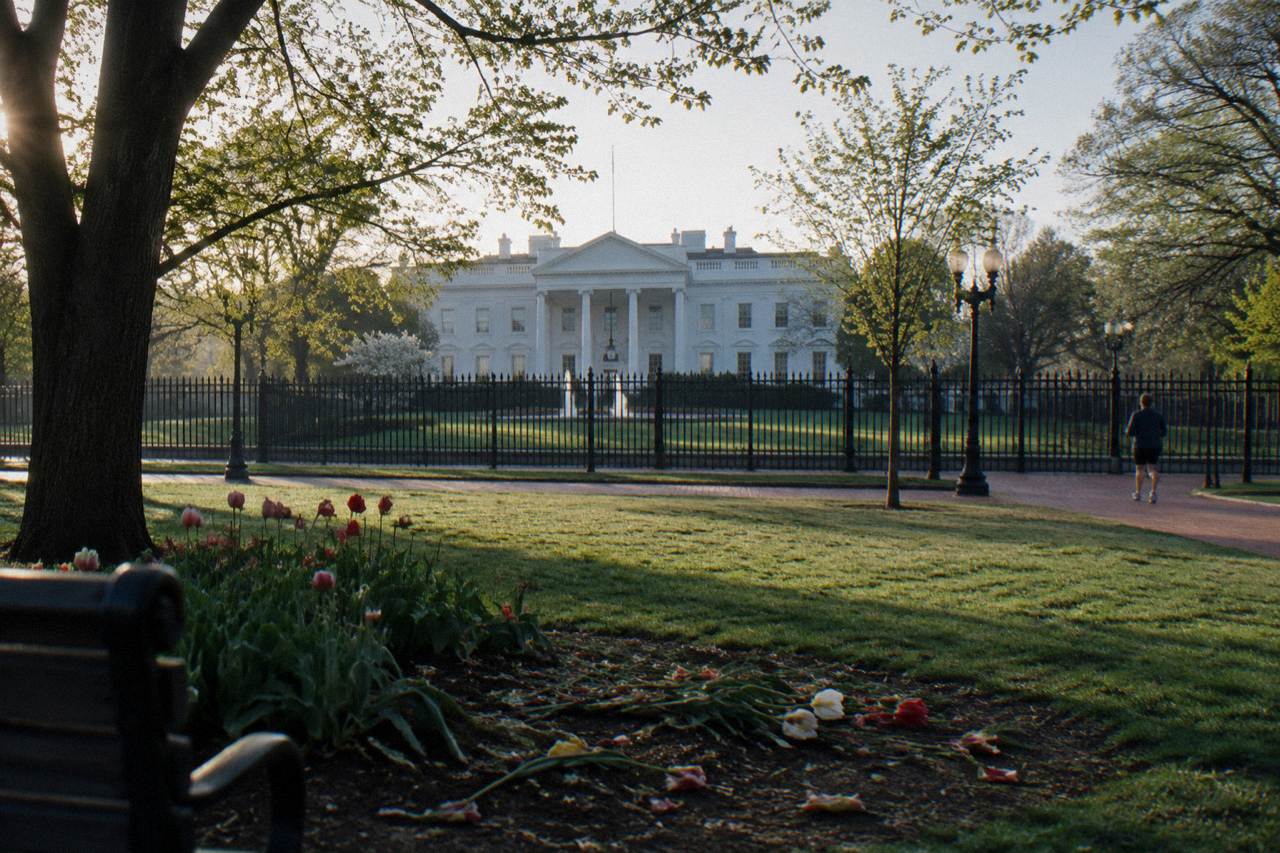
The classic free view of the White House is from the north side, through the fence at Lafayette Square, where Pennsylvania Avenue closes to traffic and the whole world comes to take the photograph. The south view, across the Ellipse toward the South Lawn, is the postcard angle from the back. Both cost nothing, need no booking, and are walkable from most of downtown.
Lafayette Square is the one most people picture: the small historic park directly north of the White House, facing its front entrance, with statues and shade trees and a permanent slow rotation of tourists, protesters, and camera crews. Pennsylvania Avenue in front of the White House has been closed to vehicular traffic for years, so you can stand in the middle of a federal avenue and shoot straight at the North Lawn and the columned facade. It is the view used in news broadcasts, and it is yours for the price of a Metro ride.
The south side is quieter and, many would argue, better. From the Ellipse, the broad park south of the White House, you look across the South Lawn with the Jefferson Memorial visible in the distance on a clear day, which is the framing that makes the building look like it belongs to the city rather than the other way around. During the winter holidays the Ellipse hosts the National Christmas Tree and its surrounding state trees, a free seasonal draw in its own right.
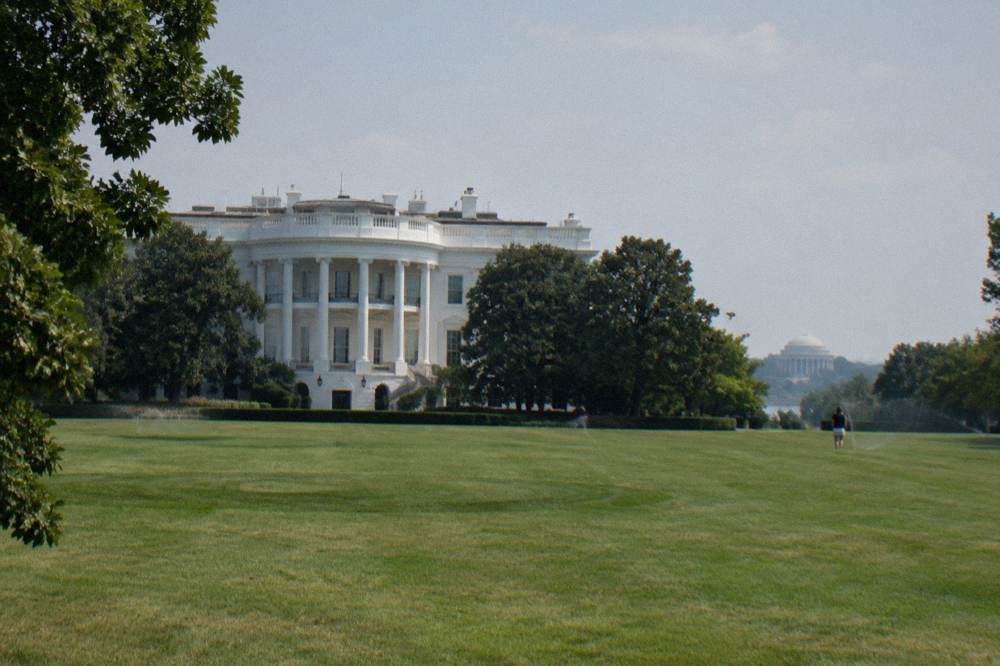
A walk that connects the outside views takes under an hour at a stroll: start in Lafayette Square, loop east past the Treasury Building, cut south through the Ellipse, and finish looking back north at the South Lawn. Add the nearby Lockkeeper's House, one of the oldest buildings in the city, sitting small and stone at the corner of 17th Street and Constitution Avenue, and you have a free circuit that most visitors never piece together.
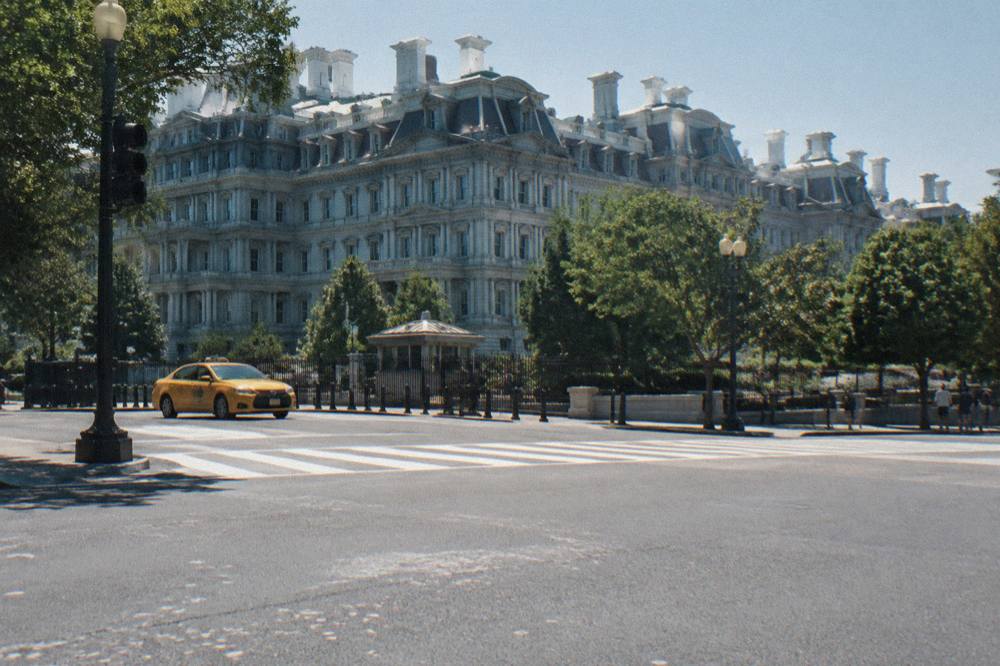
The neighborhood itself is worth naming. Decatur House on Lafayette Square, the Renwick Gallery a few blocks south, and the Treasury and Eisenhower Executive Office Building flanking the White House are all within five minutes on foot, and the Renwick, a Smithsonian craft and decorative arts museum, is free to enter with no pass needed. The White House may be the reason you came to this corner of the city, but it is not the only thing here that costs nothing.
Pairing The White House With A Free Monuments Walk
The most efficient free pairing in this part of DC is a guided pay-what-you-want walking tour of the National Mall's monument corridor, which covers the World War II Memorial, the Lincoln Memorial, and the memorials between. The Daytime Monuments Walk, National Mall, a GuruWalk listing run by a guide named Lisa, meets at the World War II Memorial, runs about 2 hours in English, and is rated 4.4 across 324 GuruWalk reviews.
The geography makes this obvious once you look at a map. The World War II Memorial sits at the eastern anchor of the Reflecting Pool, roughly a 15 minute walk from the White House's south fence line, and everything the Mall's west end is famous for, the Lincoln Memorial, the Vietnam Veterans Memorial, the Korean War Veterans Memorial, the Martin Luther King Jr. Memorial, spreads out from there. A tour that starts at the World War II Memorial is effectively a tour that starts a short walk from where you have been standing at the White House fence.
Free walking tours on GuruWalk work on a pay-what-you-want basis: you book a spot at no charge, join the walk, and tip the guide at the end what you thought the two hours were worth. That model suits a White House trip unusually well, because the day already centers on something free, and the walk extends the same logic across the rest of downtown. The site's guide to how free walking tours work in DC covers the tipping etiquette in detail, including what people typically give and why the guides depend on it.
If the tour's timing does not match your White House slot, the same corridor works as a self-guided walk, and this site's National Mall walking tour guide lays out the route stop by stop. But the guided version adds context that plaques do not, and on a thin roster of verified walks, this one covers the exact ground a White House visitor is best positioned to reach on foot.
Seeing The Mall After Dark
The monuments change character completely at night, when the crowds thin, the lighting turns the marble luminous, and the Lincoln Memorial becomes a quiet room rather than a photo op. The Monuments By Moonlight evening walk, a GuruWalk listing also run by Lisa, meets at the Albert Einstein Memorial near the National Mall, runs about 1 hour and 30 minutes, and is rated 4.26 across 65 GuruWalk reviews.
Night is when the west Mall earns its reputation. The World War II Memorial's fountains are lit, the Lincoln Memorial's columns glow from within, and the view back across the Reflecting Pool toward the Washington Monument is the single most photographed scene in the city after dark. Safety stays reasonable along the monument corridor because the paths remain busy with joggers and tour groups into the evening, though the usual city judgment applies as the night gets late.
The Einstein Memorial, the meeting point for the moonlight walk, is itself one of the Mall's easy misses: a bronze figure of Einstein seated on a bench, a star map at his feet, tucked in the trees near the National Mall's constitution avenue side, steps from the Vietnam Veterans Memorial. People walk past it daily without noticing it exists.
An evening walk also solves the White House visitor's scheduling problem neatly. A morning or midday White House tour, followed by an afternoon in the free museums, followed by a moonlight walk through the monuments, is a full and entirely free day in a city built for exactly that pattern. For more evening ideas, see this site's guide to free things to do in Washington DC at night.
Other Free DC Attractions That Need Advance Planning
The White House is not the only free DC attraction with a catch. The Smithsonian's National Museum of African American History and Culture and the Air and Space Museum's DC building both require free timed-entry passes despite being free museums, the Holocaust Memorial Museum uses timed passes, and the Washington Monument's ascent needs a ticket even though its grounds are open to all.
This is the pattern that trips up visitors most often, and it is worth learning before you build an itinerary. The Smithsonian Institution comprises 20 museums plus the National Zoo, and most of them genuinely are walk-in free, no pass, no booking, no queue for anything but the door. But two of the most popular Smithsonian venues break the rule, and travelers who assume the blanket reputation applies everywhere arrive to find same-day passes gone.
| Attraction | Free? | The catch | How to handle it |
|---|---|---|---|
| White House tour | Yes | Request through your member of Congress, months ahead | Submit early; plan a backup day |
| NMAAHC | Yes | Free timed-entry pass required | Book up to 30 days ahead via the pass system, or grab same-day passes early |
| Air and Space Museum, DC building | Yes | Free timed-entry pass required | Reserve ahead; walk-up chances are thin in peak season |
| Holocaust Memorial Museum | Yes | Timed pass for the permanent exhibition | Reserve ahead; same-day passes are limited |
| Washington Monument ascent | Yes | Ticket required: free same-day or $1 fee in advance | Queue at the Lodge early, or reserve on recreation.gov |
| Most other Smithsonian museums | Yes | No pass at all | Just walk in |
The Washington Monument's arrangement is the clearest example of how DC prices access rather than admission: the grounds are free, the monument itself is free, and the $1 charge attaches to the advance booking channel, not the ticket, as spelled out on the National Park Service's own fees page. NMAAHC's current pass mechanics are on the museum's plan-your-visit page.
One more distinction matters for honesty's sake: not everything commonly described as free is confirmed free. The Folger Shakespeare Library and Planet Word both circulate in travel content as free attractions, but their current admission status could not be pinned to a verified policy, so this site does not claim either way. Checking an operator's own page beats repeating a guidebook's assumption, and that principle is the backbone of everything published here at Free Things To Do In Washington DC.
Common Questions About Touring The White House
Is It Free To Tour The White House?
Yes. The White House tour is free, and there is no paid alternative or skip-the-line product. The only route in is a request submitted through your member of Congress, or through your embassy if you are not a US resident, well in advance of your visit.
How far in advance should I request a White House tour?
As early as you can, and many congressional offices suggest several months ahead. Tour slots are limited and allocated on a rolling basis, so spring, summer, and cherry blossom season dates go first. A request made a couple of weeks before a trip is very unlikely to succeed.
Can non-US visitors tour the White House?
Yes, through a different channel. International visitors submit tour requests through their country's embassy in Washington DC, which forwards them into the same system. The tour remains free either way.
How long does the White House tour take?
The self-guided tour of the public rooms typically runs about 30 to 45 minutes. Security screening and entry can take longer than the tour itself, so plan a half day around it rather than sandwiching it between tight bookings.
Can you see the White House without a tour?
Yes, and it costs nothing. The classic view is from Lafayette Square on the north side, where Pennsylvania Avenue is closed to traffic; the south view across the Ellipse toward the South Lawn is the quieter postcard angle. Both are a short walk from the National Mall's monument corridor.
What should you do if your White House tour request is denied?
Build the backup day, which is genuinely strong: the outside views at Lafayette Square and the Ellipse, the free Smithsonian museums along the Mall, and a pay-what-you-want guided walk through the monuments, by day or after dark. The city's best free experiences do not depend on a congressional approval.