Is GuruWalk Legit In Washington DC?
Is GuruWalk legit? An honest look at how the pay-what-you-want platform works in Washington DC, what the review numbers actually say, and how to book the city's free monument walks safely.
Is GuruWalk Legit?
Yes. GuruWalk is a legitimate, established platform for free, pay-what-you-want walking tours, and the two GuruWalk listings in Washington DC are real, live tours with real review histories: a daytime monuments walk rated 4.4 across 324 GuruWalk reviews, and a moonlight walk rated 4.26 across 65 GuruWalk reviews. Legitimate does not mean flawless, though, and this page walks through exactly what the platform does, what those numbers mean, and where the model's weak spots are.
GuruWalk is a Barcelona-based marketplace that connects independent local guides with travellers who want a free walking tour, in the sense that the tour itself costs nothing to book and the guide is paid by tips at the end. The platform does not employ the guides and does not run the tours itself. It lists them, handles the booking flow, publishes reviews from people who actually took the walk, and lets the guide and the walker settle the price between them at the end of the experience. That structure is the honest answer to most of the legitimacy question: the platform's job is matchmaking and reputation, not tour operation.
The reason the question gets asked at all is that "free tour" sounds like it must be hiding something, and in fairness the model has earned some suspicion over the years. Pay-what-you-want tourism has grown into a global industry since it spread from Europe in the early two-thousands, and where there is fast growth there are occasionally bad operators: guides who rush large groups, no-shows, and in some cities aggressive tipping pressure. None of that is unique to GuruWalk, and none of it describes the DC listings this site features. But a fair answer has to acknowledge the model's failure modes instead of pretending they do not exist, because knowing how the model can go wrong is exactly how a traveller avoids it going wrong for them.
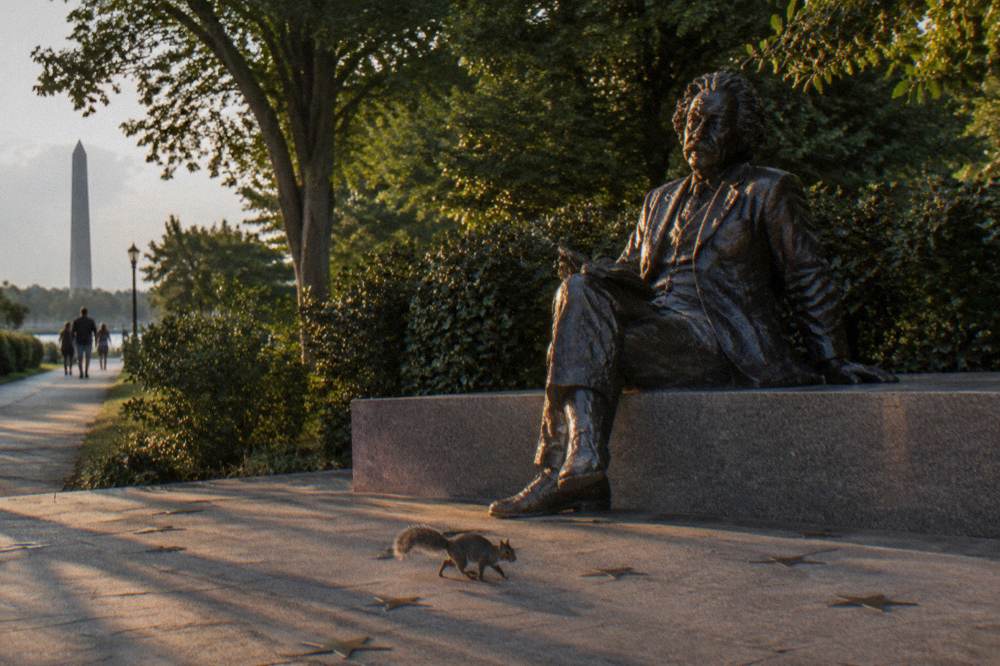
For Washington DC specifically, the picture is unusually easy to check. This site features exactly two GuruWalk listings, both run by the same guide, Lisa: the Walking Tour of DC Monuments, a two-hour daytime walk meeting at the World War II Memorial, and DC Monuments by Moonlight, a 1 hour and 30 minute evening walk meeting at the Albert Einstein Statue. Both are listed in English, both are free to book with tips at the end, and both carry review histories long enough that a handful of fake reviews could not move the numbers much. A 4.4 across 324 reviews is a genuinely good score on a genuinely large pool for a free tour platform; a 4.26 across 65 reviews is a solid score on a smaller pool. Neither figure is this site's opinion, both come straight from the guides' own GuruWalk pages.
How Does GuruWalk's Pay-What-You-Want Model Actually Work?
The model is simple: booking is free, the tour runs, and at the end you tip the guide whatever you think the walk was worth. GuruWalk makes its money from the guides' side of the ledger, not by charging walkers an upfront price. The guide sets a suggested tipping range on their listing, and the walker decides the final amount in person, which means the incentive runs in the right direction, toward the guide doing a good job.
There is a common misconception that "free tour" means the guide is a volunteer or that the tour is a loss leader for something else. In the standard pay-what-you-want model, the tip is the entire business. A full-time free-tour guide in a major city is running a small operation: they invest in research, route design, and delivery, and they rely on the average tip across a whole group to make it pay. This is why experienced walkers treat the tip as a real transaction, not a courtesy, and it is why this site's tipping guide for DC free walking tours goes into amounts in detail rather than waving it away with "tip what you feel."
The booking flow itself is where the platform's legitimacy is most visible. When a walker books a GuruWalk listing, they get a confirmation with the meeting point, the duration, and the guide's name, and the guide gets a headcount so they know how many people to expect. If a guide cancels, the platform's review system records it, and a guide who cancels repeatedly carries that record on their own page for every future walker to see. That is the practical difference between a marketplace with attached reputations and a random flyer on a hostel wall: on a marketplace, bad behaviour compounds against the person who did it.
It is also worth being clear about what the model does not do. It does not take payment at booking, which means there is no money at risk if plans change. It does not lock a walker into a group size, since free tours generally cannot cap attendance the way ticketed tours can. And it does not guarantee a small group, which is the single most common disappointment in free-tour reviews across the industry: a walker expecting an intimate stroll finds themselves in a crowd of forty on a July Saturday. The DC listings reviewed here run two hours and 1 hour and 30 minutes respectively, which is a manageable commitment either way, but anyone who wants a private experience should book a private tour, not a free one.
What Do The DC Review Numbers Actually Say?
The Daytime Monuments Walk, National Mall, run by guide Lisa on GuruWalk, is rated 4.4 across 324 GuruWalk reviews, and the Monuments By Moonlight evening walk is rated 4.26 across 65 GuruWalk reviews. Those are healthy figures for free-tour platforms, where averages typically sit lower than paid tours because expectations run high against a zero booking price.
A rating means nothing without its pool, so start with the size. Three hundred and twenty-four reviews is a substantial history for a free walking tour in any city, and it means the score reflects many seasons, many weather conditions, and many group sizes. Sixty-five reviews is a smaller but still meaningful pool, and it is the honest number to print rather than a rounded impression of "well reviewed." Neither walk is a brand-new listing with three reviews from friends, and neither is a stale listing that has not been walked in years: both were live on GuruWalk as of this site's verification pass.
The daytime walk is the flagship, and it earns that status on geography alone. It meets at the World War II Memorial and spends about two hours covering the National Mall's monument corridor, the stretch between the WWII Memorial and the Lincoln Memorial that holds the Vietnam Veterans Memorial, the Korean War Veterans Memorial, and the Reflecting Pool. This is ground a visitor would walk anyway, and the value a guide adds is context: what the gold stars on the WWII Memorial's Freedom Wall represent, why the Vietnam Veterans Memorial's design was controversial, and how the Lincoln Memorial's inscriptions were chosen. The Mall's monuments are free to visit unguided, which is exactly why a free guided walk is such a natural pairing, a fact this site covers in depth in its National Mall walking tour guide.
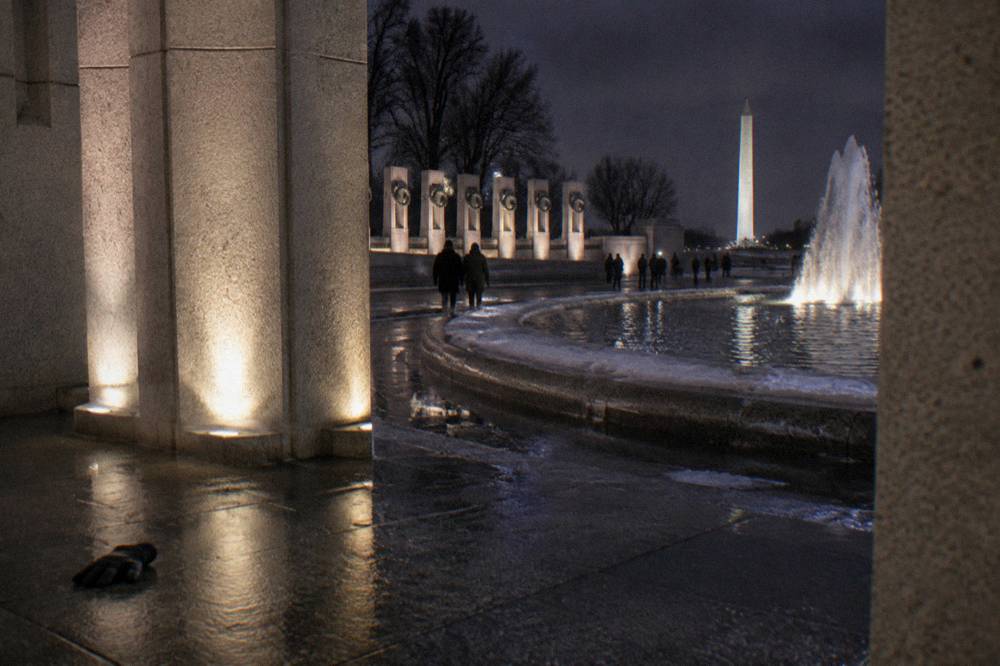
The evening walk tells a different story on purpose. At 1 hour and 30 minutes it is shorter, it meets at the Albert Einstein Statue, and its whole appeal is the Mall after dark, when the monuments are floodlit, the crowds thin out, and the temperature in summer drops to something humane. A 4.26 across 65 reviews suggests a walk that most people enjoy and a few find underwhelming, which is the normal shape of a free-tour review distribution. The honest read is that the daytime walk is the safer bet for a first visit and the moonlight walk is the better atmosphere play for a second evening in the city.
How Does GuruWalk Compare With Freetour.com In DC?
GuruWalk is not the only legitimate free-tour platform in Washington DC. Freetour.com lists a separate Mall walk, Free Tour The Mall Washington DC, run by operator Blue Umbrella Tours and rated 8.7 out of 10 across 143 freetour.com reviews. The platforms are competitors with the same model, and the main practical difference for a DC visitor is which guide and which route each listing offers.
The two platforms work almost identically from the walker's side: free booking, show up at the meeting point, tip at the end. Freetour.com rates its tours out of 10 rather than out of 5, which is why this site always prints the scale alongside the number, "8.7 out of 10 across 143 freetour.com reviews," rather than converting it into stars and quietly making it look better or worse than a GuruWalk score. Comparing a 10-point scale to a 5-point scale without saying so is one of the oldest tricks in travel affiliate content, and it is a trick this site refuses to use.
The Blue Umbrella walk is a 2 hours and 30 minutes tour, which makes it the longest of the three walks this site features, and it is the only one of the three not run by guide Lisa. For a traveller deciding between platforms, the honest framing is not "which platform is legit" but "which walk fits your day": the GuruWalk daytime monuments walk at two hours, the moonlight walk at 1 hour and 30 minutes for evenings, or the Blue Umbrella Mall walk at 2 hours and 30 minutes for a longer, different guide's take on the same ground. This site's GuruWalk versus freetour.com comparison for Washington DC lays the differences out side by side.
There is one structural point worth knowing about the free-tour industry generally, because it explains why platforms compete on review counts at all. Guides can and sometimes do list the same tour on multiple platforms, and platforms compete for guides the way any marketplace does. None of that affects legitimacy in either direction. What matters to a walker is that the listing is live, the reviews are attached to that specific listing, and the meeting point is a real place a person can stand at. All three DC walks this site features pass that test.
What Can Go Wrong, And How Do You Avoid It?
The realistic risks on a free walking tour are a no-show guide, a group far larger than expected, tipping pressure, or a walk that is really a shop-to-shop detour. All four are avoidable with the same habits: book through the platform rather than off-platform, read recent reviews, confirm the meeting point the day before, and treat the tip as a payment you control rather than a demand you must meet.
The table below is the honest failure-mode map for the model, with the DC-specific reality for each risk.
| Risk | How it happens | Reality for the DC walks featured here |
|---|---|---|
| Guide no-show | Overbooking, illness, or a listing abandoned while still live | Both GuruWalk listings verified live; a no-show is recorded in platform reviews and hurts the guide's own page |
| Oversized group | Free tours cannot cap attendance in peak season | Book the first slot of the day or a weekday walk; the moonlight walk's later hour thins crowds naturally |
| Tipping pressure | A guide names a high "standard" tip at the walk's end | Tipping norms for DC walks are covered in this site's tipping guide; the tip stays the walker's decision |
| Hidden shopping detour | Tour routes built around partner shops | The Mall corridor has no commercial stops; the walks cover federal monuments and memorials only |
None of these risks is a reason to avoid free tours, they are a reason to use the platform's tools. Reviews on GuruWalk are attached to the specific listing, not to the guide in the abstract, so a walker can see whether recent guests actually showed up and got what was promised. The meeting points for the DC walks are concrete: the World War II Memorial for the daytime walk, the Albert Einstein Statue for the moonlight walk. Both are on or beside the National Mall, both are free to stand at, and both are easy to reach by Metro.
One more habit closes most of the remaining gap: check the listing the day before. Free tours run in weather, guides occasionally shift meeting points for construction or events, and a listing that was live in spring can pause in a slow season. A one-minute check of the guide's GuruWalk page before bed costs nothing and eliminates nearly every surprise that generates bad free-tour reviews. It is also worth remembering that the walks are genuinely free to abandon: if a walk is not delivering, a walker can leave at any point, because nothing was prepaid.
Is A Free Walking Tour In DC Actually Worth It?
For most first-time visitors, yes, because the National Mall's monuments are free to visit but heavy on context, and a two-hour guided walk delivers that context at a price the visitor controls. The walk covers ground a visitor would walk anyway, the WWII Memorial to Lincoln Memorial corridor, and the tip at the end typically costs less than a ticketed tour would.
The economics of DC make this an easier call than in most cities. The city's core attractions are overwhelmingly free: the Smithsonian's twenty museums and the National Zoo, the National Gallery of Art, the monuments and memorials themselves. Destination DC counted a record 27.2 million visitors in 2025, and the vast majority of them came for attractions that charge nothing at the gate. A free walking tour fits that ecosystem perfectly, it is the guided layer on top of a free city, not a paid exception inside it.
The comparison that matters is not free tour versus no tour, it is free tour versus paid tour. A ticketed DC tour costs real money and delivers a guaranteed group size and often a headset; a free tour costs a tip and delivers a guide whose income depends on the walk being good. For a traveller who wants structure and a fixed price, paid wins. For a traveller who wants flexibility, a social group, and the ability to pay based on what was actually delivered, the free model wins. This site's longer take on that trade-off, with the DC specifics, is in is a free walking tour worth it in Washington DC.
There is a timing angle too, and it is where the moonlight walk earns its keep. The National Mall in July midday is an endurance event; the same corridor after dark is one of the best free evening experiences in the country. The monuments are lit, the heat has broken, and a 1 hour and 30 minute walk in that window is genuinely a different product from the daytime version, not a lesser repeat of it. A visitor with two evenings can honestly do both walks and see the same ground in two completely different moods, which is more than most cities offer at any price.
The final third of the question is trust in the directory itself, so it deserves a plain statement: Free Things To Do In Washington DC operates no tours, employs no guides, and takes no bookings. Every walk listed here belongs to its own operator on its own platform, and every rating printed here comes from that platform's own review system. The site's job is verification and honest description, and its roster is exactly three walks, not dozens.
Common Questions About GuruWalk In Washington DC
Is GuruWalk Legit?
Yes. GuruWalk is an established free-tour platform, and its two Washington DC listings are real, live walks with substantial review histories: the daytime monuments walk rated 4.4 across 324 GuruWalk reviews and the moonlight walk rated 4.26 across 65 GuruWalk reviews, both run by guide Lisa.
Do you have to pay anything upfront on a GuruWalk tour?
No. Booking is free and nothing is charged at reservation. The guide is paid by tips at the end of the walk, at whatever amount the walker decides. GuruWalk makes its money from the guides' side, not from an upfront fee charged to walkers.
How much should you tip on a free walking tour in DC?
Treat the tip as the tour's real price. Common practice on pay-what-you-want walks is to tip based on the walk's length and quality, with the guide's suggested range on their GuruWalk listing as a starting point. This site's DC tipping guide covers amounts in detail.
Can a GuruWalk guide cancel on you?
Yes, a guide can cancel, as with any independently run tour. The protection is that cancellations and no-shows show up in the listing's own reviews, which hurts the guide's future bookings. Confirming the listing the day before removes most of the practical risk.
Is GuruWalk better than freetour.com for DC?
Neither platform is objectively better; they are competitors running the same model. For DC, the choice comes down to the specific walk: GuruWalk carries guide Lisa's two walks, while freetour.com carries Blue Umbrella Tours' Mall walk, rated 8.7 out of 10 across 143 freetour.com reviews.
Are the DC GuruWalk tours suitable for families?
Yes, with realistic expectations. The daytime walk runs about two hours from the World War II Memorial, and the moonlight walk runs 1 hour and 30 minutes from the Albert Einstein Statue. Both are free to book, so a family can test the format on a first walk without financial risk.