Is The Bureau Of Engraving And Printing Tour Free?
Yes, the Bureau of Engraving and Printing tour is free, but it requires a timed ticket. Here is how the slot system works, what you see on the tour, and how to pair it with a free Mall walk.
Is The Bureau Of Engraving And Printing Tour Free?
Yes, the tour of the Bureau of Engraving and Printing is free, but it is not a walk-in attraction. Entry is by timed ticket only, so a visitor who shows up without a slot will be turned away even though no admission fee exists. The guiding itself, the gallery, and the whole visitor experience cost nothing, which makes it one of Washington DC's genuinely free things to do, provided you reserve your place ahead of time.
That combination, free entry plus a mandatory reservation, trips up a lot of visitors, and it is worth being precise about what it means. The Bureau does not charge admission the way a private museum does. There is no adult price, no child price, no discount tier. What controls access is a ticketing system that allocates places in timed groups, because the gallery overlooking the production floor has limited capacity and the working facility cannot absorb an open-ended crowd.
The distinction matters because DC is full of attractions that are free in one sense and conditional in another. The Washington Monument's grounds cost nothing, but going up requires a timed ticket. The Smithsonian's National Museum of African American History and Culture is free, but it also requires a timed-entry pass. The Bureau of Engraving and Printing belongs squarely in that same family: free at the point of entry, gated by a reservation. Calling it simply "free" without the ticket caveat sets a visitor up for a wasted trip.
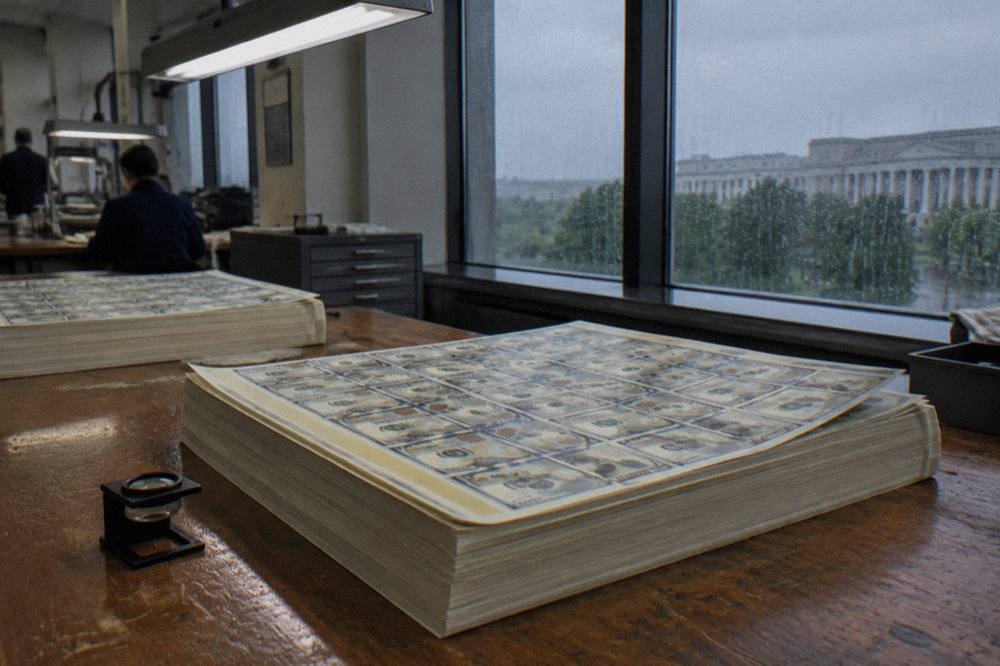
The reward for that small piece of planning is unusual. This is a working printing facility, the federal agency that produces billions of dollars in currency each year, and the tour route is built around seeing that production in progress. Very few government agencies open their operational floors to the public at all, let alone at no charge. The visitor experience is described on the Bureau's own site at the Bureau of Engraving and Printing's official page, which is where current ticketing details should always be confirmed before a visit.
If you are building a day around the Bureau, it pairs naturally with the free monuments corridor nearby, and a guided walk is the most efficient way to cover that ground:
How Does The Ticket System Work At The Bureau Of Engraving And Printing?
The Bureau distributes tour places through a timed ticket system rather than selling them. Tickets are free, but every visitor needs one, and the practical effect is that the tour behaves like a reserved event rather than an open museum. Visitors should expect to book a specific date and time in advance, and to arrive within their window, because the whole system exists to keep group sizes matched to the gallery's capacity.
The details of how and when tickets are released, including how far in advance they can be booked and whether any same-day options exist, are set by the Bureau and can change between seasons, so the operator's own page is the authoritative source. What stays constant is the principle: no ticket, no tour, regardless of the fact that the tour is free. This is the same pattern the National Park Service uses for the Washington Monument, where free same-day timed tickets are handed out at the Monument Lodge on a first-come, first-served basis and advance reservations carry a small booking service fee through recreation.gov. The Bureau's system is its own, but the logic is shared across DC's ticketed free attractions.
A useful way to think about the difference between free and unconditioned is to sort the city's major no-cost attractions by what, if anything, stands between a visitor and the door:
| Attraction | Admission cost | What you need beyond showing up |
|---|---|---|
| Lincoln Memorial | Free | Nothing, open around the clock |
| National Museum of Natural History | Free | Nothing, standard opening hours apply |
| Bureau of Engraving and Printing tour | Free | A timed ticket for a specific slot |
| National Museum of African American History and Culture | Free | A timed-entry pass, released in advance and same-day |
| Washington Monument ascent | Free | A timed ticket, free at the Lodge or a $1 service fee in advance |
| White House tour | Free | A request through a member of Congress |
The pattern in that table is the single most useful planning insight for a DC trip on a budget. The city's headline attractions are overwhelmingly free, but a meaningful subset of them has a reservation layer, and the reservation, not the money, is what you need to arrange. A visitor who spends ten minutes booking slots the week before a trip often gets to see more than a visitor who assumes everything is walk-up.
For context on just how much free capacity DC offers around the ticketed gems: the Smithsonian Institution alone runs 20 museums plus the National Zoo, with ten museums sitting directly on the National Mall and six more within about a mile and a half of it, according to the Smithsonian's own institutional factsheet. The Bureau's ticketed tour sits inside that dense free-attraction corridor, which is exactly why pairing it with other stops works so well.
What Do You Actually See On The BEP Tour?
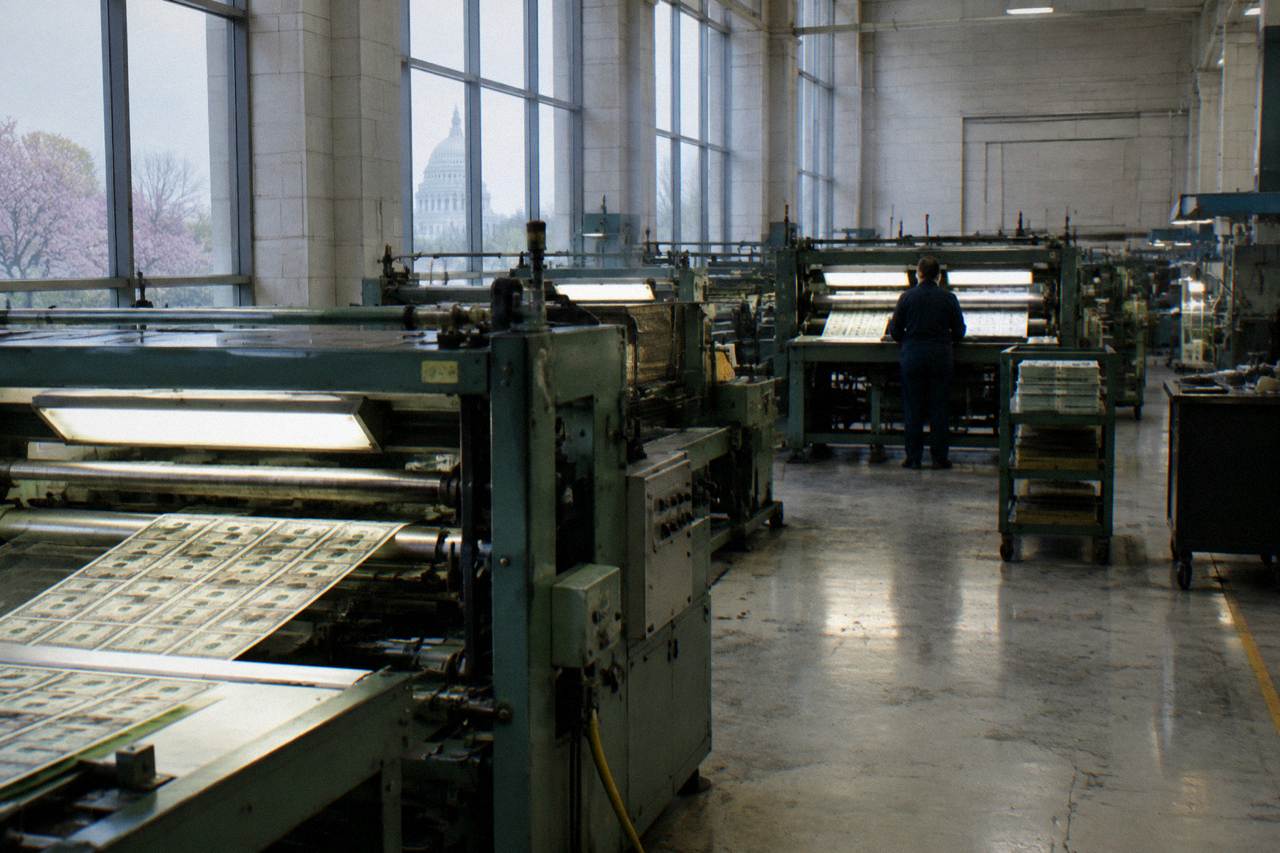
The core of the visit is a gallery view over the currency production floor, where visitors watch the printing process in operation: sheets of currency moving through the presses, the inspection stages, and the sheer scale of a facility whose output is measured in billions of dollars. The tour is built around the production being live, so the experience centers on watching real work rather than reading exhibits about it.
The Bureau is a working industrial facility, not a museum with a factory theme. That shapes everything about the visit. The route is designed so that groups can observe the production line from a safe vantage point, and the emphasis falls on process: how a sheet of paper becomes legal tender, how quality control works at scale, and how the physical printing of money is organized as an industrial operation. It is a rare look inside a part of the federal government that almost never opens its doors.
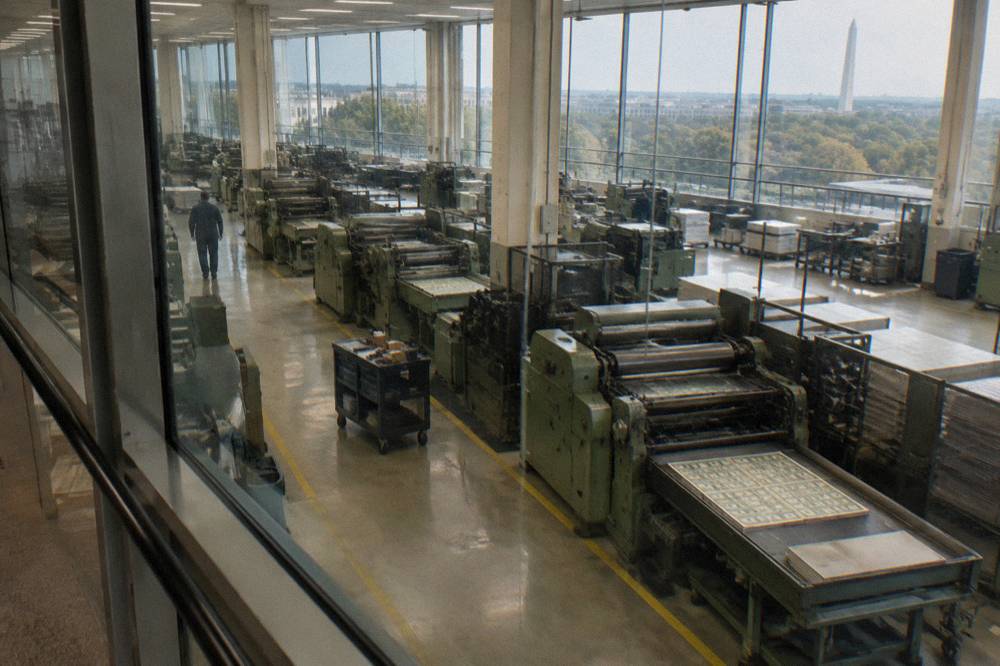
Two practical points follow from the industrial setting. First, the tour's appeal depends on production running, and a working facility has schedules, maintenance periods, and capacity realities that a static museum does not, so checking the Bureau's own page for current tour status before you go is genuinely part of the plan rather than boilerplate. Second, because the free tour is ticketed, it draws a steady flow of visitors, and the timed-slot system is what keeps the gallery from feeling like a crush, which is a small mercy during peak tourist seasons.
The scale of demand is worth appreciating. Destination DC reported a record 27.2 million visitors to the city in 2025, generating a record $11.9 billion in visitor spending, and a large share of those visitors concentrate on the National Mall corridor where the Bureau sits. Free, ticketed attractions are the city's main tool for managing that volume without putting up paywalls, which is why the reservation layer exists at the Bureau, at NMAAHC, at the Washington Monument, and at the Holocaust Memorial Museum alike.
How Do You Pair The BEP Tour With A Free Walking Tour Of The Mall?
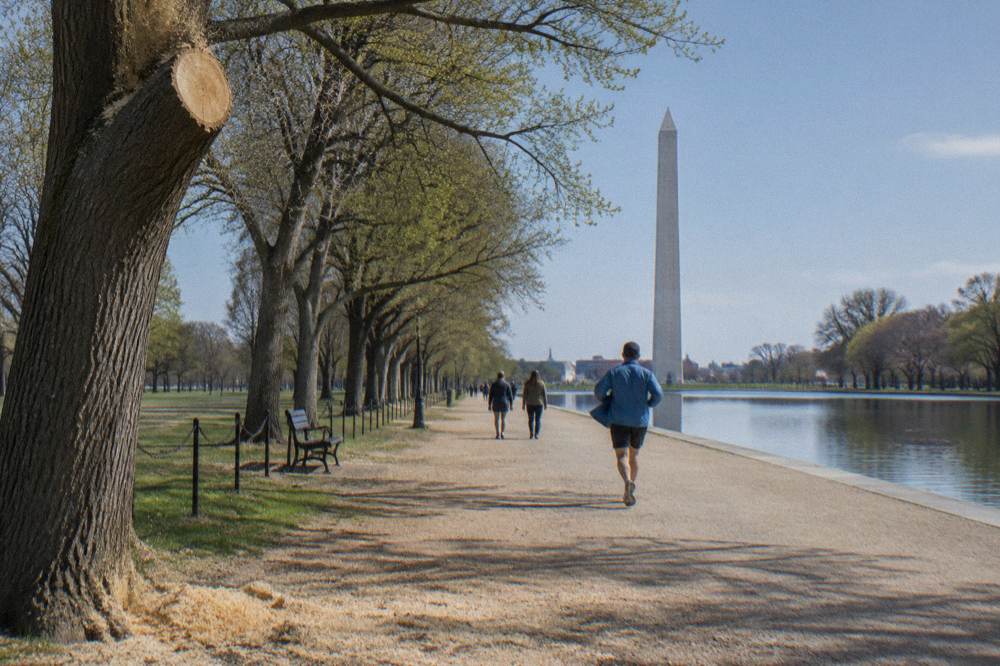
The Bureau sits close to the National Mall's monument corridor, so the natural move is to book a morning tour slot and spend the rest of the day walking the Mall's free memorials on foot. A free, pay-what-you-want guided walk covers the World War II Memorial, the Lincoln Memorial, and the surrounding monuments in about two hours, which stacks neatly against a timed BEP ticket to fill a full day at zero admission cost.
That stacking logic is the heart of a cheap DC day. The ticketed free attractions are point visits with fixed times, while the Mall itself is a free, open-air corridor you can walk any time, so a guided walk is the flexible half of the schedule. The Daytime Monuments Walk, National Mall, run by guide Lisa on GuruWalk, is rated 4.4 across 324 GuruWalk reviews, runs about 2 hours in English, and meets at the World War II Memorial, which puts its starting point squarely in the same corridor a visitor is already in for the Bureau. Because it is pay-what-you-want, the walk costs nothing up front; tips are covered in detail in the site's free walking tour tipping guide, which explains how the model actually works for the guide.
A day built this way has a pleasant rhythm. The BEP slot anchors the schedule, the walk fills the hours around it, and everything in between, the memorials, the Smithsonian museums that do not require passes, the Tidal Basin, costs nothing. Visitors who want a deeper dive into the whole corridor can follow the site's guide to the free monuments and memorials on the National Mall, which maps out the full set of no-cost stops in walking order.
The same corridor also carries the city's other big free-entry institutions. The U.S. Capitol Visitor Center, the Library of Congress, and the National Archives Museum are all free and all reachable from the Mall on foot or by a short Metro ride, and the site's guide to free government tours covering the Capitol, Library of Congress, and Archives lays out how to combine them with the Bureau in a single sightseeing arc. A visitor who reserves a BEP slot, books nothing else, and walks the rest will spend almost nothing but shoe leather.
When Is The Best Time To Take The BEP Tour?
The best time to take the Bureau of Engraving and Printing tour is a weekday morning outside the peak spring and summer visitor seasons, because ticket availability is the constraint rather than cost. Spring brings the cherry blossom crowds and the heaviest demand for every ticketed free attraction in the city, so visitors in that window should book their slot as early as the system allows and treat the reservation as the first item planned for the whole trip.
The cherry blossom season deserves its own warning because it compresses an enormous number of visitors into a short window. The National Park Service recorded peak bloom on March 26, 2026, with the main blooming window running roughly March 26 to April 2, and that week reliably puts maximum pressure on every free ticketed attraction within walking distance of the Tidal Basin. The Bureau is in that radius. Anyone visiting during the bloom should assume slots go fast and plan the rest of the day around the walk, not the other way round; the site's guide to free things to do in Washington DC in cherry blossom season covers the full picture.
Outside the bloom, the calculus is simpler. Weekday mornings tend to be the quietest for the ticketed free attractions generally, and the Bureau, as a working facility, is most alive on days when production is in full swing, which favors midweek visits over weekends. The practical advice is the same for every season: confirm the current tour schedule on the Bureau's own page, book the slot the moment booking opens, and hold the rest of the day loosely, since the free Mall corridor absorbs whatever time is left over.
There is a second, quieter season to consider. Late fall and winter strip the crowds out of the Mall corridor while leaving every free attraction fully open, and a visitor who takes the BEP tour in, say, a quiet January will experience the same gallery, the same presses, and the same zero-dollar admission with far less competition for slots. The trade is weather: the walking portion of the day is better in spring and fall, even if the ticketed portion is easier in the cold months.
What Are The Alternatives If BEP Tickets Are Gone?
If Bureau of Engraving and Printing tickets are sold out, the strongest alternatives are the other free ticketed attractions nearby, including the Washington Monument's timed ascent and the Smithsonian museums that require no pass at all. The National Museum of Natural History, the National Museum of American History, and the National Gallery of Art are all walk-up free, so a day that loses its BEP slot does not lose its plan, it just swaps the anchor.
The swap is easier than it sounds because the free supply in this corridor is deep. The walk-up-free Smithsonian museums alone give a visitor more than a day's worth of no-cost sightseeing within a short walk of the Bureau, and the site's guide to the free museums in Washington DC sorts them by which need passes and which do not. The Washington Monument is the closest analogue to the Bureau experience: free, timed, and offering a view rather than a production floor, with free same-day tickets at the Lodge and a $1 per-ticket service fee for advance booking through recreation.gov, as set out on the National Park Service's Washington Monument fees page.
For visitors who specifically wanted the guided-experience half of the day, the free walking tour roster covers the same ground regardless of what happens with BEP tickets. The Daytime Monuments Walk, National Mall on GuruWalk meets at the World War II Memorial and runs about 2 hours, and the evening option, DC Monuments by Moonlight, rated 4.26 across 65 GuruWalk reviews, covers the same corridor after dark in about an hour and a half, meeting at the Albert Einstein Statue. A third option, Blue Umbrella's Mall Walk from freetour.com, rated 8.7 out of 10 across 143 freetour.com reviews, runs about two and a half hours with a different operator's take on the same ground. All three are pay-what-you-want, so none of them needs to be booked in the way a timed BEP slot does, though checking the operator's listing for the current schedule is always wise.
One honest note on expectations: none of these walks is on the Bureau's route in any official sense. The walks cover the West Mall monument corridor, the World War II Memorial, the Lincoln Memorial, and their neighbors, and the Bureau is a separate stop you reach on your own before or after. The right framing is a pairing, not a package: book the BEP slot, then join a walk in the hours around it.
Common Questions About The Bureau Of Engraving And Printing Tour
Is The Bureau Of Engraving And Printing Tour Free?
Yes, the tour is free, but it requires a timed ticket. There is no admission fee of any kind; the reservation, not money, is what controls entry. Confirm current ticketing details on the Bureau's own page before your visit.
Do You Need A Ticket For The Bureau Of Engraving And Printing Tour?
Yes. Entry is by timed slot only, so a visitor who arrives without a reservation will not get in even though the tour costs nothing. Book your slot in advance, especially in spring and summer when demand across the Mall corridor peaks.
Can You Just Walk Into The Bureau Of Engraving And Printing?
No. Unlike most of the Smithsonian museums on the Mall, which are walk-up free, the Bureau's tour is a ticketed experience inside a working federal facility. The ticket is free, but it must be arranged ahead of time.
How Long Does The BEP Tour Take?
The visit is a short, structured experience rather than a full museum day, since the route centers on the gallery overlooking the production floor. Plan the rest of your day around it: a free Mall walking tour of roughly two hours fits comfortably alongside a timed BEP slot.
Is The Bureau Of Engraving And Printing Near The National Mall?
Yes, it sits in the same corridor as the Mall's monument core, which is why it pairs so well with a free walking tour. The Daytime Monuments Walk meets at the World War II Memorial and covers the surrounding memorials on foot, a natural fit before or after a BEP slot.
What Happens If BEP Tickets Are Sold Out?
Fall back on the walk-up-free Smithsonian museums nearby, or try the Washington Monument, which offers free same-day timed tickets at the Lodge. The free Mall walking tours are pay-what-you-want and need no advance booking, so the guided half of your day survives any ticket disappointment.
The short version: the Bureau of Engraving and Printing tour is one of the best free things in a city full of them, and the only price of admission is a reservation. Book the slot, walk the Mall, and the day costs almost nothing. For the wider picture, Free Things To Do In Washington DC maps out the full no-cost catalogue, from the unconditional freebies to the conditional ones like this one.