Why Is The Smithsonian Free?
Why the Smithsonian charges nothing at the door, which of its museums need a timed pass, and how free admission shapes the way Washington DC feels for visitors.
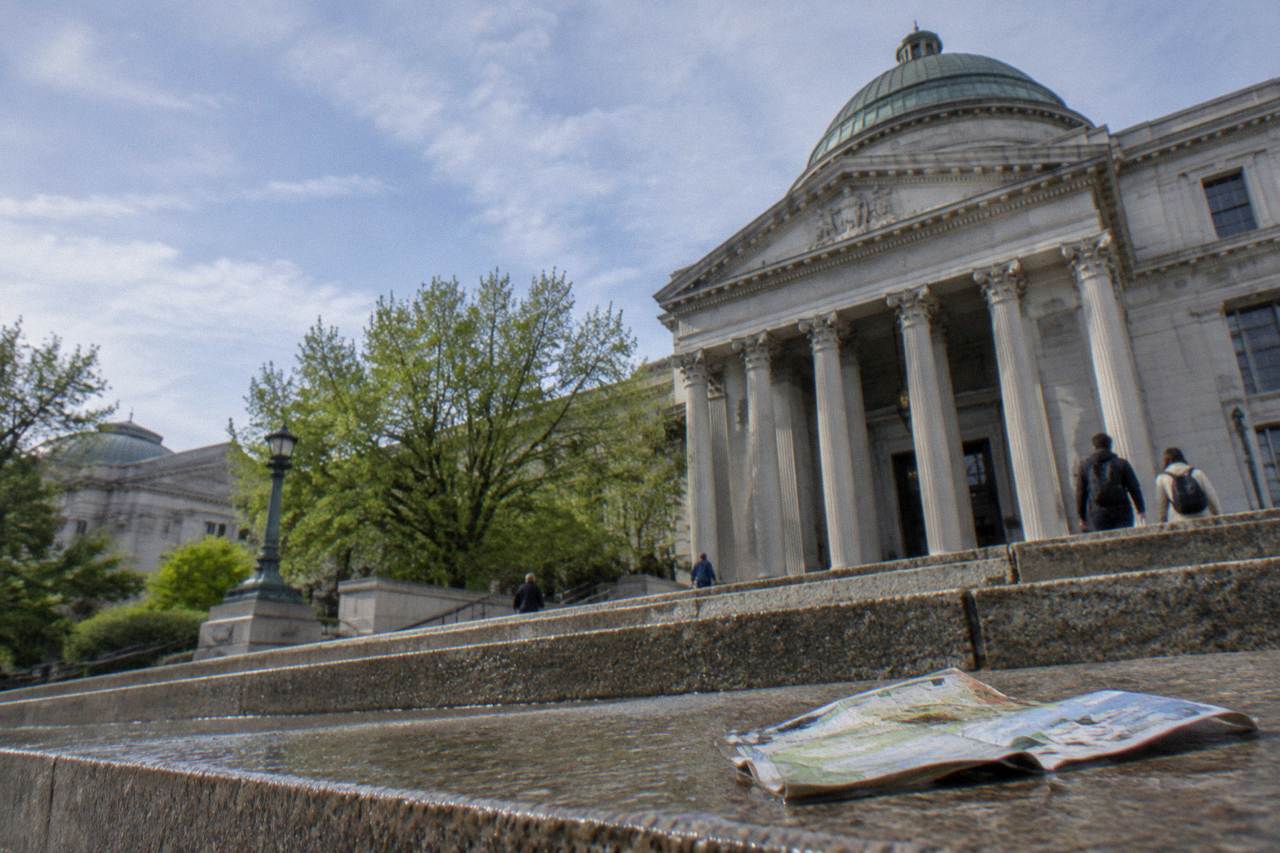
Why Is The Smithsonian Free?
The Smithsonian is free because it was built as a public trust rather than a commercial attraction: its museums are funded to be open to everyone, so no admission charge exists at the door for the general collection. The rule covers 20 museums plus the National Zoo, though a small number of venues attach conditions, and the Smithsonian itself, not the city, sets that policy.
The short answer is institutional design. The Smithsonian operates as a trust dedicated to "the increase and diffusion of knowledge," and that mission has always been read as including open physical access. Where a commercial museum prices tickets to fund its operations, the Smithsonian's model treats the collection as a public inheritance, closer in spirit to a national library than to a theme park. The result is one of the few capital cities in the world where a visitor can spend a full week inside major museums without buying a single general-admission ticket.
That does not mean everything is unconditional. The institution's own museums directory lists 20 museums plus the National Zoo, and the free-entry principle holds across almost all of them, but two of the most popular venues, the National Museum of African American History and Culture and the Smithsonian Air and Space Museum's DC building, manage crowds with free timed-entry passes. The passes cost nothing; they just reserve a slot. We come back to that below, because it is the single most common trip-planning surprise in Washington.
The scale matters too. Ten Smithsonian museums sit directly on the National Mall, six more are within about 1.5 miles of it, two are in New York City, and the Udvar-Hazy Center sits out in Virginia. Free admission at that scale is a deliberate load-bearing feature of the city's tourism economy. Destination DC counted a record 27.2 million visitors in 2025, generating a record $11.9 billion in visitor spending, and the no-ticket museum corridor is a large part of what pulls people to the National Mall in the first place.
"Free" gets used loosely in travel content, so here it means admission to the general collection, not that every program or service inside is free. Admission to the general collection is free. That is the promise, and it has held for generations. It does not mean every door inside every building is open without a booking, and it does not mean every service inside a free building is also free. The Smithsonian's free rule is a statement about access to the collection, not a guarantee that a visit requires zero planning. Getting that distinction right is the difference between a smooth museum day and standing outside a venue you assumed would simply let you in.
If your plan is to pair museum interiors with the outdoor memorials, the free/pay-what-you-want walking tours on this site cover the same ground. All three walks in the roster are free to join.
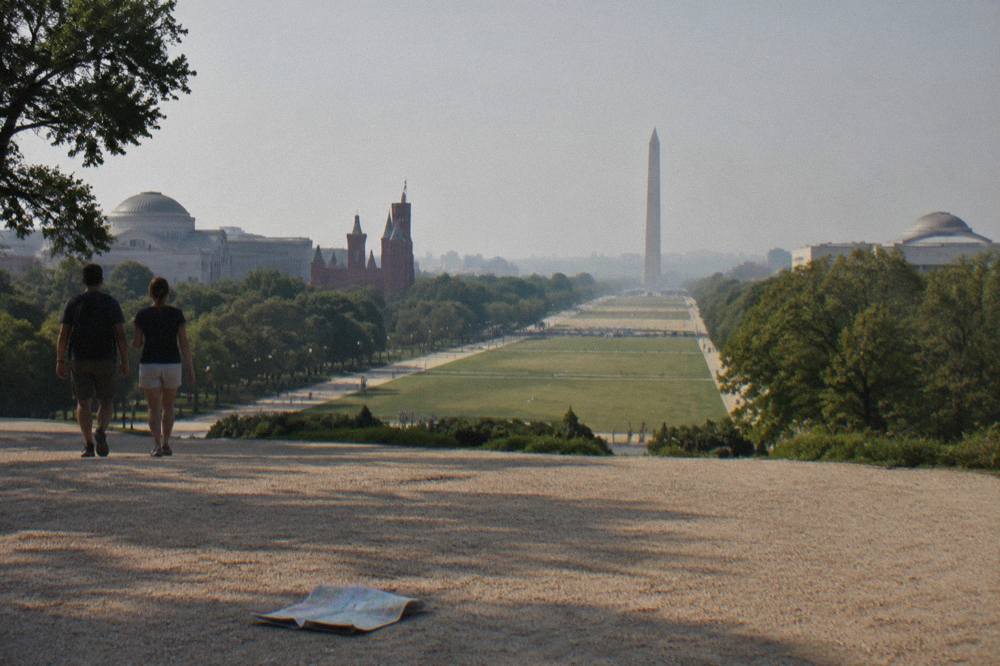
Which Smithsonian Museums Can You Just Walk Into?
Most of them. The National Museum of Natural History, the National Museum of American History, the American Art Museum, the National Portrait Gallery, the Freer and Sackler galleries, the Hirshhorn, the Postal Museum and the Renwick Gallery all admit walk-up visitors with no ticket and no charge. The National Gallery of Art, while technically a separate institution, follows the same free rule.
The walk-up list is longer than most visitors expect. Along the Mall you can move from the Natural History museum to American History to the American Indian museum in a single afternoon, stopping at no desk, booking nothing, paying nothing. Off the Mall, the Portrait Gallery and American Art Museum share a building near the convention center, and the Renwick, a short walk from the White House, is the craft and decorative-arts wing of the same family. All of them run on the open-door model.
| Smithsonian venue | Entry model | What to know |
|---|---|---|
| National Museum of Natural History | Walk-up, free | No ticket needed for general entry |
| National Museum of American History | Walk-up, free | No ticket needed for general entry |
| National Museum of the American Indian | Walk-up, free | No ticket needed for general entry |
| Air and Space Museum (DC building) | Free, timed pass required | Reserve a pass even though admission is free |
| National Museum of African American History and Culture | Free, timed pass required | Passes released up to 30 days ahead or same-day online |
| National Zoo | Free admission, paid parking | Parking is $30 advance / $40 day-of |
The two timed-pass venues are the ones that trip people up, and the reason is crowd management, not money. NMAAHC has been one of the most in-demand museums in the country since it opened, and the pass system is how it keeps the building inside capacity. Passes are available up to 30 days in advance on a rolling basis, and a same-day batch is released online in the morning. The Air and Space Museum's DC building uses the same logic while its long renovation work continues. Neither pass costs anything, which is the point: free admission with a queue-control mechanism is still free admission.
A useful habit for the walk-up venues is to treat them as flex capacity in your day. Because they need no booking, they absorb whatever time the pass venues leave open. If your NMAAHC slot is at 2 p.m., the morning belongs to whichever walk-up museum is nearest your Metro stop, and the afternoon can absorb a second one after you exit. Visitors who plan only the pass venues and leave the rest to chance often end up walking less and seeing more, simply because the open doors let you improvise. The walk-up model rewards wandering in a way almost no other major museum city does.
If you want the deep dive on any single venue's rules, the site's dedicated pieces on the Air and Space Museum's free entry and the National Zoo's parking charges break down each condition separately.
Once you are back outside, the Mall itself is the other half of the free day. The Daytime Monuments Walk, National Mall is a free, pay-what-you-want walking tour rated 4.40 across 324 GuruWalk reviews on GuruWalk. It runs two hours in English, meeting at the World War II Memorial, and it covers the west-Mall corridor that most museum visitors walk between venues anyway. Booking it costs nothing up front.
The walk and the museums slot together naturally in either order. A morning inside the Natural History or American History museum followed by an afternoon walk west along the memorial corridor is the classic DC day, and reversing it, monuments first while the light is good and museums after, works just as well in summer when the Mall gets hot by midday. Because the tour is pay-what-you-want, it can sit at either end of the schedule without changing the budget.
Where Does The Smithsonian's Money Actually Come From?
The institution is funded by a mix of federal appropriation and its own endowment income, with the federal share covering a large part of core operations. That hybrid model is what allows free admission: no museum's door revenue has to pay its light bills, so no museum needs to charge at the door.
The Smithsonian began with a private gift. A British scientist, James Smithson, left his estate to the United States for the founding of an institution dedicated to the increase and diffusion of knowledge, and the organization that grew from that bequest still carries his name. What started as one man's legacy has become a public-private hybrid: Congress appropriates federal funds toward the institution's operations, while the endowment, private donations and grants fund much of everything else, from new buildings to research programs.
That structure explains a quirk visitors often notice. The Smithsonian is not a government department in the way the National Park Service is, even though many of its neighbors on the Mall are federal. It is a trust instrumentality of the United States, which in practice means it operates with public money and public accountability but with a governing board structure of its own. Free admission sits inside that bargain: the public has already paid, in a sense, so the door stays open.
It also explains why the free rule survives budget cycles. Because the funding model is mixed rather than wholly appropriated, a single bad appropriations year does not automatically translate into ticket booths, and because the founding mission explicitly frames access as part of the institution's purpose, charging general admission would be a philosophical break, not just a pricing decision. No one at the Smithsonian needs a door take to keep the lights on, so no one has one.
The same logic extends to the research side, which most visitors never see. The Smithsonian is a major scientific research organization, with staff scientists, field programs and collections used by researchers worldwide, and the trust structure funds that work alongside the exhibition halls. The museums are the public face of a much larger operation, and the free door is the visible edge of a funding arrangement that treats the whole enterprise, research included, as a public good. That is why the free rule feels structural rather than promotional: it is not a discount designed to draw crowds, it is the operating model.
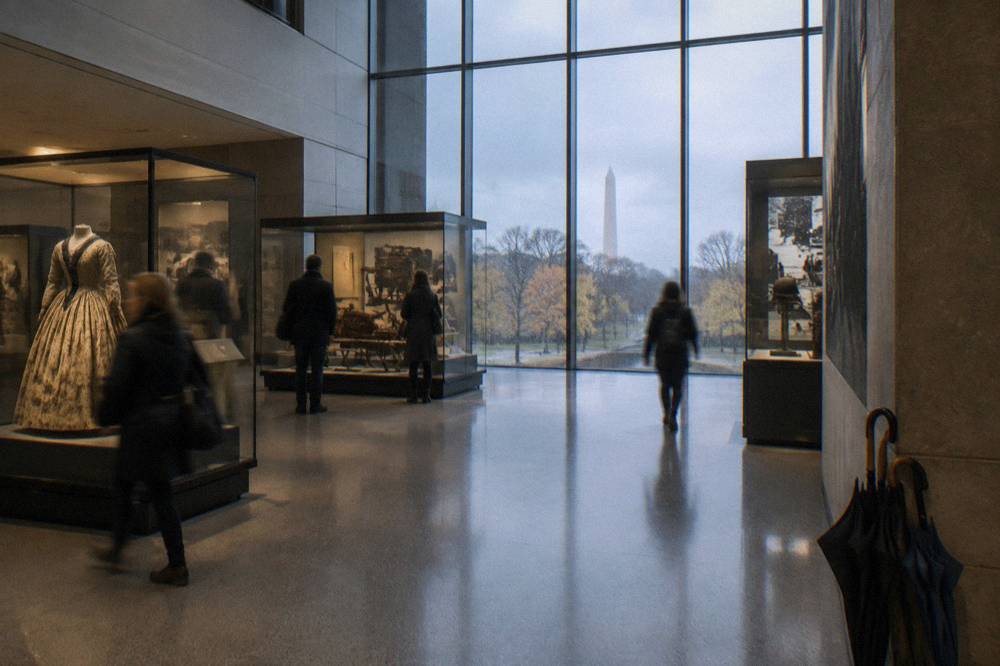
Does Free Admission Have Any Catches?
A few, and they are about capacity rather than money. The Air and Space Museum's DC building and NMAAHC require free timed passes, the National Zoo charges for parking even though admission is free, and special exhibitions or programs can occasionally carry their own separate ticket. None of these change the general rule, but each can change your day.
The catches break into three types. The first is the timed pass, which we have covered: free, but bookable, and genuinely required. The second is the parking trap at the Zoo, where a family can park for $40 on the day and spend nothing on entry, which stings precisely because everything inside is free. The third is the special-case ticket: IMAX films, simulators and one-off exhibitions inside otherwise-free buildings sometimes charge, because those are program add-ons rather than the general collection. The wider set of guides lives on Free Things To Do In Washington DC.
None of this is hidden. The Smithsonian's official factsheet states the free-admission principle plainly, and each museum's own visit page states its own conditions. The planning failure is almost always on the visitor side: people hear "the Smithsonian is free," treat that as "no planning needed," and then discover that the one museum they most wanted, usually NMAAHC or Air and Space, is the one with a pass queue.
The practical fix is to plan around the two pass venues first. If either is on your list, reserve passes the moment your dates are inside the 30-day window, then build the rest of the day, the walk-up museums, the Mall, the memorials, around those fixed slots. Everything else flexes; the pass museums do not.
One more catch deserves a plain-language warning: the free rule is per-institution, and DC's museum landscape is not all Smithsonian. The National Gallery of Art is free but separately governed. The National Archives, the Library of Congress and the Capitol Visitor Center are free but federal, each with its own reservation habits. And several private museums in the city charge full price with no free tier at all. Visitors who treat "DC museums are free" as a single blanket rule will eventually hit a door that wants a ticket, so the honest version of the rule is: Smithsonian venues are free, most without conditions, and everything else needs its own check.
For the full condition-by-condition breakdown, the site's guide to free museums in Washington DC lists every venue with its own rule attached, rather than one blanket claim stretched across all of them.
How Does Free Smithsonian Entry Compare To DC's Paid Attractions?
The Smithsonian's free museums sit within walking distance of several genuinely paid attractions, including the International Spy Museum and George Washington's Mount Vernon at $30 for adults, so a DC trip can swing from fully free to fairly expensive depending on which doors you choose. The free tier is deep enough that skipping the paid ones costs a visitor very little.
The contrast is stark because of geography. The Spy Museum sits in the same Penn Quarter blocks as the free Portrait Gallery, and its pricing is dynamic and date-based, with no static figure on its own site, so the honest answer to "how much" is that it varies by day. Mount Vernon, at $30 for visitors 12 and up, is a separate trip down the Potomac and the most expensive line in the standard DC itinerary. Museum of the Bible charges $34.99 for adults, though it runs free admission every Tuesday through May 18, 2027, one of the more unusual conditional-free arrangements in the city.
| Attraction | Cost status | Notes |
|---|---|---|
| Smithsonian museums (most) | Free, walk-up | The default across the majority of venues |
| NMAAHC and Air and Space (DC) | Free, timed pass | Reserve ahead or grab the same-day release |
| International Spy Museum | Paid, dynamic pricing | No static figure; price varies by date |
| Museum of the Bible | $34.99 adult (18-64) | Free every Tuesday through May 18, 2027 |
| George Washington's Mount Vernon | $30 adult (12+) | Small discount for advance online purchase |
The point of the comparison is not that the paid attractions are bad value; several are excellent. It is that Washington is one of the few cities where the free tier is not the consolation prize. The Natural History museum, the American History museum, the Air and Space building once you have a pass, and the National Gallery together form a collection that would be the paid centerpiece of most other capitals. A visitor who spends nothing beyond food and transit is not seeing the second-string version of DC.
That asymmetry also shapes crowd behavior. Because the free museums are the headline rather than the fallback, they fill, which loops back to why the timed-pass system exists at the two most in-demand venues. Free, at DC's scale, means popular, and popular means managed.
There is a budgeting consequence worth spelling out. A family of four that books the Spy Museum and Mount Vernon on the same trip can add well over a hundred dollars to the attraction budget before lunch, while the family next door, inside the Smithsonian corridor, spends nothing at the door at all. Neither family sees a smaller city. The difference is purely which doors they chose, which is why understanding the free map of DC is genuinely a money question and not just trivia.
Can You Extend The Free Day Past The Museums?
Yes, and the monuments are the natural extension: every memorial on the National Mall is free and open around the clock, with no pass and no ticket, and several free walking tours cover that ground on a pay-what-you-want basis. The same free principle that built the Smithsonian's open doors applies to the outdoor Mall end to end.
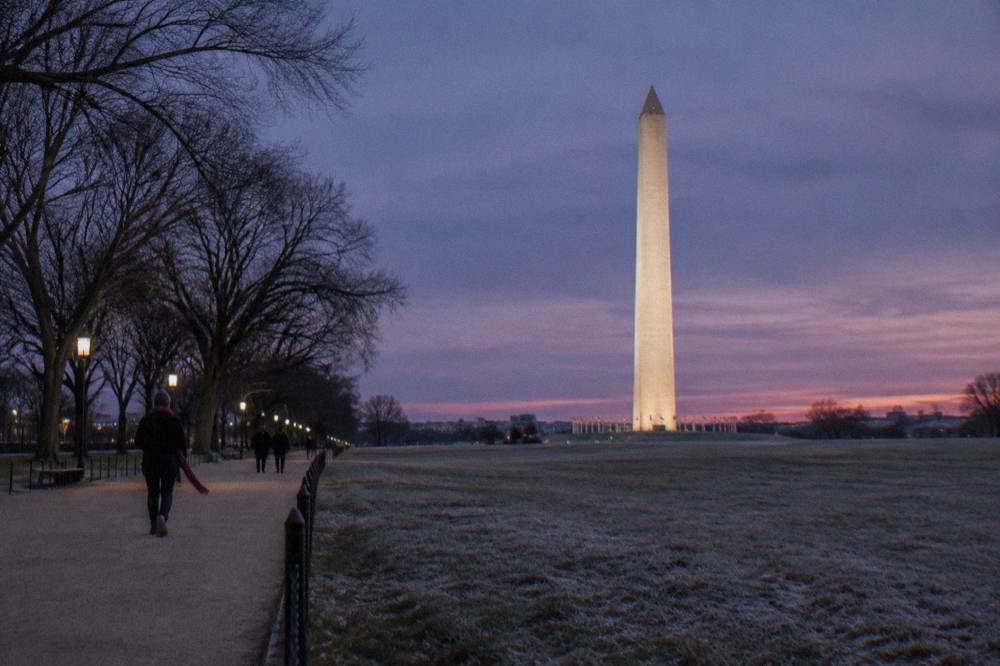
The Lincoln Memorial, the Vietnam Veterans Memorial, the Korean War Veterans Memorial, the World War II Memorial, the Jefferson, FDR and MLK memorials: all free, all the time, no booking. The one exception in the corridor is the Washington Monument, whose grounds are free but whose ascent requires a timed ticket, free at the walk-up lodge on a first-come basis or bookable in advance with a $1 service fee per ticket through recreation.gov. The site's piece on whether the Washington Monument is free covers that split in detail.
The evening version of the monument corridor is a different experience again, and it is where the night walk on this site's roster comes in. Monuments By Moonlight, Evening Walk is a free, pay-what-you-want tour rated 4.26 across 65 GuruWalk reviews, running an hour and a half in English from the Albert Einstein Statue. After a day inside the museums, the lit memorials are the standard DC second act, and the tour format means the decision costs nothing but time.
The third walk in the roster, Blue Umbrella's Mall Walk from freetour.com, rated 8.7 out of 10 across 143 freetour.com reviews, covers the Mall over two and a half hours, and it pairs with the museum day the same way: free to join, tip if you liked it. Between the open museum doors and the open memorials, the honest summary of Washington is that the city's single biggest expense for most visitors is the hotel, not the attractions.
Common Questions About The Smithsonian's Free Admission
Why Is The Smithsonian Free?
The Smithsonian operates as a public trust whose founding mission frames open access to knowledge as part of its purpose, and its funding model combines federal appropriation with endowment income. Because no museum depends on door revenue, general admission has always been free, and the institution has kept that policy across all 20 museums plus the National Zoo.
Are all Smithsonian museums free to enter?
Almost all. Most venues are walk-up free with no ticket, but the National Museum of African American History and Culture and the Air and Space Museum's DC building require a free timed-entry pass. The National Zoo is free to enter but charges for parking.
Do you need tickets for the National Museum of African American History and Culture?
Yes, free timed-entry passes are required for all visitors. Passes are released up to 30 days in advance on a rolling basis, and a same-day batch is released online in the morning. The pass costs nothing; it exists to manage capacity.
Is the Smithsonian funded by the government?
Partly. The institution is a trust instrumentality of the United States, receiving federal appropriations toward core operations while also drawing on its endowment, private donations and grants. The mixed model is what keeps general admission free.
Does free Smithsonian admission include special exhibitions?
Not always. General collection entry is free, but some special exhibitions, IMAX films and programs inside otherwise-free buildings can carry separate charges. Each museum's own visit page lists its current exceptions.
Is the National Zoo free if admission is free?
Admission is free, but parking is not: the Zoo charges $30 booked in advance or $40 on the day. Arriving by Metro avoids the parking charge entirely.