Is The National Museum Of African American History And Culture Free?
Yes, NMAAHC is free, but it requires a timed-entry pass. Here is how the pass system works, what you can see inside, and how to pair the museum with a free Mall walk.
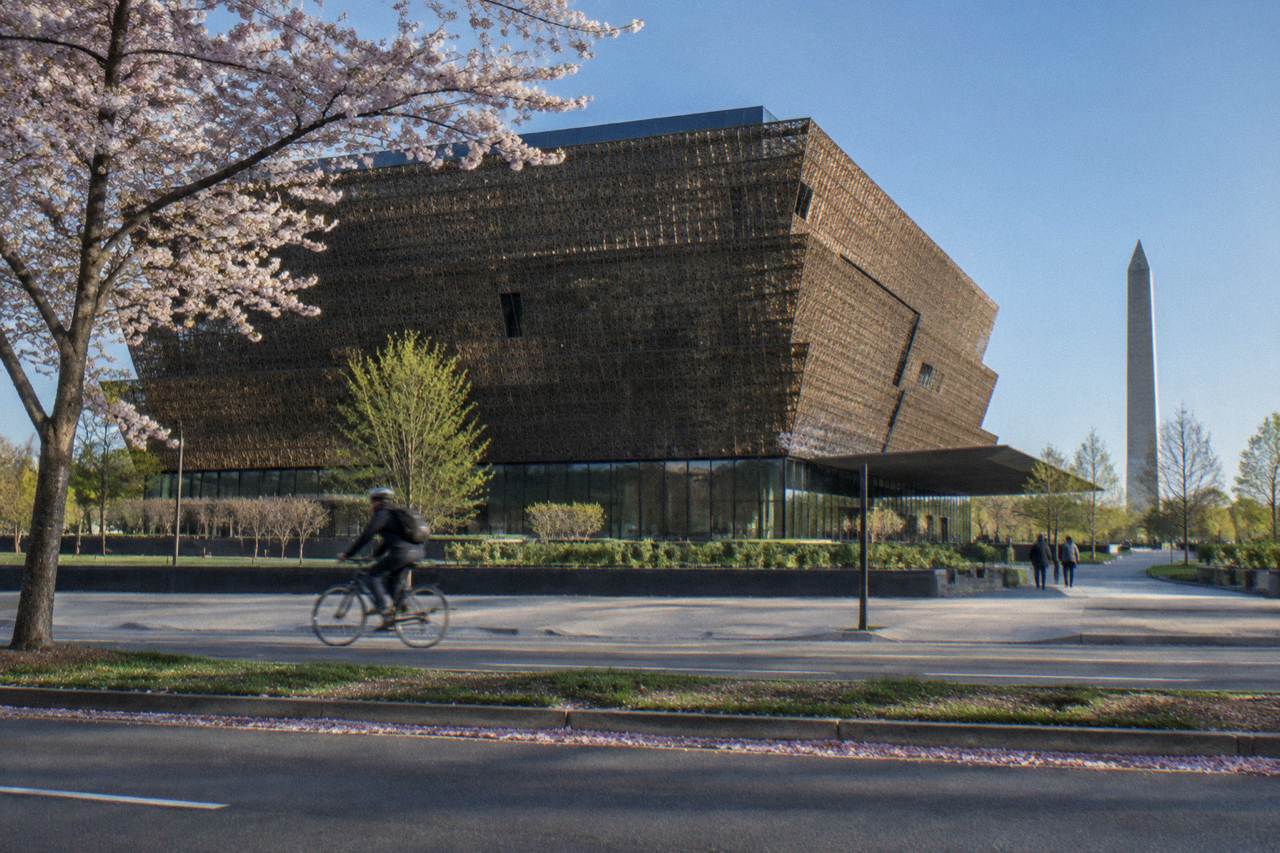
Is The National Museum Of African American History And Culture Free?
Yes, admission to the National Museum of African American History and Culture is completely free. It is a Smithsonian museum, and like the rest of the Smithsonian's DC collection it charges no entrance fee. The catch is that free does not mean walk-in: NMAAHC requires a timed-entry pass for every visitor, so you need to reserve a slot before you can walk through the doors.
That pass requirement is the single most misunderstood thing about this museum. Travelers hear "Smithsonian" and assume the blanket walk-up-free rule applies, and for most Smithsonian venues it does. The National Museum of Natural History, the National Museum of American History, the American Art Museum and the National Portrait Gallery all operate on genuine walk-in access. NMAAHC is different. Since it opened, demand has consistently outrun capacity, and the museum manages that demand with timed passes issued through the Smithsonian's own ticketing system.
The passes cost nothing. The system exists purely to control crowd flow through a building that was designed around a sequence of descending gallery levels, where the history galleries begin deep below ground and the visitor experience moves upward through the decades. When everyone arrives at once, that choreography collapses, so the museum meters entry instead.
It is also worth understanding what "free" buys you here. The pass covers the entire permanent collection: the history galleries, the community galleries, the culture galleries and the sports and military history floors. There is no separate ticket tier, no premium wing, no hidden upsell inside. Special exhibitions occasionally carry their own terms, but the core museum experience is one free pass, all access.
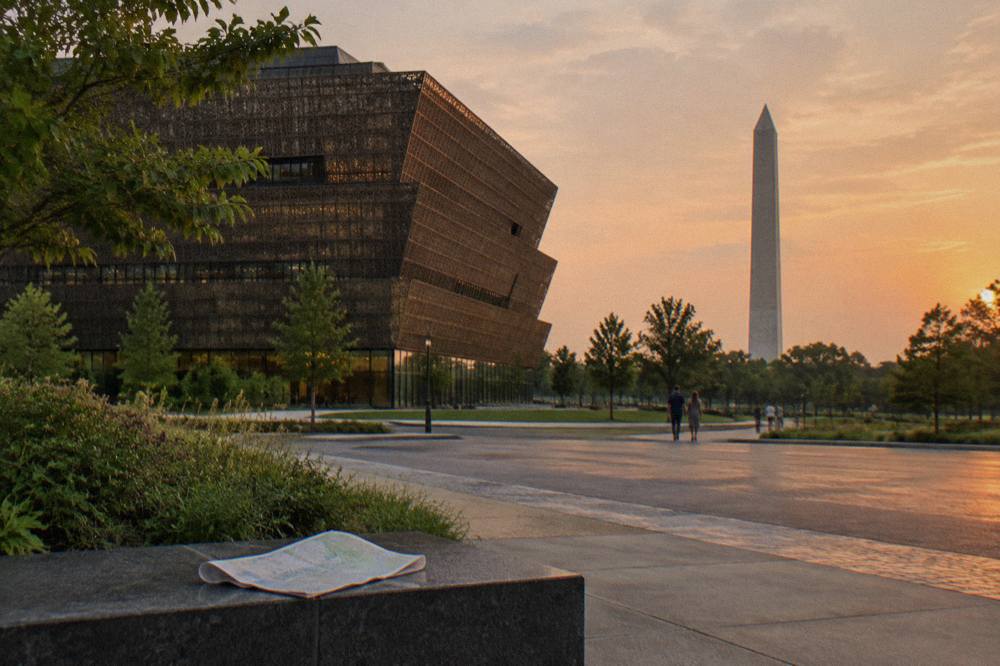
If you are building a wider free itinerary around the visit, the Free Things To Do In Washington DC directory keeps the whole roster in one place, and the museum sits at the center of it. The National Mall corridor outside its doors is the densest concentration of free attractions in the country, and a guided walk is one of the best ways to fill the hours before or after your timed slot. Three free, pay-what-you-want walks cover that ground, and the selection below compares them directly.
The rest of this article walks through exactly how the pass system works, what you will see once you are inside, and how the museum fits into a day built around the Mall.
Do You Need Timed-Entry Passes For NMAAHC?
Yes, every visitor needs a timed-entry pass, including children, and there is no walk-up option for general admission. Passes are released through the Smithsonian's ticketing site up to 30 days in advance on a rolling basis, and a limited number of same-day passes are released online each morning at around 8:15 a.m. EST. Both routes are free.
The advance window is the reliable one. Passes appear on the Smithsonian's ticketing platform in a rolling 30-day cycle, which means a visit on the last day of the month opens for booking on the first day of that month. For peak periods, cherry blossom season, summer weekends, holiday weeks, the advance passes go quickly, often within hours of release. If your dates are fixed, set a reminder for the morning your window opens and book then.
The same-day release is the backup. Every morning, a block of passes for that day appears online at roughly 8:15 a.m. EST. It is genuinely free and genuinely same-day, but the block is small and competition for it is fierce, so treat it as a fallback rather than a plan. If you are staying somewhere with decent wifi, it costs nothing to try, and on quieter weekdays in fall and winter your odds are far better than in July.
There is a third route worth knowing about: the museum has historically held back a small number of walk-up passes for local residents on certain days, but the terms of that program have shifted over time and you should not build a trip around it. Check the museum's own visit page for the current version before assuming anything. The official planning guidance lives at nmaahc.si.edu/visit/plan-your-visit, and the passes themselves are issued through tickets.si.edu.
One practical note: the pass carries a time slot, not just a date. Arriving well outside your slot can mean rejoining the entry queue, and arriving very late can mean missing the window entirely, especially on high-demand days when the lobby is full. Aim to be at the entrance fifteen minutes ahead of your slot.
The pass system also shapes what the rest of your day should look like. Because your entry time is fixed, everything around it becomes schedulable in a way a walk-in museum never is, and that is exactly what makes a free walking tour such a natural pairing. A two-hour guided walk of the monuments ending near the museum, timed to finish an hour before your slot, turns a pass reservation into a full free day on the Mall without spending a dollar. The Daytime Monuments Walk, National Mall is the free, pay-what-you-want GuruWalk walk that does this: it runs two hours in English from the World War II Memorial, rated 4.4 across 324 GuruWalk reviews, and its route along the western Mall corridor puts you a short walk from the museum's front door when it wraps up.
How Does NMAAHC Compare With Other Smithsonian Museums?
The Smithsonian runs 20 museums plus the National Zoo, and ten of those museums sit directly on the National Mall. Most are walk-in free, but NMAAHC is one of the exceptions: it shares its timed-pass requirement with the Air and Space Museum's DC building, which also requires a free timed entry pass. Never assume the blanket rule covers every venue.
The scale of the Smithsonian is hard to overstate. The Institution's own factsheet counts 20 museums and the National Zoological Park, with ten museums along the Mall between 15th and 3rd Streets, six more within about a mile and a half of the Mall, and the Udvar-Hazy Center out in Virginia. The official count is on si.edu/visit/museums. All of them are free to enter, and the National Zoo's admission is free too, though its parking is not.
That is the pattern this site keeps returning to, because it is the pattern that catches visitors out. Free is real, but the conditions vary venue by venue, and generalizing one museum's rule onto its siblings is the fastest way to a wasted morning. The walk-up rule holds for Natural History, American History, the American Indian Museum, the American Art Museum, the Portrait Gallery, the Freer, the Hirshhorn and the others. It does not hold for NMAAHC. It does not hold for Air and Space's DC building. The Holocaust Memorial Museum, not a Smithsonian venue but often mentally filed alongside them, runs its own timed-pass system as well. For the backstory on why the Institution charges nothing at all, this site's answer to whether the Smithsonian is free covers where the funding actually comes from.
| Museum | Admission | Entry requirement |
|---|---|---|
| NMAAHC | Free | Timed-entry pass required, advance or same-day |
| Air and Space Museum (DC building) | Free | Timed-entry pass required |
| Natural History Museum | Free | Walk in, no pass |
| American History Museum | Free | Walk in, no pass |
| American Indian Museum | Free | Walk in, no pass |
| National Portrait Gallery | Free | Walk in, no pass |
The reason NMAAHC carries a pass while its neighbors mostly do not comes down to demand against capacity. The museum opened to extraordinary public interest, and its gallery layout, which funnels visitors down to the lowest level before spiraling them up through the chronological history galleries, simply cannot absorb uncontrolled arrival surges. The pass is the museum's crowd-management tool, not a revenue mechanism. Nothing about it costs the visitor money, which is worth saying plainly because "timed pass" sounds like a ticketed attraction to anyone who has paid for timed slots elsewhere.
It also helps to know how the museum sits in the wider visitor picture. Destination DC counted a record 27.2 million visitors to the city in 2025, generating a record $11.9 billion in visitor spending. That volume lands disproportionately on the Mall, and the museums with capacity constraints, NMAAHC chief among them, are the ones where a pass system is doing real work.
What Can You See Inside For Free?
The pass covers the entire permanent collection: the three history galleries that descend below ground and rise through slavery, segregation and the civil rights era, plus the community and culture galleries, the military history gallery and the sports galleries. There is no paid tier inside, no premium exhibition upsell on the standard visit.
The emotional center of the museum is the history section, and almost every review of the place says the same thing: give it more time than you think it needs. The galleries begin below ground, with the Atlantic slave trade, and move upward and forward through Reconstruction, Jim Crow, the Great Migration and the civil rights movement, ending near the present day. The upward trajectory is deliberate architecture, the building's designers wanted the walk itself to trace the arc from the darkest chapters toward the present, and the bronze lattice wrapping the exterior is a direct reference to the ornamental ironwork of Black craftsmen in Charleston and New Orleans.
Above the history galleries, the culture floors cover music, film, visual art, theatre and food, and the community galleries take a broader sweep across topics like education, religion and family life. The sports and military history galleries hold artifacts that include items donated by public figures, and the museum's collection overall has grown past tens of thousands of objects since opening. A full visit realistically runs three to four hours, and many people report coming back for a second pass on a later day because a single slot is not enough.
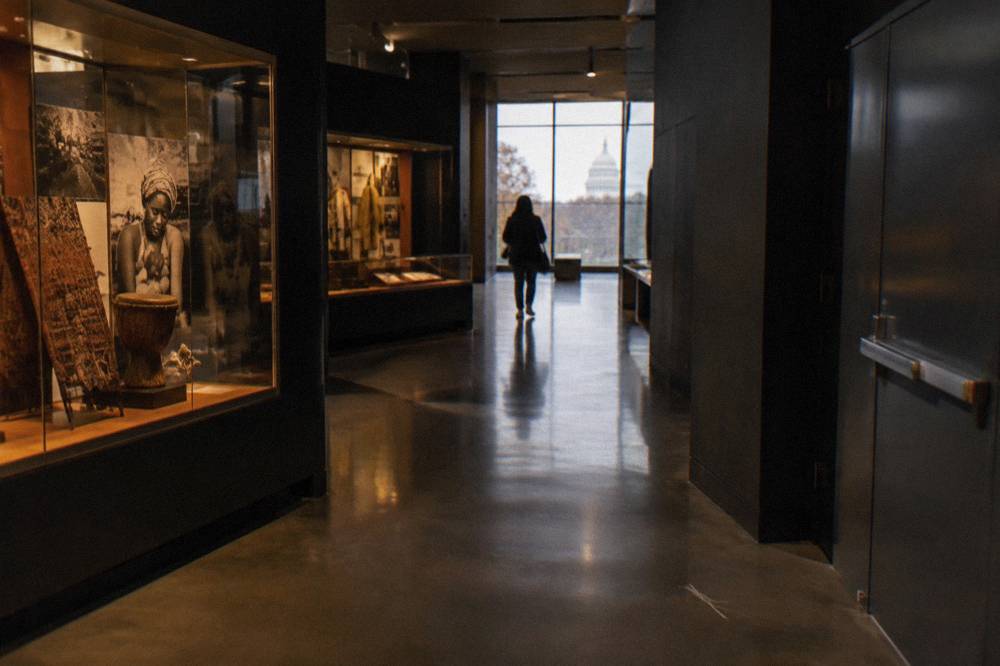
Planning around the size of the place matters more than planning around its price. The single most common mistake is booking an afternoon pass and discovering that the history galleries alone can absorb three hours. If your pass is late in the day, consider starting on the upper culture floors and returning another time for the full descent. The museum also runs free docent-led tours and regular public programs, which are listed on its own calendar and are worth checking before your visit.
For families, note that the museum recommends its content for a range of ages and provides guidance for younger visitors on some of the harder material in the history galleries. There is no separate family ticket because there is no ticket at all, only the pass, and children need their own pass even if they are being carried.
Can You Pair The Museum With A Free Walking Tour Of The Mall?
Yes, and the pairing is one of the best free days in the city: a free, pay-what-you-want walking tour of the monuments in the morning, then a timed NMAAHC pass in the afternoon. The museum sits on Madison Drive at the western end of the Mall, a short walk from the World War II Memorial where the daytime walk begins.
This is where the pass system actually works in your favor. Because your museum entry time is fixed, you can anchor a whole day to it. A morning walk of the monuments covers the Lincoln Memorial, the Vietnam Veterans Memorial, the Korean War Veterans Memorial and the World War II Memorial, all free, all outdoors, all within a few minutes' walk of the museum's entrance. Finish the walk at noon, grab lunch, and walk into NMAAHC at your slot time with the western Mall already under your belt.
The site's own roster lists three free walks, and two of them fit this day especially well. The Daytime Monuments Walk, National Mall is the GuruWalk daytime option, two hours in English from the World War II Memorial, rated 4.4 across 324 GuruWalk reviews. It is free to join, with the guide's gratuity at your discretion, and this site's how free walking tours work guide explains the pay-what-you-want model in full if the format is new to you.
For a different operator entirely, Blue Umbrella's Mall Walk, Another Operator is the freetour.com alternative: a two-and-a-half-hour walk rated 8.7 out of 10 across 143 freetour.com reviews, run by Blue Umbrella Tours. The longer runtime covers more of the Mall's length, which suits a day when your museum slot is late and the morning needs filling. Like every walk on this roster, it costs nothing to join.
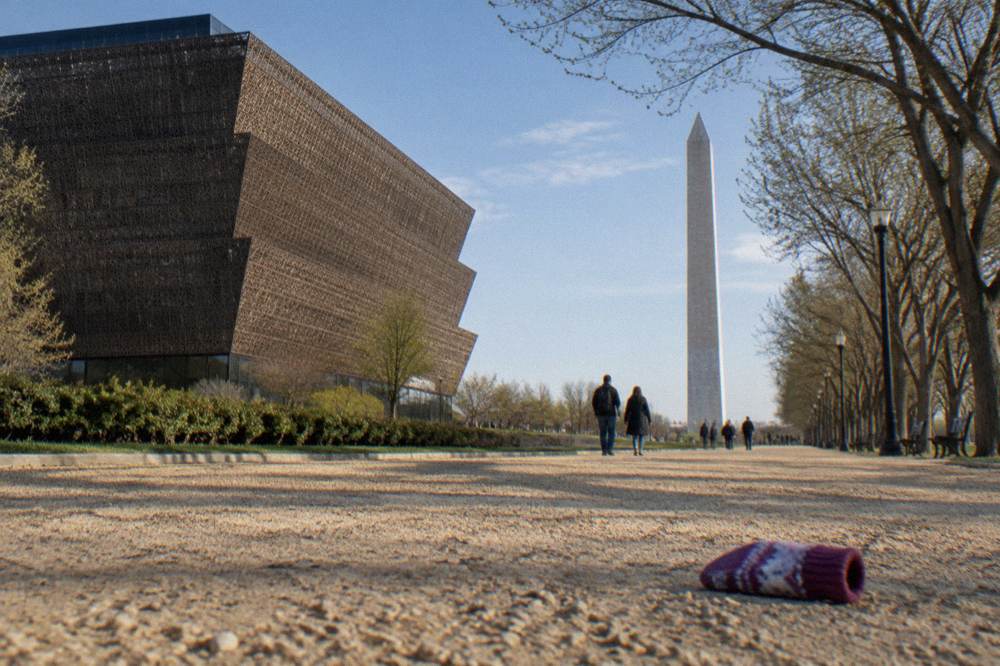
If your museum slot falls in the morning instead, flip the day: museum first, then an evening walk. The moonlit alternative on the roster is Monuments By Moonlight, Evening Walk, a GuruWalk evening walk that runs an hour and 30 minutes and meets at the Albert Einstein Statue, rated 4.26 across 65 GuruWalk reviews. The memorials after dark are a genuinely different experience, quieter and lit from below, and it costs nothing to join either.
There is no wrong order, only the constraint of your pass time. The one thing to avoid is booking a morning walk that runs long and then sprinting for a 12:30 slot. Walks of the Mall corridor are generous with photo stops, and the museum's own entry queue can add ten minutes at busy times. Give yourself an hour of buffer between the walk's end and your slot, and the day stays relaxed.
What Should You Know Before You Go?
Book your pass 30 days out for peak dates, or try the same-day release at 8:15 a.m. EST. Arrive fifteen minutes before your slot, plan three to four hours inside, and use the Metro rather than driving, since museum-adjacent parking is scarce and the National Zoo is the only Smithsonian property with its own paid lots.
The practical details are straightforward once the pass is secured. The museum's entrance faces Madison Drive NW, on the northern edge of the Mall between 14th and 15th Streets. The nearest Metro stations are Smithsonian and Federal Triangle on the Blue, Orange and Silver lines, both a short walk away. Metro fare is modest and the system reaches the museum from anywhere in the city core, which matters because driving to the Mall is the one genuinely expensive part of a DC museum day. Street parking near the Mall is time-limited and heavily contested, and the commercial lots nearby charge downtown rates.
Security screening operates at the entrance like every federal-adjacent museum in the city, so pack light. Large bags have to fit a size limit and there is no large-item storage for visitors, which is worth knowing before you arrive straight from a hotel checkout with luggage in tow. Food is available in the museum's own café, which is a paid concession, and the sweet potato pie there has something of a reputation, but the surrounding blocks also offer cheaper options along 14th Street if you would rather keep the day at zero spend.
For the timing of your visit, the seasonal rhythm matters. Cherry blossom season is the most crowded stretch on the Mall; peak bloom in 2026 landed on March 26, with the main blooming window running roughly through the first week of April. If you are visiting in that window, treat the 30-day advance release as mandatory, because same-day passes are effectively gone within minutes. Fall and winter weekdays are the opposite: passes are easy to get, and the museum is quiet enough that you can move through the history galleries at your own pace.
If every slot for your date is gone, the free museums in Washington DC roster lists the walk-in alternatives a few blocks away, no pass needed, and several of them rank among the best museum visits in the country.
| Situation | Best approach |
|---|---|
| Visiting during cherry blossom season | Book exactly 30 days ahead; same-day passes are near-impossible |
| Summer weekend visit | Book 30 days ahead; try early morning slots |
| Off-season weekday | Advance pass still required, but easy to get |
| Missed the advance window | Try the same-day release at 8:15 a.m. EST, or check for cancellations |
| Traveling with a group | Book all passes in one session; slots for large groups go first |
One last note on expectations. The museum is fully accessible, with wheelchairs available at the entrance, and the descending gallery layout is served by elevators, so the below-ground start is not a barrier for visitors with mobility needs. Service animals are welcome. If you are visiting with someone who cannot manage long standing periods, the museum's own visit page covers seating locations and accessible routes through the galleries.
The whole day, museum pass, morning walk, evening monuments, can run at zero fixed cost, with only your Metro fare and whatever you choose to tip a guide. That is the quiet point of the pass system: it exists to protect the experience inside, not to charge for it, and a visitor who books ahead gets one of the best free museum visits in the United States.
Common Questions About The National Museum Of African American History And Culture
Is The National Museum Of African American History And Culture Free?
Yes. Admission is completely free, but every visitor needs a timed-entry pass. Passes are released up to 30 days in advance or same-day at around 8:15 a.m. EST through the Smithsonian's ticketing site, and both routes cost nothing.
Can you walk into NMAAHC without a pass?
No. Unlike most Smithsonian museums, NMAAHC has no walk-up general admission. A timed-entry pass is required for every visitor, including children, so reserve before you travel.
How far in advance can you book NMAAHC passes?
Passes open on a rolling basis up to 30 days ahead through the Smithsonian's ticketing platform. For cherry blossom season and summer weekends, book on the day your window opens, because popular slots go quickly.
How long does a visit to the museum take?
Plan three to four hours for the permanent collection. The history galleries alone, which start below ground and rise chronologically, can absorb most of a visit, so a late-day pass may mean returning another time.
Do other Smithsonian museums require timed passes?
Most do not, but two do: NMAAHC and the Air and Space Museum's DC building both require free timed-entry passes. The rest of the Mall museums operate on walk-in access, so check each venue's own visit page rather than assuming one rule covers all.
Can you pair the museum with a free walking tour?
Yes. A free, pay-what-you-want monuments walk in the morning followed by an afternoon NMAAHC slot is one of the best zero-cost days in the city. The daytime GuruWalk walk starts at the World War II Memorial, a short walk from the museum's entrance.