Is The National Archives Museum Free?
Yes, the National Archives Museum is free to enter, no ticket needed. Here is what you can see inside, how it compares to DC's other free museums, and how to pair it with a free walking tour.
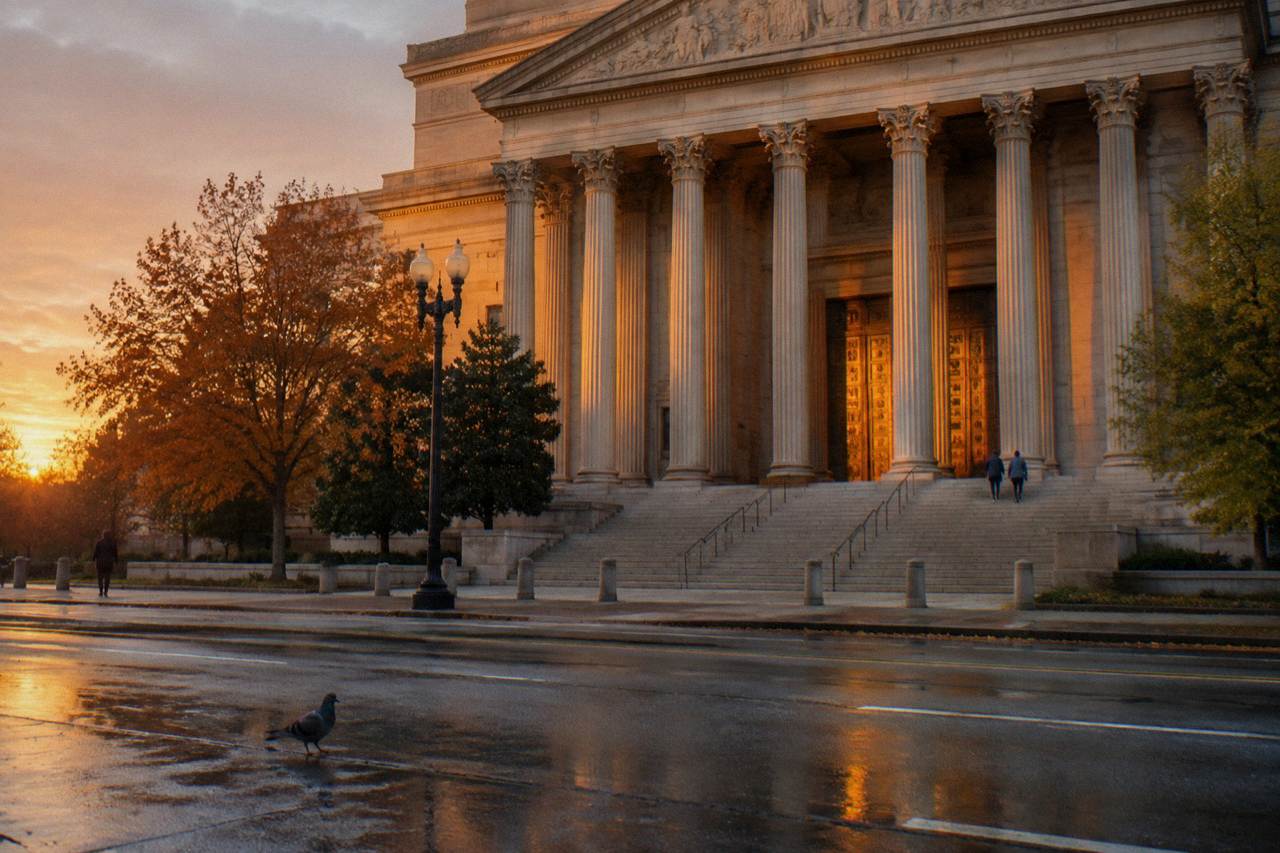
Is The National Archives Museum Free?
Yes, the National Archives Museum is free to enter, with no admission charge and no timed-entry pass required. Visitors can simply walk in during open hours, making it one of the most accessible attractions in Washington DC for travelers on any budget. That means you can walk up, clear security, and go straight to the Rotunda without booking a thing. It sits in a smaller group than many visitors assume, because several of the city's most famous museums are free but ticketed, and the Archives is not one of them. For a budget traveler, that difference decides the whole shape of a day.
The distinction matters more in DC than in almost any other city. The capital's free attractions are not uniform. Some are free with no strings, some are free only if you reserve a timed pass in advance, and some, like the International Spy Museum, are paid outright with dynamic date-based pricing that its own site does not publish as a static figure. The National Archives Museum sits in the cleanest category of all: free, unconditional, no booking channel, no service fee, no same-day ticket scramble at 8:15 in the morning.
That makes it one of the most dependable stops on a budget itinerary. You do not need to plan around a release window or worry that passes will be gone before you finish breakfast. If you are building a day around the National Mall, the Archives is the rare marquee sight you can treat as a spontaneous drop-in, sandwiched between the monuments and the Smithsonian museums, without a single reservation on your calendar.
It also happens to sit in the same corridor this site's featured walks cover. If you are exploring the Mall with a guide, the Daytime Monuments Walk on its tour page covers the West Mall monument corridor and pairs naturally with an Archives visit, and the full set of options is below.
What Can You See Inside For Free?
Yes, free admission covers the museum's permanent exhibits, most importantly the Rotunda for the Charters of Freedom, where the original Declaration of Independence, Constitution, and Bill of Rights are displayed together. Visitors can view these founding documents at no cost, making the Rotunda the centerpiece of any free visit to the museum. You pay nothing to stand in front of the founding documents of the United States, which is the single draw most visitors come for and the reason the building has a permanent line on busy days. Everything in the public galleries is included in that free entry, so the only real limit on your visit is time and crowd tolerance, not money.
The Rotunda is the emotional center of the visit, and it is worth setting expectations honestly. The documents are original, they are encased in bronze and glass, and after more than two centuries the ink has faded badly, especially on the Declaration, whose text is now barely legible in low light. That is not a defect of the display, it is the reality of old parchment surviving under careful conservation. Visitors who know this in advance tend to rate the moment higher, because they are looking at an artifact rather than expecting a crisp reprint.
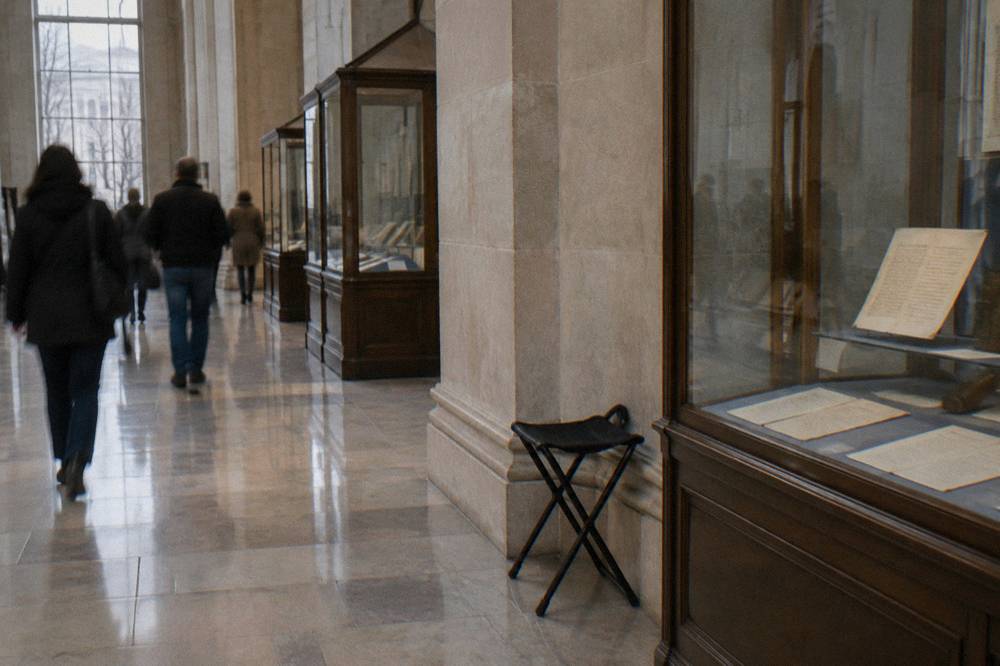
Beyond the Rotunda, the museum's public galleries tell the story of how the National Archives itself works: what the federal government keeps, why records matter, and how ordinary documents, from census sheets to military service files, become the raw material of history. The museum is compact compared with the Smithsonian giants down the street, which is a practical advantage. A focused visit fits comfortably in a morning or an afternoon, and you are not working your way through a maze of wings trying to find the one thing you came for.
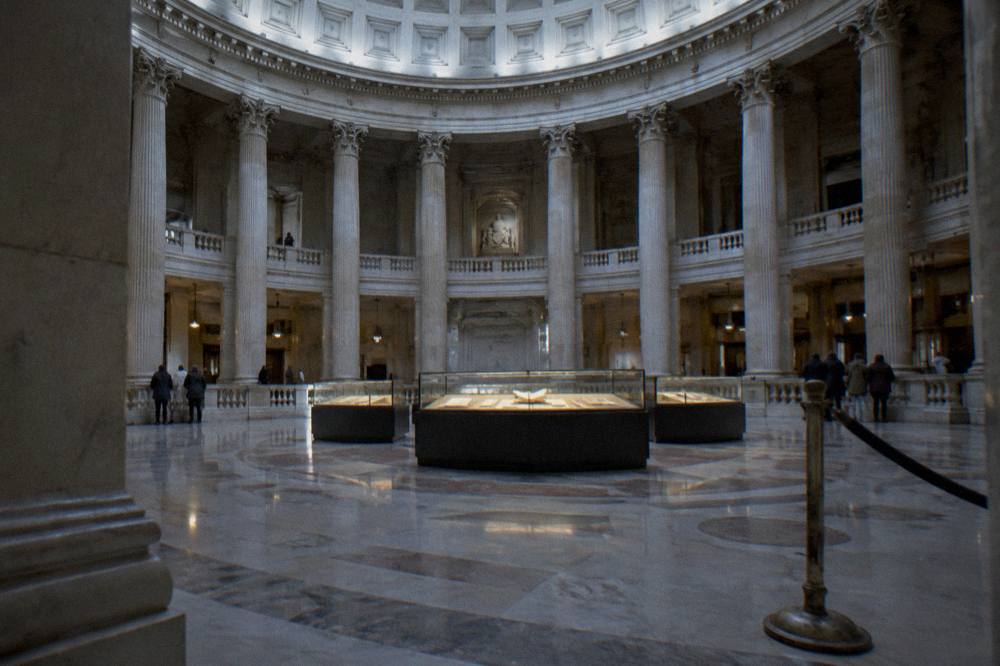
Budget visitors should treat the Archives as a high-value, low-time-cost stop. It delivers a genuine "I saw the original" moment, the kind that otherwise requires a ticket or a fee in most capitals, and it costs nothing but the security line. If your day is anchored on the National Mall, the sequencing writes itself: monuments in the morning when the light is good and the stone is cool, the Archives when you want air conditioning and a chair, then back outside for the memorials that look best toward evening.
For a morning of monuments before you head inside, the Daytime Monuments Walk, National Mall is the natural fit. It is a free, pay-what-you-want walk on GuruWalk, run by a guide named Lisa, rated 4.4 across 324 GuruWalk reviews, lasting about 2 hours in English and meeting at the World War II Memorial, which is the same end of the Mall the Archives sits near. It covers the monument corridor that most first-time visitors want anyway, and because it is pay-what-you-want, it keeps the entire morning free, not just the museum.
If you would rather have the monuments to yourself in a different light, the Monuments By Moonlight evening walk covers the same corridor after dark, rated 4.26 across 65 GuruWalk reviews over about an hour and a half. Either way, the pattern holds: spend nothing on the walk, spend nothing at the Archives, and your only real costs for the day are food and transit.
Do You Need A Ticket Or Reservation?
No, you do not need a ticket or reservation to visit the National Archives Museum. There is no timed-entry pass, no advance booking, and no fee of any kind, which sets it apart from the Smithsonian museums that do require free timed passes for entry. Free does not always mean walk-up in Washington DC, and this is the trap that catches visitors who assume one institution's rules apply to the next. The Archives is the straightforward case in a city full of conditional ones, and that alone earns it a slot on any low-effort budget itinerary.
The verified picture across the city's free institutions looks like this. The National Museum of African American History and Culture requires free timed-entry passes for all visitors, released up to 30 days in advance on a rolling basis, with same-day passes appearing online by about 8:15 a.m. Eastern. The Smithsonian's Air and Space Museum in its DC building requires a free timed pass too, despite being a Smithsonian venue, which surprises people who have heard the blanket "walk into any Smithsonian" claim. The Washington Monument is its own case: the grounds are free, but going up requires a timed ticket, free same-day at the Monument Lodge on a first-come basis, or a $1 per-ticket non-refundable service fee if you book in advance through the federal recreation.gov reservation system. The fee attaches to the booking channel, not the ticket itself.
None of that applies to the National Archives Museum. Its verified status is unconditionally free, and that is precisely why it earns a place on a no-planning budget itinerary. You cannot lose it to a sold-out pass window. You cannot arrive to find same-day tickets gone. The only real constraint is the operating schedule and the security line, both of which are worth checking on the National Archives' own site before you go, since hours and special exhibits change with the seasons.
This distinction is the single most useful thing to understand about free DC. The city runs on a pattern where the headline attraction is free but the access channel is not, or the museum is free but the pass is mandatory. The Archives sidesteps the whole pattern. For visitors who would rather not build a trip around 8:15 a.m. alarm clocks for same-day passes, it is the most reliable of the city's heavyweight sights, and it is one of the reasons a fully free DC day is genuinely achievable rather than theoretical.
How Does It Compare To Other Free Museums In DC?
The Archives holds its own against DC's bigger free museums on the thing that matters most, original historical objects, and it beats most of them on friction. It is free, requires no ticket, and stays compact enough to see in one focused visit rather than a full-day expedition. Where the Smithsonian museums compete on scale, the Archives competes on irreplaceability, and for many visitors one faded parchment outranks an entire hall of dinosaurs. It is the only stop in the corridor where you can see original founding documents with no pass, no fee, and no advance planning at all.
The honest comparison needs the conditional cases in view, because they change the arithmetic of a free day. Here is how the verified free and near-free attractions stack up:
| Attraction | Admission | Catch, if any |
|---|---|---|
| National Archives Museum | Free | None verified: walk-up entry, no timed pass |
| National Museum of Natural History | Free | Walk-up, no pass needed |
| National Gallery of Art | Free | Walk-up, no pass needed |
| National Museum of African American History and Culture | Free | Timed-entry pass required, released up to 30 days ahead or same-day by about 8:15 a.m. |
| Air and Space Museum (DC building) | Free | Timed-entry pass required |
| Washington Monument ascent | Free | Timed ticket: free same-day at the Lodge, or $1 service fee per ticket booked in advance |
| Museum of the Bible | Paid | Free every Tuesday through May 18, 2027 |
| International Spy Museum | Paid | Dynamic date-based pricing, no static figure published |
| George Washington's Mount Vernon | $30 adult (12+) | Small discount for advance online purchase |
Two readings of that table are useful. First, the Archives belongs to the minority of heavyweight sights with no catch at all, which is rarer than it looks. Second, the "catch" column is where most DC budget plans actually break: a free museum with a mandatory pass is still free in dollars but expensive in planning, especially in peak season when passes vanish quickly. A family that misses the NMAAHC pass window has not lost money, but it has lost the sight. Other pages covering the same trip are gathered on Free Things To Do In Washington DC.
Scale is the one place the Archives gives ground. The Smithsonian Institution runs 20 museums plus the National Zoo, ten of them directly on the National Mall and six more within about a mile and a half of it, so the depth on offer within walking distance of the Archives is unmatched anywhere in the country. The Archives does not try to compete with that breadth. It does one thing, holds the originals, and lets you leave. For a visitor with limited time, that focus is a feature: you are choosing between an unfinishable museum and an unmissable document.
For context on how the city's free ecosystem works, the guides on free museums in Washington DC and free government tours of the Capitol, Library of Congress and Archives cover the ticketed and unticketed cases in detail, including the institutions where a reservation is genuinely required.
Pairing The Archives With A Free Walking Tour
The best free pairing is a pay-what-you-want Mall walk in the morning followed by the Archives at midday, because the walk covers the outdoor corridor and the museum covers the one indoor sight that needs no pass. It is a complete half-day that costs nothing unless you choose to tip your guide, and the geography works without any transit. You finish the walk within walking distance of the museum's front door, which is exactly the kind of sequencing a zero-dollar itinerary needs.
The logic of the sequence is simple. The monuments are best in morning light and cooler air, and they are spread out, which is exactly the problem a guide solves: you get the route, the stories, and the pacing handled, and you pay what the experience was worth to you at the end. The Archives then absorbs the hottest, most crowded hours of the day, costs nothing, requires nothing in advance, and delivers the city's single most concentrated dose of history per square foot. Add lunch from a food truck or a packed bag, and the entire outing remains at zero fixed cost.
The other operator option covers the same ground in a different package. Blue Umbrella's Mall Walk, run through freetour.com, is rated 8.7 out of 10 across 143 freetour.com reviews and runs about 2 hours and 30 minutes in English, longer than the GuruWalk daytime walk, which gives more room for each stop. It is a genuine alternative rather than a copy: different operator, different platform, different pacing, same pay-what-you-want model. Comparing the two is worth a few minutes before you commit a morning.
If you are weighing how the pay-what-you-want model actually works and what a fair tip looks like, the tipping guide for free walking tours in DC breaks it down, and the comparison of GuruWalk versus freetour.com in Washington DC covers the platform differences directly.
What Else Is Free Nearby?
Within the same corridor you can stack the National Mall's monuments, the Lincoln Memorial, the Vietnam Veterans Memorial, the Korean War Veterans Memorial, and the World War II Memorial, all free and all walkable from the Archives, plus the Smithsonian museums that need no pass. A full free day in this part of the city requires no car, no tickets, and no schedule beyond comfortable shoes. Very few capitals offer this density of zero-cost sights within a single walkable zone.
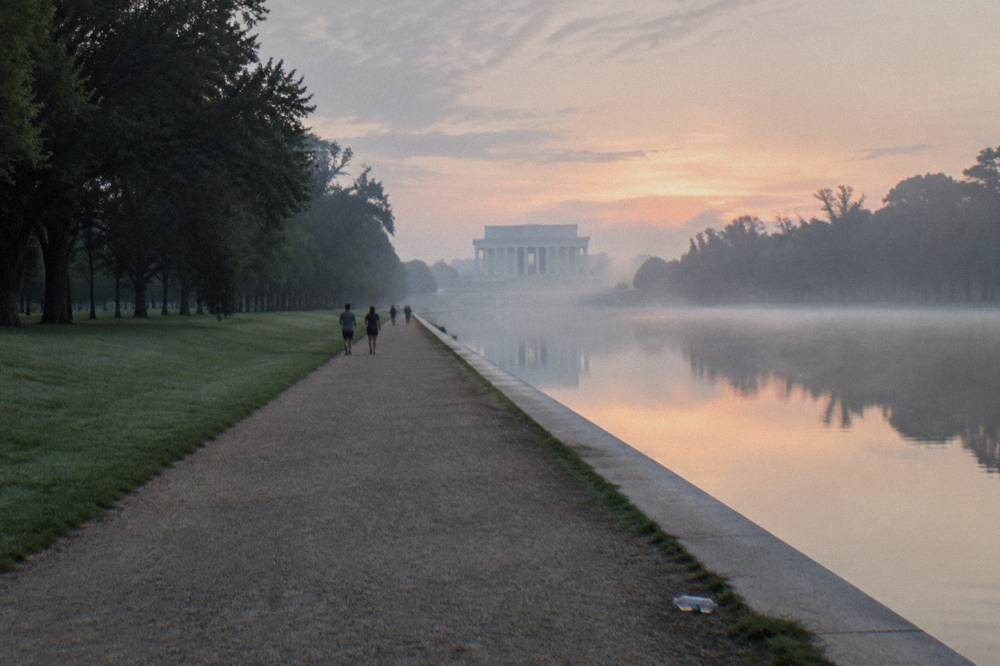
The monument cluster is the obvious companion. Every outdoor memorial in the West Mall corridor is free and open, with no pass, no fee, and no reservation, which is why the free walking tours run through it: it is the densest concentration of zero-cost sights in the city. The Lincoln Memorial, the Vietnam Veterans Memorial, the Korean War Veterans Memorial, the World War II Memorial, and the National Mall itself are all verified unconditionally free. If you want the full rundown, is the National Mall free? covers the corridor in detail.
Going the other direction from the Archives, the free government institutions cluster tightly: the Library of Congress, the U.S. Capitol Visitor Center, and the National Archives itself form a trio that can fill a second day without spending anything, and the walk-up rules differ between them, so check each one rather than assuming. The White House tour is the notable conditional case in this zone, requiring a request through your member of Congress, so it belongs on a wish list rather than a plan.
The one thing to keep straight as you plan: never generalize one institution's rule onto its neighbor. The Archives needs no pass. The African American History museum does. The Washington Monument's grounds are free but its ascent is ticketed. The city rewards visitors who check each sight individually, and this site exists precisely because the "everything in DC is free" shorthand is only about two-thirds true. The Archives is the easy case, and it makes a perfect anchor for a day built around the harder ones.
Common Questions About The National Archives Museum
Is The National Archives Museum Free?
Yes. The National Archives Museum is free to enter, with no admission charge and no timed-entry pass required. It is verified as unconditionally free, so you can walk up, clear security, and visit the Rotunda without booking anything.
Do you need a ticket for the National Archives Museum?
No. Unlike the National Museum of African American History and Culture or the Air and Space Museum's DC building, both of which require free timed-entry passes, the Archives has no pass requirement. You simply walk in during opening hours.
What documents are on display at the National Archives Museum?
The Rotunda for the Charters of Freedom displays the original Declaration of Independence, the Constitution, and the Bill of Rights. The ink has faded considerably over the centuries, especially on the Declaration, but these are the original documents, not reproductions.
How long does a visit to the National Archives Museum take?
The museum is compact compared with the Smithsonian museums nearby. A focused visit centered on the Rotunda and the public galleries fits comfortably into a morning or an afternoon, which makes it easy to pair with a monuments walk on the National Mall in the same day.
Can you visit the National Archives Museum without a reservation in peak season?
Yes, that is one of its main advantages. Because there is no pass system, you cannot be shut out by a sold-out release window the way you can at pass-required museums. Expect a longer security line in peak season, especially around the cherry blossom window, but entry itself remains free and unticketed.
Is the National Archives Museum good for a budget trip to DC?
It is one of the best stops on a zero-dollar itinerary. Entry is free, no booking fee exists, and it sits in the same corridor as the free monuments and the pay-what-you-want walking tours, so you can build an entire day around it without paying for a single attraction.