Things To Do In Washington DC That Are Free With Kids
Washington DC is one of the few capital cities where a family can fill three full days without buying a single attraction ticket. The catch is that several of the most famous free sights carry reservation rules, and a few of the 'free' ones come with paid parking or paid extras that catch families out.
Short answer
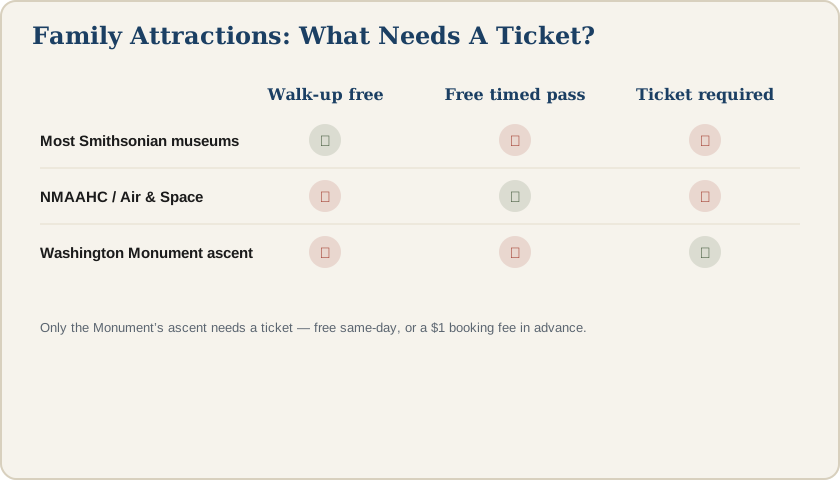
DC's core family attractions are genuinely free: the monuments and memorials, most Smithsonian museums, the National Zoo's admission, the National Gallery of Art and the Botanic Garden. Two big exceptions need free timed passes, the Air and Space Museum's DC building and the African American History museum, and the Washington Monument's ascent needs a ticket.
What Can Families Do In Washington DC For Free?
Yes, and more than in almost any other US city: the National Mall's monuments, ten Smithsonian museums on the Mall itself, the National Zoo's admission, the National Gallery of Art, the Botanic Garden and the National Archives are all free to enter, and most need no ticket at all. The exceptions are specific: the Air and Space Museum's DC building and the National Museum of African American History and Culture both require a free timed pass.
Families arrive in DC expecting to pay museum prices and discover the opposite. The Smithsonian Institution runs 20 museums plus the National Zoo, and admission to almost all of them costs nothing, a policy explained in more depth on why the Smithsonian is free. Ten of those museums sit directly on the National Mall between 15th and 3rd Streets, which means a family can walk between dinosaurs, space capsules, mummies and the Hope Diamond without ever opening a wallet.
That density is the reason DC works so well with children. In most cities a museum day means one museum. Here a morning at the Natural History museum can roll into an afternoon at American History and an evening on the memorial corridor, all on foot. The city set a record 27.2 million visitors in 2025, and the free core is a large part of the draw.
The honest version of this guide has to cover the friction too. "Free" in DC is usually true but not always simple, and the sections below separate the walk-right-in attractions from the ones that need a pass booked weeks ahead.
Which Monuments And Memorials Keep Kids Engaged?
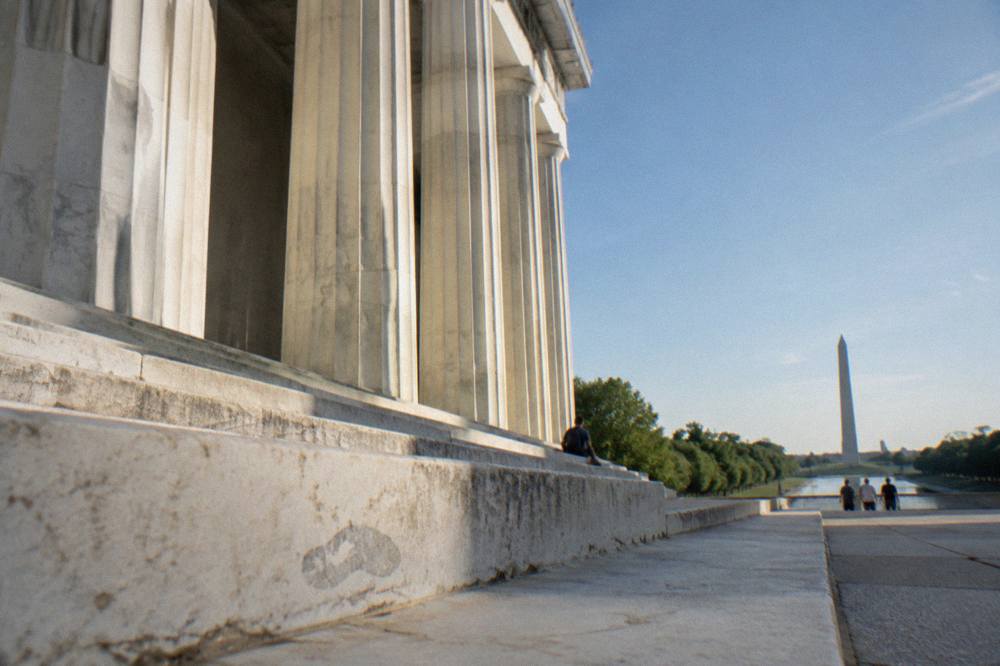
The Lincoln Memorial, the World War II Memorial, the Korean War Veterans Memorial and the Albert Einstein Memorial are the strongest free monument picks for children: all four are walk-up free with no ticket, all four sit within a short walk of each other, and each has something a child can physically interact with, from the Lincoln steps to Einstein's climbable statue. The Vietnam Veterans Memorial is equally free and equally close, though it asks for quiet.
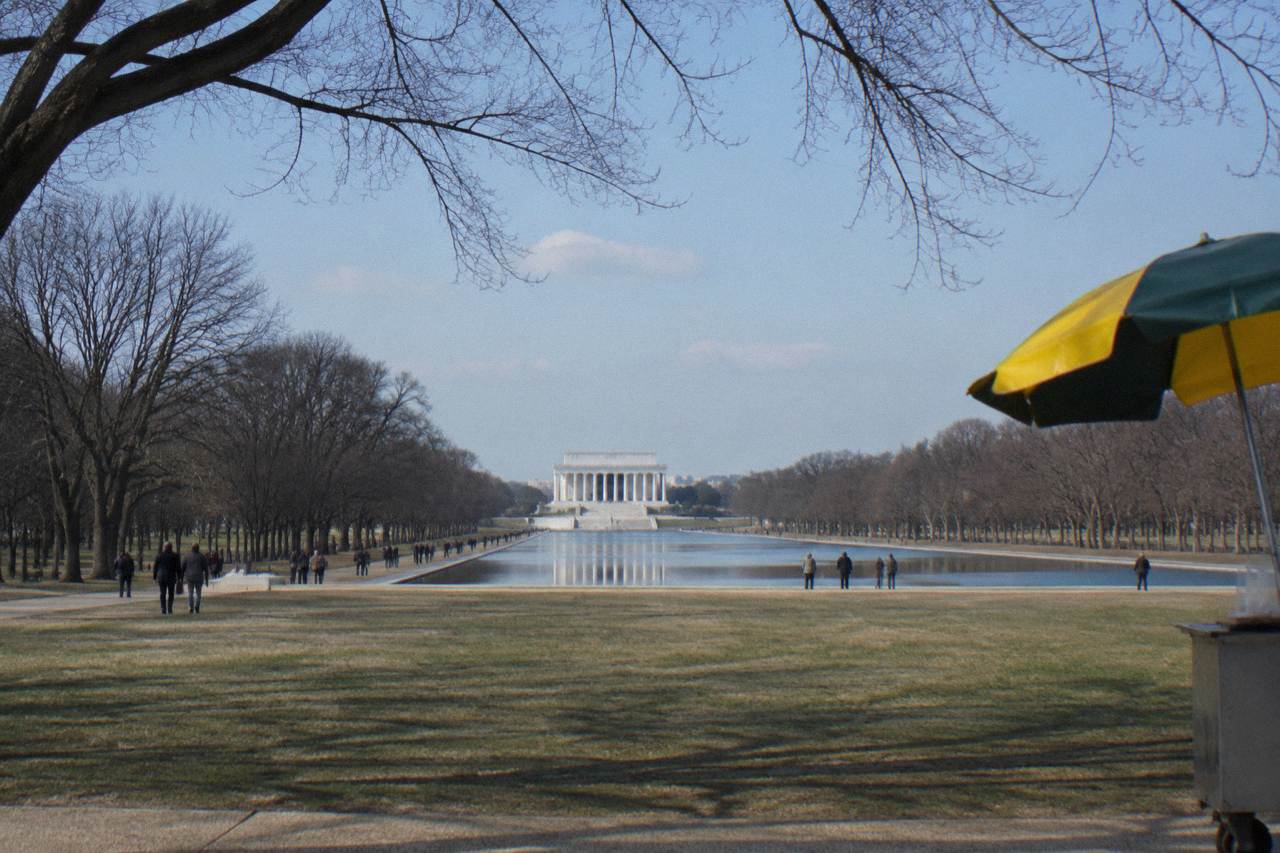
The memorial corridor along the Mall's west end is the single best free stretch for families. Start at the World War II Memorial, where the fountains and state pillars give children something to count and name, then walk west past the Reflecting Pool to the Lincoln Memorial. The climb up those steps is a genuine achievement for a six-year-old, and the view back over the pool repeats the postcard shot most kids already know.
The Einstein Memorial sits a short detour north of the Vietnam Veterans Memorial, near Constitution Avenue, and it is the most climbable statue in the city. Children sit on the bronze bench beside the figure, and the embedded star map on the ground fascinates the ones who like patterns. It costs nothing and rarely has a crowd.
Two rules keep the visit honest. Every memorial on the Mall is free with no pass, but the National Park Service asks visitors to be respectful at the veterans' memorials in particular, so brief loud children beforehand. And the Washington Monument's grounds are free to walk around, while going up inside requires a timed ticket, a distinction covered in full on Washington Monument free tickets.
| Memorial | Free entry | Ticket needed | Kid appeal |
|---|---|---|---|
| Lincoln Memorial | Yes, walk-up | No | Steps, statue, view over the pool |
| World War II Memorial | Yes, walk-up | No | Fountains, 56 state pillars |
| Einstein Memorial | Yes, walk-up | No | Climbable statue, star map |
| Korean War Veterans Memorial | Yes, walk-up | No | Life-size soldier figures |
| Vietnam Veterans Memorial | Yes, walk-up | No | Name-finding, quiet reflection |
| Washington Monument grounds | Yes, walk-up | No for grounds, ticket for the ascent | Obelisk viewing |
A family walking this corridor covers the same ground as the site's featured Daytime Monuments Walk, a free, pay-what-you-want walking tour that meets at the World War II Memorial and runs about two hours in English. It's listed on GuruWalk, rated 4.4 across 324 GuruWalk reviews, and the guide, Lisa, handles the memorial-to-memorial pacing that's hard to judge with children in tow. For families who'd rather have the stories than carry the guidebook, the full tour page has the meeting point and schedule.
How Do Free Walking Tours Work With Children?
Free walking tours in DC are pay-what-you-want: you reserve a spot for free, join the group, and tip the guide at the end based on what you thought the walk was worth. For a family this is the lowest-risk way to test whether your children can handle a guided two hours, because the walk itself costs nothing and there's no ticket to write off if someone melts down by the halfway point.
The full mechanics, including what to tip, are explained on how free walking tours work. The short version: no upfront price, no booking fee, and the guide's income comes entirely from what participants choose to give at the end.
The site's roster carries three walks, all free to join. The Daytime Monuments Walk meets at the World War II Memorial and runs two hours in English, rated 4.4 across 324 GuruWalk reviews on its GuruWalk listing. Monuments By Moonlight, the evening counterpart, meets at the Albert Einstein Statue and runs an hour and a half, rated 4.26 across 65 GuruWalk reviews. Blue Umbrella Tours runs a separate Mall walk listed on freetour.com, rated 8.7 out of 10 across 143 freetour.com reviews, over about two and a half hours.
With children, the honest advice is to match the walk to their stamina rather than to the itinerary. A two-hour daytime walk suits ages roughly seven and up; toddlers in strollers manage the Mall's flat, paved paths but not the standing-and-listening. The moonlight walk is the better pick for teenagers, when the monuments are lit and the crowds have thinned, and it's short enough at 90 minutes to hold attention.
Tipping is the only cost, and it's entirely at your discretion, typically a few dollars per adult per hour for a walk you enjoyed. There's no minimum, and no walk on this roster charges a booking fee or an upfront price.
The daytime walk is the one this site features most often for families, because its World War II Memorial meeting point sits at the edge of the memorial corridor most visitors are walking anyway. If the children are done after an hour, you're never far from a Metro station or an ice cream stand.
Which Free Museums Work Best For Kids?
The Smithsonian National Museum of Natural History is the best free museum in DC for kids, offering dinosaurs, the Hope Diamond, the insect zoo, and the mammal hall with no ticket required. The National Museum of American History and the National Gallery of Art are also free and nearby. Note that the Air and Space Museum's DC building and the National Museum of African American History and Culture both require a free timed pass.
The Natural History museum is the default family choice and earns it. The Fossil Hall's reconstructed skeletons hold small children spellbound, the Gems and Minerals gallery ends at the Hope Diamond, and the insect zoo's live leafcutter ants are a reliable hit. Admission is free and no pass is needed: walk in, expect a bag check at the door.
American History, one block north, trades dinosaurs for the flag that inspired the national anthem, Julia Child's kitchen and a room of presidential memorabilia. The National Gallery of Art, directly across the Mall, has the only underground concourse in DC with a moving walkway, a waterfall and a gelato counter, which is the kind of fact a tired parent appreciates. Its main building is free to enter, as covered on is the National Gallery of Art free.
The timed-pass rule is where families get caught. The Air and Space Museum's DC building and NMAAHC both require free timed-entry passes even though both are Smithsonian and free, and NMAAHC passes go quickly for peak dates, released up to 30 days ahead with same-day passes posted online in the morning. The Smithsonian's own visit pages carry the current rules, and the National Park Service's trip-planning pages cover the outdoor sites.

| Museum | Admission | Pass needed | Best ages |
|---|---|---|---|
| Natural History | Free | No, walk-up | 4 and up |
| American History | Free | No, walk-up | 6 and up |
| National Gallery of Art | Free | No, walk-up | All, with the concourse for breaks |
| American Indian | Free | No, walk-up | 6 and up |
| Air and Space (DC building) | Free | Yes, timed pass | 5 and up |
| African American History and Culture | Free | Yes, timed pass | 8 and up |
What Free Outdoor Spaces Does DC Offer Families?
The National Zoo's admission is free, the US Botanic Garden is free, and Meridian Hill Park and the National Arboretum are free open green space, all no ticket needed. The zoo is the one with a catch: its on-site parking is paid, $30 booked in advance or $40 on the day, so the free visit depends on arriving by Metro, which drops you a ten-minute uphill walk from the entrance.
The National Zoo is one of the best free family outings in the country, with giant pandas, elephants, lions and a kid-focused American Trails section, and admission costs nothing, as detailed on is the Smithsonian National Zoo free. The parking charge is real and separate, run by the zoo itself, and it's the single most common "I thought this was free" moment for driving families. The Cleveland Park Metro station approach avoids it entirely.
The US Botanic Garden, at the foot of Capitol Hill, is free, walk-up and small enough to finish in an hour, which suits short legs. Its conservatory runs from desert to jungle in a single loop, and the outdoor children's garden lets kids touch and plant. The National Arboretum, farther northeast, is free with free parking, and its bonsai collection and old Capitol columns are worth the drive out.
Meridian Hill Park, near Adams Morgan, is a neighborhood freebie: fountains, a long cascade of terraces and weekend drum circles that children watch for free. None of these needs a pass, a reservation or a ticket, and all of them reward a picnic rather than a schedule.
| Outdoor site | Admission | Parking | Notes for families |
|---|---|---|---|
| National Zoo | Free | Paid, $30 advance / $40 day-of | Metro recommended, hilly site |
| US Botanic Garden | Free | Street parking nearby | One-hour loop, stroller friendly |
| National Arboretum | Free | Free on site | Driving distance, bring water |
| Meridian Hill Park | Free | Street parking | Weekend drum circle |
| National Mall grounds | Free | Paid garages nearby | The default free picnic space |
What Are The Free Evening Options With Kids?
The monuments after dark are DC's best free family evening: the Lincoln Memorial, the World War II Memorial and the Capitol grounds are lit, walkable and open, and the Mall's crowds drop sharply after dinner. The moonlight walking tour covers the same lit corridor in 90 minutes, free to join with tipping at the end, and the Kennedy Center's Millennium Stage hosts free performances most evenings.
DC after dark is a different, calmer city, and it's free. The memorial corridor that's crowded at noon is quiet and floodlit at eight, and children who were dragging at three o'clock often get a second wind when the Lincoln Memorial glows. The whole west Mall walk is safe, paved and stroller-friendly, and it costs nothing.
The Monuments By Moonlight walk packages that evening corridor into a guided hour and a half, meeting at the Albert Einstein Statue, rated 4.26 across 65 GuruWalk reviews on its GuruWalk listing. It's the strongest evening pick for families with teenagers, and the shorter runtime matters when a school-age child's attention budget is spent. More evening ideas are on free things to do in DC at night.
The Kennedy Center's Millennium Stage has long run free performances in its Grand Foyer, and the building's river terrace is itself a free view over the Potomac. The Bureau of Engraving and Printing stops tours in the evening, so save that for daytime, but the outdoor options are unlimited: the Tidal Basin loop, the Capitol grounds and the Ellipse are all open and all free.
Where Do The Hidden Costs Hide?
The four places "free" DC stops being free are parking at the National Zoo, the interior tram tour and parking at Arlington National Cemetery, the $1 advance booking fee for Washington Monument tickets, and the paid comparison attractions outside the free core, Mount Vernon at $30 for adults and the International Spy Museum with dynamic pricing its own site doesn't pin to a number. Knowing these four boundaries is the difference between a free trip and a surprise bill.
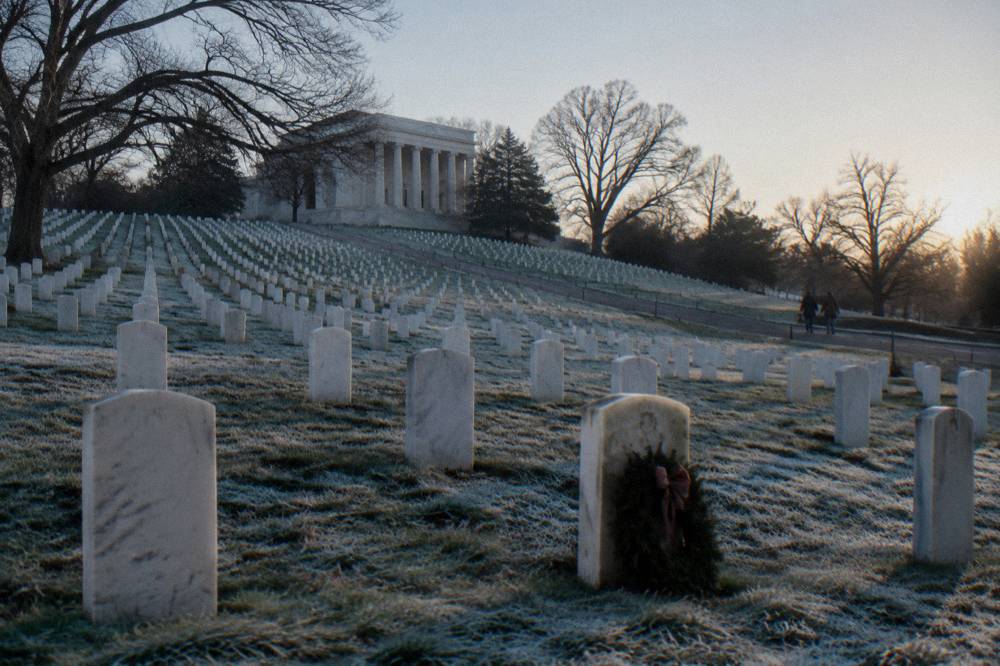
The zoo parking is the big one and it's covered above. Arlington is the other classic: entry to the cemetery itself is free, including viewing the Changing of the Guard at the Tomb of the Unknown Soldier, but the tram tour that carries visitors up the hill is a separately paid product run by a concessionaire, and cemetery parking is charged separately too. Walking the cemetery free is entirely possible, it's a long hill, and the full breakdown is on is Arlington National Cemetery free.
The Washington Monument's $1 fee attaches to the booking channel, not the ticket: same-day tickets at the Monument Lodge are free, advance reservations through recreation.gov carry the $1 service fee per ticket. For a family of five that's five dollars, worth knowing before checkout.
Two attractions families often assume are free are not. Mount Vernon, outside the city, charges $30 for ages 12 and up. The International Spy Museum uses dynamic date-based pricing with no static figure published, so the honest answer is to check the operator's own ticketing page. The Museum of the Bible is paid, $34.99 for adults, with a real exception: free admission every Tuesday through May 18, 2027.
| Attraction | The free part | The paid part |
|---|---|---|
| National Zoo | Admission | Parking, $30 advance / $40 day-of |
| Arlington National Cemetery | Entry, Tomb ceremony viewing | Tram tour, on-site parking |
| Washington Monument | Grounds, same-day Lodge tickets | $1 per-ticket booking fee on advance reservations |
| Museum of the Bible | Tuesdays through May 18, 2027 | $34.99 adult otherwise |
| Mount Vernon | None found | $30, ages 12 and up |
One contested pair deserves a flag rather than a claim: the Folger Shakespeare Library and Planet Word are both commonly described as free in travel content, but this site's own verification pass couldn't pin a current, sourced admission policy for either, so no free claim is made here until a direct check against each operator's own visit page settles it.
How Do You Plan A Free Three-Day Family Itinerary?
Day one: the memorial corridor and the Natural History museum, all walk-up free. Day two: the National Zoo by Metro in the morning and the Botanic Garden or American History in the afternoon. Day three: the timed-pass day, book Air and Space and NMAAHC passes a month out, then the moonlight walk to close. The only spend in that whole plan is food, Metro fares and whatever you tip a guide.
The sequencing matters more than the list. Book the timed passes first, because NMAAHC passes for weekends go fast, released up to 30 days ahead through tickets.si.edu with same-day passes posted in the morning. Once the pass days are fixed, build the walk-up days around them. The Destination DC what's-open page is worth a glance before travel for any closure notices.
Cherry blossom season needs its own warning: peak bloom landed on March 26 in 2026, and the Tidal Basin in that window is the most crowded free sight in the country. It's spectacular, and the family-focused planning is on free things to do in DC in cherry blossom season.
For families who want a guide on one of the three days, the third operator on this site's roster is Blue Umbrella Tours' Mall walk, listed on freetour.com, rated 8.7 out of 10 across 143 freetour.com reviews, running about two and a half hours. It's a genuine alternative to the GuruWalk listings rather than a duplicate, and the longer runtime suits older children.
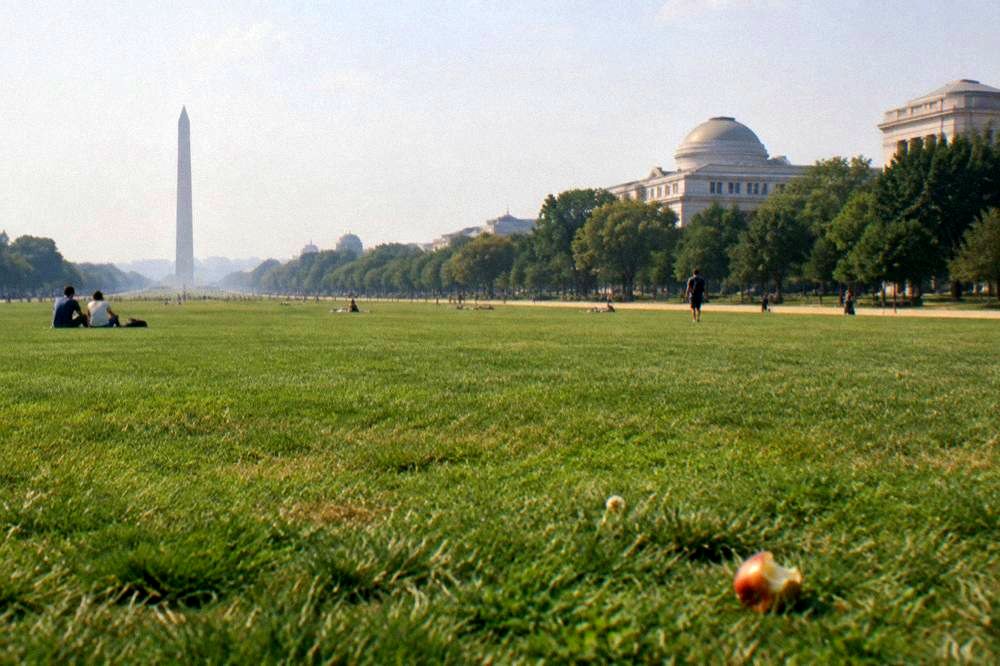
The practical spine of any DC family trip is the Mall itself: flat, shaded in summer, ringed with free museums and food trucks. A guide to the corridor's full free list is on free things to do near the National Mall, and the site's homepage, Free Things To Do In Washington DC, collects the full roster of free attractions and walks in one place.
Common Questions About Free Things To Do In Washington DC With Kids
Is the National Zoo really free for kids?
Yes, admission to the National Zoo is free for everyone, with no ticket needed. The catch is parking: on-site parking is paid, $30 booked in advance or $40 on the day, so arriving by Metro keeps the visit genuinely free.
Do kids need timed passes for the Smithsonian museums?
Most Smithsonian museums are walk-up free with no pass, but two require a free timed-entry pass: the Air and Space Museum's DC building and the National Museum of African American History and Culture. NMAAHC passes are released up to 30 days in advance, with same-day passes posted online in the morning.
Can children join a free walking tour in DC?
Yes. All three walks on this site's roster are free to join and pay what you want at the end. The two-hour Daytime Monuments Walk suits roughly ages seven and up, and the 90-minute moonlight walk works well for teenagers. There's no booking fee, so a family can leave mid-walk without losing anything.
Is the Washington Monument free to go up?
The grounds are free to walk around anytime. Going up inside requires a timed ticket: free same-day tickets at the Washington Monument Lodge on a first-come basis, or advance reservations through recreation.gov with a $1 non-refundable service fee per ticket.
What's the best free evening activity with kids in DC?
The lit memorial corridor after dark. The Lincoln Memorial, World War II Memorial and the Tidal Basin are all open, free and floodlit, and the crowds thin out after dinner. The Monuments By Moonlight walk covers that corridor in 90 minutes, free to join with tipping at the end.
Are the monuments on the National Mall free to visit?
Yes, every memorial on the Mall, including the Lincoln, World War II, Korean War and Vietnam Veterans Memorials, is free and open with no ticket or pass at any time of day.