Free Things To Do In Washington DC In April: Cherry Blossoms, Monuments And Museums Without Spending A Dollar
April is the month Washington DC saves its best weather and its biggest crowds for, and almost everything worth seeing is free. Here is how to plan a blossom-season visit around the monuments, the museums and the timed-pass rules that catch visitors out.
Short answer
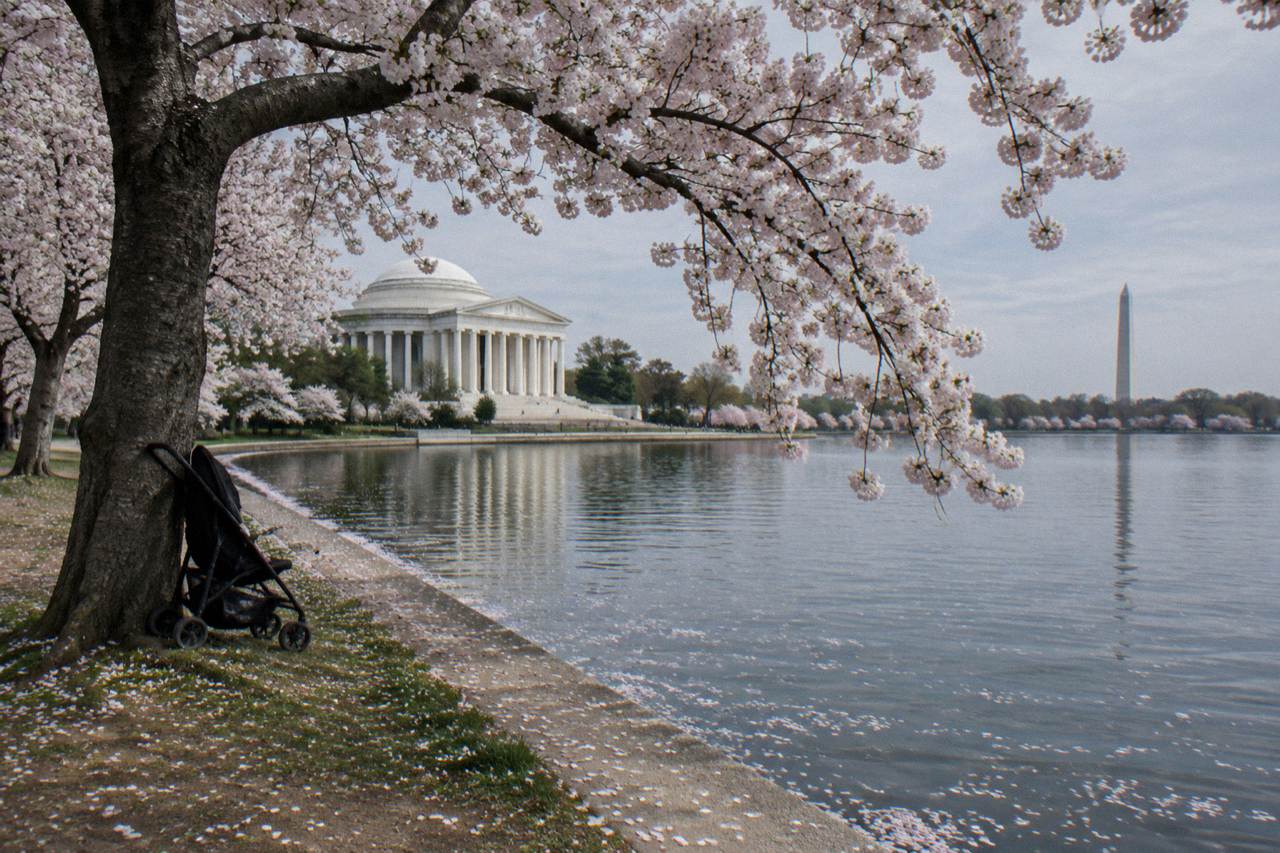
The Tidal Basin cherry blossoms are free to see 24 hours a day, and the most recent peak bloom landed on March 26, 2026, with blossoms holding into early April. The monuments and most Smithsonian museums are free too, though the Washington Monument, NMAAHC and the Air and Space Museum require free timed passes.
What Can You Do In Washington DC In April For Free?
Almost everything that defines a Washington April costs nothing: the Tidal Basin cherry blossoms, the Lincoln Memorial, the Smithsonian museums along the Mall, the National Gallery of Art, Arlington National Cemetery's entry and the monuments at dusk. The catches are narrow but real, and they are all about timed passes and parking, not admission. Get the pass rules right and an entire long weekend can run at zero dollars.
April is the one month when Washington's free core and its most beautiful scenery overlap. The city's visitor economy is enormous, a record 27.2 million visitors in 2025 generating $11.9 billion in spending according to Destination DC, and a large share of those trips cluster around the cherry blossom window. Yet the thing those visitors come to photograph, the Yoshino cherry trees ringing the Tidal Basin, stands on public parkland with no gate, no ticket and no fee. The National Park Service, which manages that land, publishes its bloom forecasts openly on its Bloom Watch page.
The planning problem in April is not cost, it is logistics. Crowds at the Tidal Basin on a peak-bloom Saturday are dense enough that the sidewalk along the water slows to a shuffle. Some of the free museums that normally let you walk straight in switch to timed-entry passes in busy seasons. Parking anywhere near the Mall is scarce and, at the National Zoo, explicitly paid even though the zoo itself is free. This guide walks through each of those pieces: the blossoms, the free monuments and memorials, the museums and their pass rules, the free events that land in April, and a sample zero-dollar day that strings them together.
If you want the monument corridor explained rather than just walked, this site's directory covers exactly three free, pay-what-you-want walks, and the Daytime Monuments Walk on the National Mall is the one that pairs most naturally with an April visit. More on that below.
When Do The Cherry Blossoms Actually Peak, And Is Seeing Them Free?
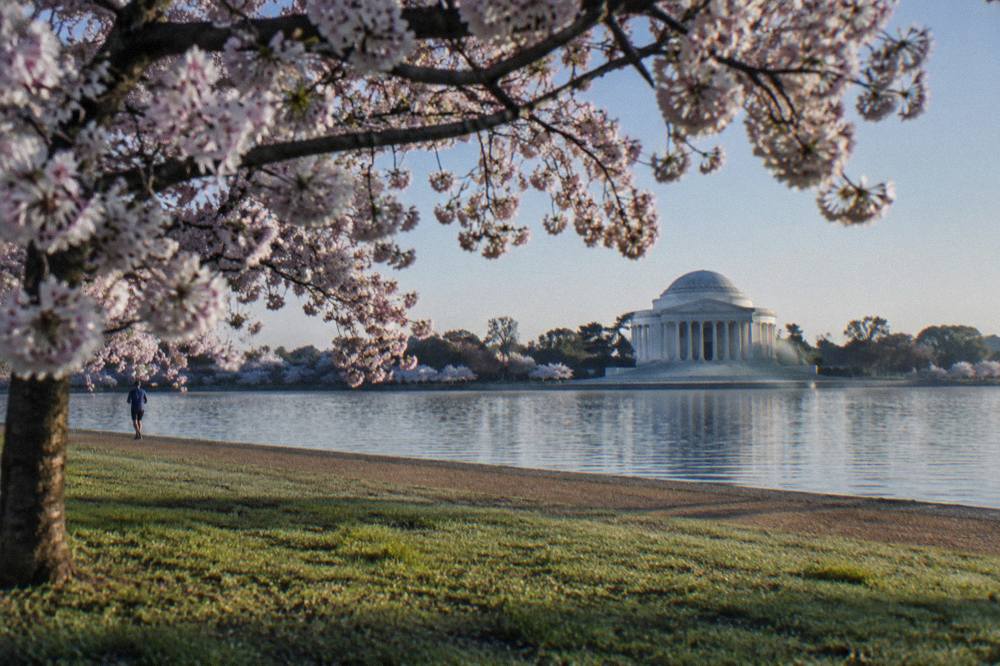
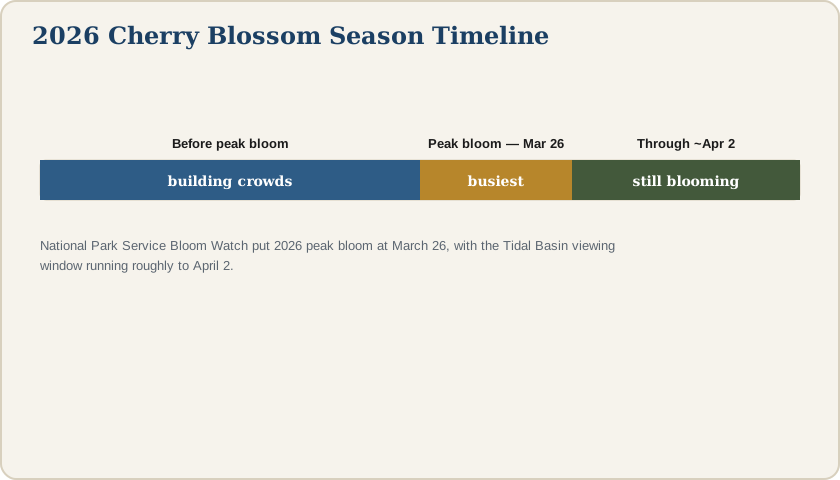
Yes, seeing the cherry blossoms is completely free, at any hour, on National Park Service land around the Tidal Basin and East Potomac Park. The most recent peak bloom was March 26, 2026, with the blossoms holding roughly through April 2. Peak bloom is defined as the day 70 percent of the Yoshino cherries at the Tidal Basin are open, a definition the Park Service publishes with its forecast each year.
That March 26 date matters for April planners, because it shows how variable the window is. The trees can hit peak anywhere from mid-March to mid-April depending on the winter, so an April trip is a genuine gamble on the calendar rather than a guaranteed blossom show. When peak lands late, as it sometimes does, the first week of April is the best free spectacle in the country. When peak lands early, as in 2026, April visitors find the tail end of the bloom, petals falling into the Tidal Basin, which is its own kind of scene and considerably less crowded.
The National Cherry Blossom Festival itself, the citywide event series that runs alongside the bloom, stages plenty of free programming: the parade, the opening ceremony and most of the neighborhood events cost nothing to attend, while some ticketed gala events do not. The trees are the main draw either way, and no festival pass, wristband or ticket exists for simply walking among them.
For the mechanics of a free Mall visit more broadly, the site's National Mall walking tour guide covers the layout, and free things to do in Washington DC this weekend tracks the recurring no-cost options. If you would rather have a guide than a map, all three walks in this site's directory are free, pay-what-you-want tours, and the trio below covers a daytime option, a night option and a second operator's take on the same ground.
How Do You See The Blossoms Without The Worst Crowds?
Go at sunrise or after dark. The Tidal Basin has no gates and no hours, so the same free trees are viewable at 6 a.m. with a handful of joggers or at 9 p.m. under floodlights with thin crowds. The peak-bloom weekend between 11 a.m. and 4 p.m. is the single most congested stretch of parkland in the city, so timing, not money, is the lever you control.
Sunrise is the classic move. Photographers line the north shore of the Tidal Basin before dawn because the light comes up behind the Jefferson Memorial, and by 7:30 a.m. on a weekday you can still walk the loop at a normal pace. The loop around the basin is about two miles, flat, and connects at its northeast corner to the Lincoln Memorial, the Korean War Veterans Memorial and the Martin Luther King Jr. Memorial, all free, all open, all within a ten minute walk of the trees.
After dark is the underrated option, and it is where an evening walk earns its place. The monuments are lit, the blossom petals catch the floodlights, and the crowd level drops by an order of magnitude. The Monuments By Moonlight walk in this site's directory is a free, pay-what-you-want evening option, rated 4.26 across 65 GuruWalk reviews, running an hour and a half from the Albert Einstein Statue, and the moonlit blossom corridor along the west Mall is exactly the ground it covers. GuruWalk lists it with its meeting point and schedule on the guide's own page.
A third angle is to skip the Tidal Basin entirely on the busiest days. The cherry trees at the U.S. National Arboretum, which is free to enter, and the lesser-known groves in residential neighborhoods give you the same flowers without the funnel crowd. The Arboretum's collection includes older, larger specimens and, in April, azaleas that follow the cherries, all on free public land a metro ride from the Mall.

Which Free Monuments And Memorials Are Best In April?
The World War II Memorial, the Lincoln Memorial, the Vietnam Veterans Memorial, the Korean War Veterans Memorial and the Martin Luther King Jr. Memorial form a walkable free cluster on the west Mall, all open around the clock. In April the Franklin Delano Roosevelt Memorial and the Jefferson Memorial sit inside the cherry-bloom zone itself, so the stones and the flowers arrive in one walk. None of them charge admission or require a pass.
This is the corridor an April visitor should walk first, because it doubles as the blossom route. Start at the World War II Memorial, where the Daytime Monuments Walk, the free two-hour tour in this site's directory, also starts, then walk west past the Reflecting Pool to the Lincoln Memorial. The FDR Memorial, a few minutes south of the Lincoln along the Tidal Basin's west edge, is made of red granite rooms and waterfalls and is at its best with the cherries out. The Jefferson Memorial across the water completes the loop.
The memorials reward some background knowledge, which is the honest case for a guided walk over a solo one. The free Daytime Monuments Walk, run by a guide named Lisa and rated 4.4 across 324 GuruWalk reviews, covers this west Mall ground over two hours in English, meeting at the World War II Memorial. You pay nothing to join and tip at the end if the walk earned it. The full mechanics of how that model works are explained in the free walking tours tipping guide.
One April-specific note: the National Park Service does not allow picnicking or recreational games on the Tidal Basin's blossom-facing lawns during the festival period, and the trees themselves are protected, so the free visit comes with a light touch of etiquette. Stay on paths near the trees, and the grounds stay in the condition that makes the walk worth taking.
For a fuller inventory of what is free and what is not, free monuments and memorials on the National Mall lists them all with their access rules.
If the guided version appeals, the practical details are simple: the walk runs two hours in English, it meets at the World War II Memorial, and the only money that changes hands is the tip you choose to give at the end. Booking a spot costs nothing, and the free-cancellation terms on GuruWalk's own listing mean a change of weather plan does not strand you.
Which Free Museums Are Worth Pairing With A Blossom Walk?
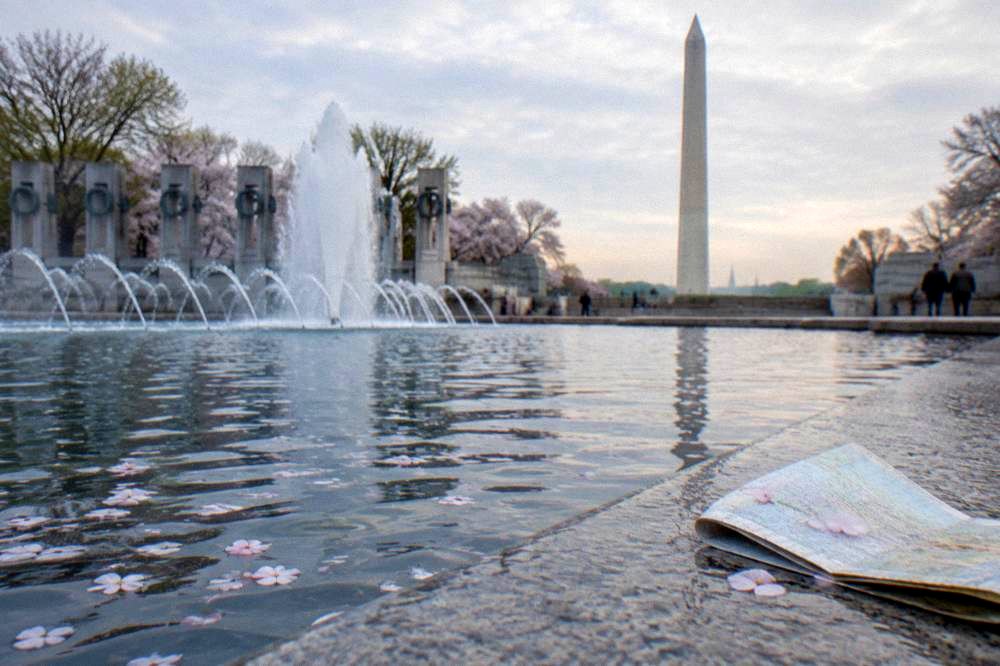
The National Gallery of Art, the National Museum of Natural History, the American History Museum and the American Indian Museum are all free with no pass needed, and all sit within a fifteen minute walk of the Tidal Basin. The two Smithsonian museums that do require a free timed pass are the National Museum of African American History and Culture and the Air and Space Museum's DC building. Never assume the walk-in rule applies across the whole Smithsonian.
The Smithsonian Institution is large, twenty museums plus the National Zoo, with ten museums sitting directly on the Mall between 15th and 3rd Streets and six more nearby. Most of them hold to the famous walk-in-free policy. The two exceptions, NMAAHC and the Air and Space Museum's DC building, use free timed-entry passes booked in advance, with NMAAHC releasing passes up to 30 days ahead and a same-day batch online in the early morning. The passes cost nothing, but a peak-season April Saturday can distribute them fast, so booking ahead is the difference between getting in and standing outside. Everything else covered here is indexed on Free Things To Do In Washington DC.
The Holocaust Memorial Museum also requires a free timed pass year-round, though it is not a Smithsonian museum, and passes go fastest during cherry blossom season. The National Archives Museum, home of the Declaration of Independence, is free and generally walk-up outside the worst summer weeks. The table below sorts the April-relevant ones by their actual access rule.
| Museum | Admission | Pass needed? |
|---|---|---|
| National Museum of Natural History | Free | No, walk in |
| National Museum of American History | Free | No, walk in |
| National Museum of the American Indian | Free | No, walk in |
| National Gallery of Art | Free | No, walk in |
| African American History and Culture Museum | Free | Yes, free timed pass |
| Air and Space Museum, DC building | Free | Yes, free timed pass |
| Holocaust Memorial Museum | Free | Timed pass required |
| National Archives Museum | Free | Walk-up, timed in peak summer |
The Smithsonian's own museums directory is the page to check before any visit, because pass policies are the one thing that changes. Two museums in this city have genuinely unresolved admission status, the Folger Shakespeare Library and Planet Word, and this site does not claim either is free or paid until their own visit pages confirm it.
A free walk that covers the Mall's museum corridor from the outside is Blue Umbrella Tours' Mall walk, listed on freetour.com, rated 8.7 out of 10 across 143 freetour.com reviews and running two and a half hours in English. It is the one walk in this directory that is not on GuruWalk, and it gives the Mall's buildings and history a narrated frame for whatever you tip.
What Free Events Happen In Washington DC In April?
The National Cherry Blossom Festival's parade and opening ceremony are free, the Smithsonian museums run their normal free program of talks and demonstrations, and the Kennedy Center's Millennium Stage hosts a free live performance almost every evening at 6 p.m. The National Zoo's admission is free year-round, and April is one of its best weather months. The only April costs hiding inside the free list are the zoo's parking and the festival's ticketed gala events.
The parade is the anchor. It runs along Constitution Avenue within sight of the Mall, costs nothing to watch from public sidewalk space, and typically features the festival's floats, marching bands and giant balloons. Grandstand seats are the paid version, but the sidewalk viewing is the traditional one and it is free.
The Kennedy Center's Millennium Stage is Washington's most reliable free evening event, a live performance most evenings at 6 p.m. in the Grand Foyer, with the building itself open to visitors and the river terrace views over the Potomac thrown in at no charge. Pair it with a sunset monument walk and you have a full free evening. The free things to do in Washington DC at night guide expands that whole evening category.
Beyond the festival, April's calendar reliably includes free ranger talks from the National Park Service at the monuments, free tours of the Bureau of Engraving and Printing when its season is running, and the U.S. Botanic Garden's spring displays a short walk from the Capitol, all free and all indoors-adjacent enough to serve as rain backups. The Botanic Garden sits right at the base of Capitol Hill, which makes it an easy add-on to the free Capitol Visitor Center.
| Event or venue | Cost | April note |
|---|---|---|
| Cherry Blossom Festival parade | Free to watch | Sidewalk viewing on Constitution Avenue |
| Kennedy Center Millennium Stage | Free | Most evenings, 6 p.m. |
| National Zoo admission | Free | Parking is paid, $30 advance or $40 day-of |
| U.S. Botanic Garden | Free | Spring displays near the Capitol |
| National Park Service ranger talks | Free | Scheduled at the monuments |
| Festival gala events | Ticketed | The exception, skip freely |
What Should You Skip Or Pay For In April?
The honest paid list is short: the International Spy Museum and Mount Vernon charge admission, the Washington Monument's ascent needs a ticket, the zoo's parking is paid, and the Spy Museum and the Cathedral use variable pricing with no fixed figure to quote. Everything else a first-time visitor wants is free or conditionally free. The Museum of the Bible is the odd one, paid at $34.99 for adults but free every Tuesday through May 18, 2027.
The Washington Monument deserves its own sentence because it is the most misunderstood item on the Mall. The grounds are free, the view from outside is free, but going up requires a timed ticket: free same-day tickets at the Monument Lodge on a first-come basis in the morning, or an advance reservation through recreation.gov that carries a $1 per-ticket service fee. The fee attaches to the booking channel, not the monument. The Washington Monument free tickets guide covers the mechanics in full.
Arlington National Cemetery follows the same pattern: entry is free, the tram tour inside and the parking are separately paid. The Arlington cemetery guide sorts that out. Mount Vernon, George Washington's estate, charges $30 for adults 12 and up, and it is the one major April draw where a paid ticket buys something the free list genuinely does not have. The Spy Museum's own site uses dynamic date-based pricing with no static figure, so check its ticketing page rather than any quoted price you see elsewhere, and Washington National Cathedral's sightseeing tickets are listed as varying.
For most April itineraries the right answer is to pay for nothing. The free tier in Washington is not a discount tier, it is the main product: the blossoms, the memorials, the Smithsonian museums, the Capitol and the Archives are the city's headline attractions, and they cost zero.
| Attraction | Status | The catch |
|---|---|---|
| Washington Monument ascent | Free, ticketed | Same-day at the Lodge or $1 recreation.gov fee in advance |
| International Spy Museum | Paid | Dynamic pricing, no fixed figure |
| Mount Vernon | $30 adult (12+) | Small advance online discount |
| Museum of the Bible | $34.99 adult | Free Tuesdays through May 18, 2027 |
| National Cathedral sightseeing | Paid, varies | Worship services are free |
| Folger Shakespeare Library | Unresolved | No free or paid claim made here |
| Planet Word | Unresolved | No free or paid claim made here |
What Does A Zero-Dollar April Day In DC Actually Look Like?
A realistic free day: sunrise at the Tidal Basin, the west Mall memorials through the morning, a walk-in-free Smithsonian museum after lunch, the Archives or Capitol Visitor Center in the afternoon, and the lit monuments or the Kennedy Center's 6 p.m. show to close. The only money a day like this needs is metro fare and food, because every stop on it is free, and the timed-pass stops are the ones you book the week before.
Here is a version that assumes a peak-bloom weekday in early April, built entirely from the free list above. The order is deliberate: the blossoms come first because the light and the crowd window close fastest, and the museum sits midday because it is the indoor, rest-your-legs slot.
| Time | Stop | Cost | Rule to know |
|---|---|---|---|
| 6:45 a.m. | Tidal Basin blossom loop | Free | Open parkland, no pass, no hours |
| 9:00 a.m. | World War II to Lincoln Memorial walk | Free | Open 24 hours |
| 11:00 a.m. | FDR and Martin Luther King Jr. Memorials | Free | Inside the blossom zone |
| 12:30 p.m. | Lunch, then Natural History or American History Museum | Free | Walk-in, no pass |
| 3:00 p.m. | National Archives or Capitol Visitor Center | Free | Archives walk-up, Capitol tour reserve ahead |
| 6:00 p.m. | Kennedy Center Millennium Stage show | Free | Most evenings at 6 |
| 8:00 p.m. | Lit monuments, Lincoln steps | Free | The quiet version of the morning |
Swap in a guided walk at either end and the day still costs nothing upfront. The Daytime Monuments Walk covers the 9 a.m. slot with a guide, the Moonlight walk covers the 8 p.m. one, and both run on the pay-what-you-want model where the tip is the only transaction. Families have a slightly different set of constraints, and free things to do in Washington DC for families builds the kid-weighted version of this same day.
The one thing to book before you arrive is a pass, not a payment. If NMAAHC or the Air and Space Museum is on your list, reserve the free timed passes as soon as your dates are fixed, because April's visitor volume is the highest the Mall sees outside of summer, and the passes are the only part of the free city that can sell out.
Common Questions About Free Things To Do In Washington DC In April
Are the cherry blossoms in Washington DC free to see?
Yes, completely. The cherry trees around the Tidal Basin and East Potomac Park sit on National Park Service land with no gate, ticket or fee, and they are viewable at any hour. The most recent peak bloom was March 26, 2026, with blossoms holding roughly through April 2.
Is April a good time to visit Washington DC on a budget?
It is one of the best. The city's headline attractions, the monuments, the Smithsonian museums, the National Gallery and the Tidal Basin, are all free, so the main costs are transport, food and lodging. April crowds are heavy during peak bloom, but the free tier does not get more expensive, it just gets busier.
Do Smithsonian museums require tickets in April?
Most do not. The majority of Smithsonian museums are walk-in free with no pass. The two exceptions are the National Museum of African American History and Culture and the Air and Space Museum's DC building, both of which require a free timed-entry pass booked in advance or grabbed in the same-day release.
What is the best free thing to do in DC at night in April?
The lit monuments. The Lincoln Memorial, the World War II Memorial and the Tidal Basin blossom corridor are all free and open around the clock, and the crowds after dark are a fraction of the daytime ones. The Kennedy Center's Millennium Stage also hosts a free live performance most evenings at 6 p.m.
Do you need to pay for the Washington Monument in April?
The grounds are free. Going up requires a timed ticket that is free at the Monument Lodge on a same-day, first-come basis, or reservable in advance through recreation.gov with a $1 per-ticket service fee. The fee is for the booking channel, not the monument itself.
Are free walking tours in DC really free?
Yes. The three walks in this site's directory, two on GuruWalk and one on freetour.com, operate on a pay-what-you-want model: you join at no charge and tip the guide at the end if the walk earned it. Nothing is owed upfront and there is no minimum.