Best Free Things To Do In Washington DC: The Full List
Washington DC gives away more world-class sightseeing than almost any capital on earth. Here is what is genuinely free, what is conditionally free, and how to spend a day, or a week, without buying a single ticket.
Short answer
The best free things to do in Washington DC are the National Mall's monuments and memorials, the Smithsonian museums (most walk-in free, two need a timed pass), free government tours of the Capitol, Library of Congress and Bureau of Engraving and Printing, the National Zoo, and pay-what-you-want walking tours. Expect to pay only for food, transit and a few optional extras.
What Are The Best Things To Do For Free In Washington DC?
The best free things to do in Washington DC are walking the National Mall's monuments and memorials, visiting the Smithsonian museums, touring the Capitol, Library of Congress, National Archives and Bureau of Engraving and Printing, seeing the National Zoo, and joining a pay-what-you-want walking tour. Most are genuinely free at the door; a handful need a free timed pass booked ahead.
DC is unusual among capital cities in how much of its headline sightseeing carries no admission charge at all. The monuments are outdoors and open around the clock. The Smithsonian Institution runs 20 museums plus the National Zoo, and admission to most of them costs nothing, a policy that dates back to the Institution's founding bequest. The federal government runs free tours of its own buildings, from the Capitol to the money factory.
Destination DC counted a record 27.2 million visitors in 2025, and a large share of those trips were built almost entirely around things that cost nothing to enter. That is not an accident or a loophole. It is how the city was designed: the Mall, the museums and the memorials were laid out as public space, and most of them still function as exactly that.
The honest version of a "best free things" list has to draw one line carefully. Some of DC's biggest draws are free with a condition attached: the Washington Monument's grounds are free but the ascent needs a timed ticket, the National Museum of African American History and Culture needs a free timed pass, and the Air and Space Museum's DC building is the same. This guide separates the genuinely free from the conditionally free, and names the condition every time, because a list that calls everything "free" sets readers up for a wasted trip.
Here is the short version of the whole list, before the detail.
| Free thing | Where | The catch |
|---|---|---|
| National Mall and its monuments | Between the Capitol and the Lincoln Memorial | None, open around the clock |
| Most Smithsonian museums | On and around the Mall | None for walk-in venues |
| NMAAHC and Air and Space (DC building) | The Mall | Free timed pass required |
| U.S. Capitol tour | Capitol Visitor Center | Reservation recommended |
| Library of Congress | Capitol Hill | None for exhibitions |
| National Archives Museum | Constitution Avenue | Timed entry recommended in peak season |
| Bureau of Engraving and Printing | 14th and C Streets SW | Ticketed tour slots |
| National Zoo | Rock Creek Park | Admission free, parking is paid |
| U.S. Botanic Garden | Near the Capitol | None |
| Pay-what-you-want walking tours | Various meeting points | Tip at the end |
The National Mall's Monuments And Memorials Cost Nothing
Every monument and memorial on the National Mall is free to visit, with no ticket, no pass and no closing time: the Lincoln Memorial, the World War II Memorial, the Vietnam Veterans Memorial, the Korean War Veterans Memorial, the Jefferson Memorial, the FDR Memorial and the MLK Memorial. The grounds of the Washington Monument are free too, though going up requires a timed ticket.
This is the single best free experience in the city, and it is genuinely free, not conditionally free. The Mall stretches from the Capitol to the Lincoln Memorial, and the memorial corridor along its western half is the part most visitors come for. The Lincoln Memorial sits at the far end, its steps facing the Reflecting Pool and the Washington Monument beyond it. The Vietnam Veterans Memorial, the Korean War Veterans Memorial and the World War II Memorial cluster within a few minutes' walk of each other.
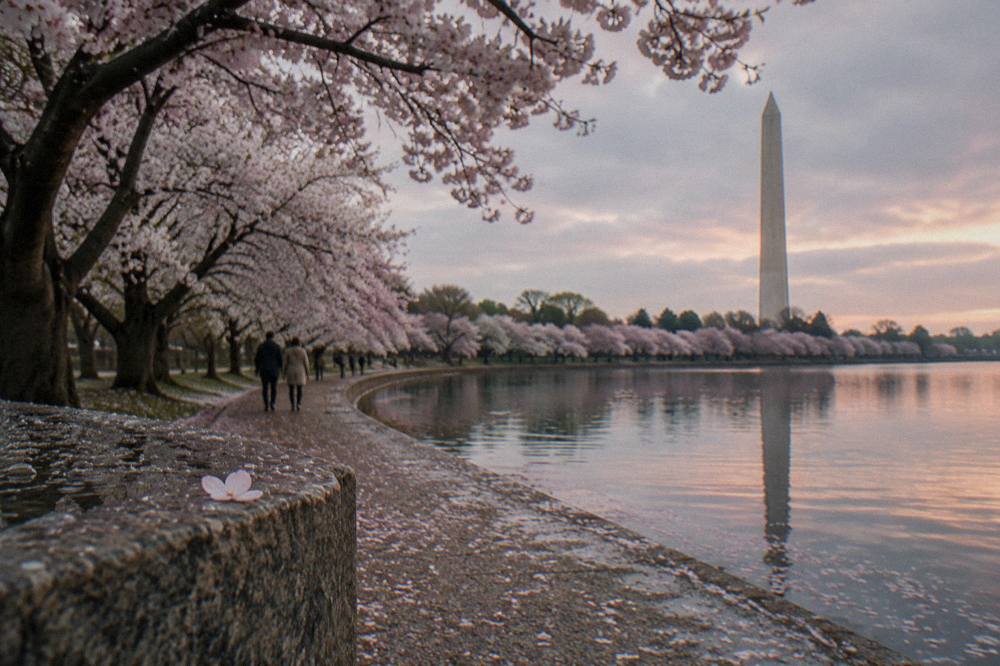
Crossing the Tidal Basin takes you to the Jefferson Memorial, the FDR Memorial and the Martin Luther King Jr. Memorial, all free, all open, all reachable on foot. The National WWI Memorial at Pershing Park and the Albert Einstein Memorial near the National Mall round out the set. In cherry blossom season the Tidal Basin is the city's most photographed spot; peak bloom in 2026 landed on March 26, and the blooming window ran roughly through April 2. The trees cost nothing to walk among, which is worth knowing when hotel rates in that week are the highest of the year.
The distances are longer than most visitors expect. The Mall is about two miles from end to end, and the memorial corridor adds side trips. Many people pair the walk with a structured tour, and the free-walk model suits this stretch well because the ground itself is the attraction.
The Daytime Monuments Walk, National Mall is one such option: a pay-what-you-want walking tour on GuruWalk, run by a guide named Lisa, rated 4.4 across 324 GuruWalk reviews. It runs about two hours in English, meeting at the World War II Memorial, and covers the core monument corridor the way a good local guide does, with context a plaque cannot give you. You pay nothing upfront and tip what you think the walk was worth at the end.
If you would rather go alone, that works too. Start at the Capitol end in the morning or the Lincoln end in the late afternoon, when the light is best and the crowds are thinner, and give the western half at least three hours. Water and shade are scarce in summer, and the walk between the Lincoln Memorial and the Capitol is not one most people want to do twice in a day.
For a deeper cut on this corridor, the guide to the free monuments on the Mall breaks down each memorial individually, and the National Mall walking tour guide maps a sensible route.
The Smithsonian Museums: Mostly Free, With Two Catches
Most Smithsonian museums are free to walk into with no ticket: Natural History, American History, the American Indian Museum, American Art, the Portrait Gallery, the Freer and the Museum of Asian Art, the Hirshhorn, the Postal Museum and the Renwick. Two exceptions require a free timed pass: the National Museum of African American History and Culture, and the Air and Space Museum's DC building.
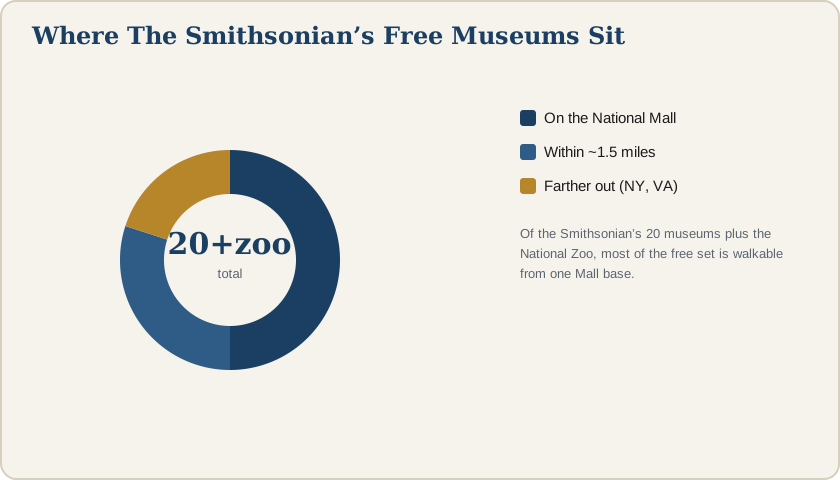
The Smithsonian Institution comprises 20 museums and the National Zoo, per the Institution's own museums directory. Ten sit directly on the National Mall, six more are within about a mile and a half of it, two are in New York City, and the Udvar-Hazy Center is out in Virginia. For a visitor on foot around the Mall, the practical set is the ten on the Mall plus the near ones.
The blanket "walk in free" reputation is mostly accurate, and it is the reason a DC trip can cost so little. The National Museum of Natural History, with its dinosaur halls and the Hope Diamond, charges nothing. American History, with the Star-Spangled Banner and the First Ladies' gowns, charges nothing. The American Art Museum, the Portrait Gallery, the Hirshhorn, the Freer, the Renwick: all free, all the time, no ticket needed.
The two catches matter enough to plan around. NMAAHC requires a free timed-entry pass for all visitors, released up to 30 days in advance on a rolling basis, with same-day passes posted online by about 8:15 a.m. through tickets.si.edu. The Air and Space Museum's DC building uses the same timed-pass system. Both remain free; the pass is a crowd-control tool, not a price. The National Zoo's admission is free as well, but its parking is not, at $30 booked in advance or $40 on the day.
The full picture, including which museums sit where and which need passes, is laid out in the free museums guide, and the question of why the Smithsonian is free at all has its own answer in why the Smithsonian is free.
Free Government Tours: Capitol, Library Of Congress, Archives And The Money Factory
The U.S. Capitol tour, the Library of Congress, the National Archives Museum, the Supreme Court, the Bureau of Engraving and Printing and the Kennedy Center's Millennium Stage are all free. The Capitol and the Bureau of Engraving and Printing require or strongly recommend a reservation; the Library of Congress and National Archives can be visited without one, though timed entry helps in peak season.
The federal government runs some of the best tours in the city and charges nothing for any of them. The Capitol Visitor Center offers free guided tours of the building, and a reservation is the practical way to guarantee a slot, especially in spring and summer. The tour covers the Rotunda, the Crypt and National Statuary Hall, and it is the one DC tour where the building you are standing in is still in daily use by the people it was built for.
The Library of Congress, across the street, is free to enter, and the Jefferson Building's Great Hall alone justifies the walk over. The National Archives Museum on Constitution Avenue holds the Declaration of Independence, the Constitution and the Bill of Rights; entry is free, and timed reservations smooth out the peak-season queue. The Supreme Court is free to visit when it is not in session, and the Bureau of Engraving and Printing offers a free ticketed tour where you can watch money being printed.
| Government attraction | Free? | Reservation |
|---|---|---|
| U.S. Capitol tour | Yes | Required, book ahead |
| Library of Congress | Yes | None for exhibitions |
| National Archives Museum | Yes | Timed entry recommended |
| Supreme Court | Yes | No, first-come |
| Bureau of Engraving and Printing | Yes | Ticketed tour slots |
| Kennedy Center Millennium Stage | Yes | No |
The White House is the one that trips people up. A White House tour is free, but it must be requested through a Member of Congress, typically 21 to 90 days ahead, so it is a planning item rather than a walk-up activity. The Capitol, Library of Congress and Archives guide covers the whole federal cluster in detail.
Monuments By Moonlight: The Free Evening Show
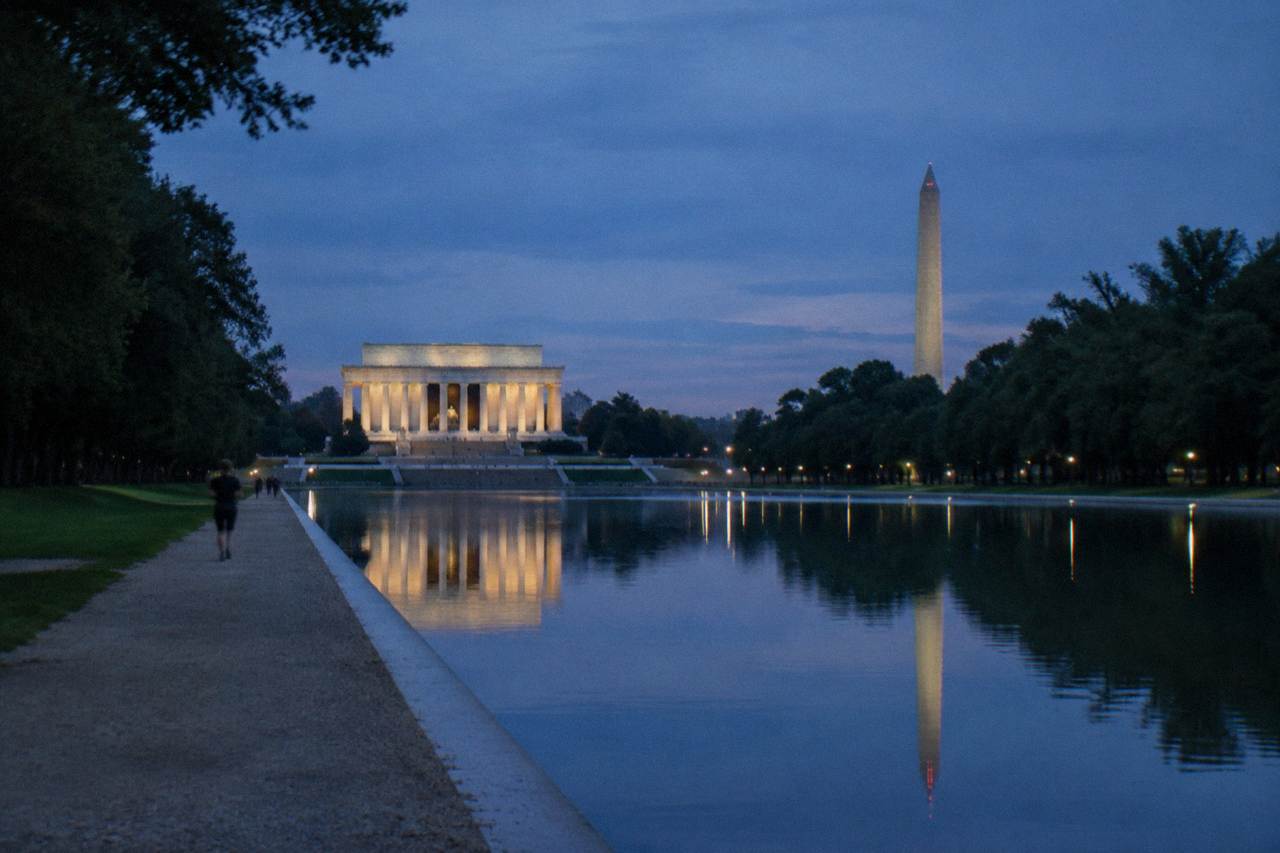
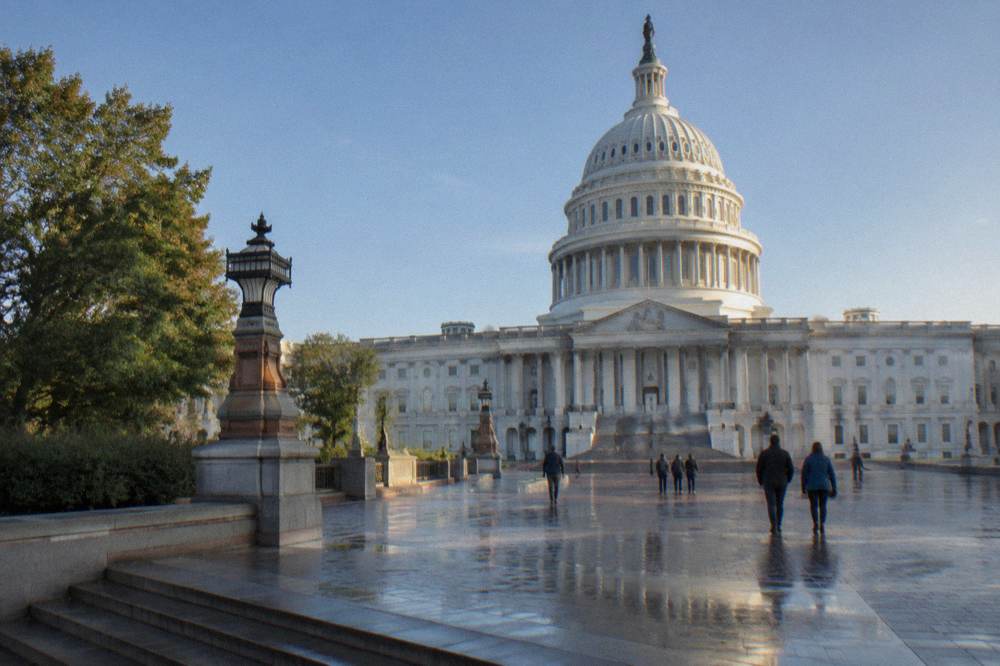
After dark, the Mall's monuments become a second, free attraction: the Lincoln Memorial, the World War II Memorial and the Korean War Veterans Memorial are lit and open all night, the crowds thin out, and the stone takes on a completely different character. Nothing about the evening Mall costs anything, and the lighting makes it the best free night activity in the city.
Daytime is the default, but the memorials after dark are arguably the better show. The Lincoln Memorial's columns are uplit, the Vietnam Veterans Memorial's wall catches the light in long low lines, and the World War II Memorial's fountains run into the evening. The heat of a DC summer, which can make a midday Mall walk punishing, is gone by nine. The whole corridor is public space, so there is no gate, no closing time and no fee.
This is also where the evening version of the pay-what-you-want walk fits in. Monuments By Moonlight, Evening Walk is a GuruWalk listing run by the same guide, Lisa, rated 4.26 across 65 GuruWalk reviews. It runs about an hour and a half in English, meeting at the Albert Einstein Statue, and covers the lit memorial corridor at the hour it looks best. Like the daytime walk, it costs nothing to join; you tip at the end.
Walking the Mall at night alone is perfectly safe on the main corridor, which stays lit and populated, but a guide adds the storytelling layer that the plaques do not carry. The free things to do at night guide has the full evening list, including the Kennedy Center's free Millennium Stage performances.
Beyond The Mall: Zoo, Gardens, Parks And Neighborhoods
Beyond the monument corridor, the National Zoo, the U.S. Botanic Garden, the U.S. National Arboretum, Meridian Hill Park and the Kennedy Center's free Millennium Stage shows are all free to enter. Arlington National Cemetery across the river is free to enter as well, though its interior tram tour and its parking are separately paid.
The National Zoo in Rock Creek Park is free to enter and holds giant pandas among its collection; the catch is parking, which is paid, so arriving by Metro is the budget move. The U.S. Botanic Garden sits at the foot of Capitol Hill and is one of the most pleasant free hours in the city, especially in winter when its conservatory is warm. The U.S. National Arboretum, farther northeast, is free and huge, with the National Capitol Columns as its backdrop.
Across the Potomac, Arlington National Cemetery's entry is free, and the walk to the Tomb of the Unknown Soldier is a steep but worthwhile climb. The changing of the guard ceremony is free to watch. The cemetery's tram tour and its parking are run as separate paid services, so the free version of Arlington is the walking version. The details are in is Arlington National Cemetery free.
Meridian Hill Park in Columbia Heights hosts drum circles on Sunday evenings in warm months, and the Kennedy Center's Millennium Stage puts on a free performance most evenings, with the building's river terrace as a free viewpoint before or after. None of these needs a ticket.
The Three Free Walking Tours, Compared
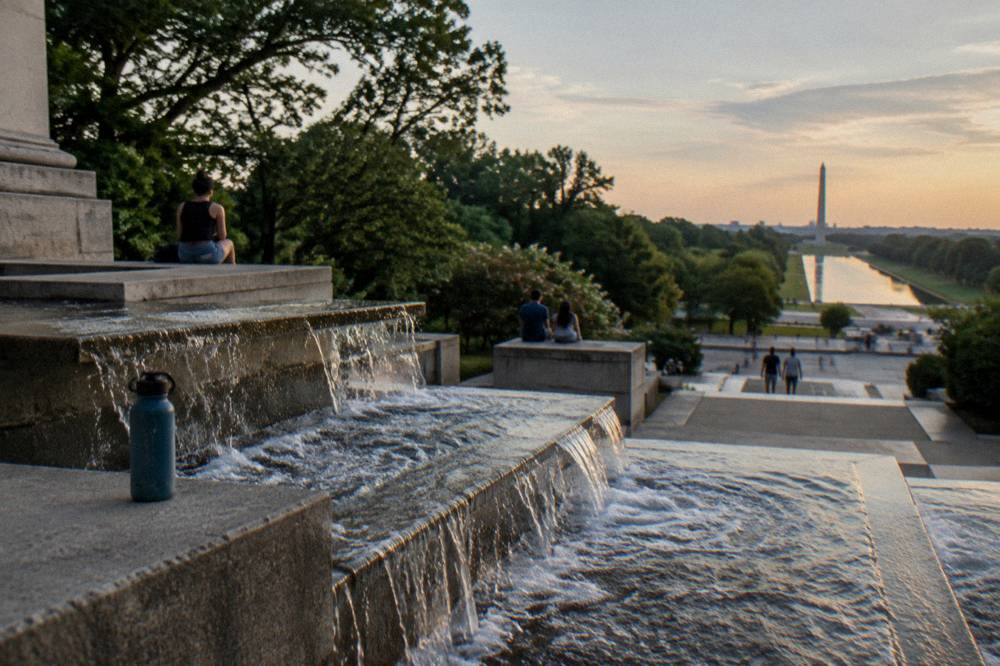
This site's roster has three pay-what-you-want walks: the Daytime Monuments Walk on GuruWalk (4.4 across 324 reviews, two hours), Monuments By Moonlight on GuruWalk (4.26 across 65 reviews, an hour and a half), and Blue Umbrella's Mall Walk on freetour.com (8.7 out of 10 across 143 reviews, two and a half hours). All three are free to join, and all three are tipped at the end.
The third walk is run by a different operator entirely. Free Tour The Mall Washington DC is a freetour.com exclusive from Blue Umbrella Tours, rated 8.7 out of 10 across 143 freetour.com reviews, running about two and a half hours in English. It covers the Mall's core the same way the GuruWalk walks do, with the operator's own guides and its own pacing.
| Walk | Platform | Rating | Duration | Meets at |
|---|---|---|---|---|
| Daytime Monuments Walk, National Mall | GuruWalk | 4.4 across 324 reviews | 2 hours | World War II Memorial |
| Monuments By Moonlight, Evening Walk | GuruWalk | 4.26 across 65 reviews | 1 hour and 30 minutes | Albert Einstein Statue |
| Blue Umbrella's Mall Walk, Another Operator | freetour.com | 8.7 out of 10 across 143 reviews | 2 hours and 30 minutes | See the listing |
The honest comparison is about fit, not quality. The daytime walk is the longest-established of the three and suits a first visit. The moonlight walk suits anyone whose daylight hours are spoken for. The Blue Umbrella walk is the longest of the three and comes from a separate operator, so it is the one to pick if you want a different guide's take on the same ground. The GuruWalk vs freetour.com comparison breaks down how the two platforms' tipping models differ, and the tipping guide explains what a fair tip actually looks like.
What "Free" Actually Means In DC: The Conditional List
In DC, "free" has three distinct meanings: unconditionally free (the Mall, most Smithsonian museums, the government tours), conditionally free (the Washington Monument's ascent, NMAAHC, Air and Space, the Holocaust Museum, the White House, Museum of the Bible on Tuesdays), and genuinely paid (the International Spy Museum, Mount Vernon). Planning fails when the three get mixed.
The Washington Monument is the classic case. Its grounds are free and always open, but the ascent requires a timed ticket: free same-day tickets are handed out first-come at the Washington Monument Lodge from about 8:45 a.m., or you can reserve in advance through recreation.gov, where a $1 non-refundable service fee attaches to the booking channel, not to the ticket itself. The National Park Service's own fees page lays out the mechanics.
The U.S. Holocaust Memorial Museum also uses a free timed-entry pass system, like NMAAHC. The White House tour needs a congressional request. Museum of the Bible is normally $34.99 for adults, but free every Tuesday through May 18, 2027, which makes it a conditional rather than a flat paid attraction.
On the paid side, the International Spy Museum uses dynamic date-based pricing with no static figure to quote, and Washington National Cathedral's own visit page says "Prices Vary" for sightseeing, though its worship services are open to all. George Washington's Mount Vernon is $30 for adults. Two commonly cited "free" museums, the Folger Shakespeare Library and Planet Word, have unresolved admission status; this site does not claim either way until a direct check against their own pages settles it.
| Attraction | Status | The condition |
|---|---|---|
| Washington Monument ascent | Conditionally free | Timed ticket, free at the Lodge or $1 fee via advance booking |
| NMAAHC | Conditionally free | Free timed pass, up to 30 days ahead |
| Air and Space Museum (DC) | Conditionally free | Free timed pass |
| Holocaust Memorial Museum | Conditionally free | Free timed pass |
| White House tour | Conditionally free | Request via a Member of Congress |
| Museum of the Bible | Conditionally free | Free Tuesdays through May 18, 2027 |
| International Spy Museum | Paid | Dynamic pricing, no static figure |
| Mount Vernon | Paid | $30 adult |
The Washington Monument free tickets guide covers the ascent's booking mechanics in full, and the wider set of planning guides on Free Things To Do In Washington DC handles each of these attractions one question at a time.
A Free Day In DC, Hour By Hour
A realistic all-free day: the monument corridor in the morning before the crowds, a Smithsonian museum after lunch, the Capitol grounds or Botanic Garden in the afternoon, and the lit memorials or a Kennedy Center show in the evening. Add a pay-what-you-want walk at either end and the day's only costs are food and Metro fare.
The sequencing matters more than the list. The memorials are best in the margins of the day, the museums are best in the middle of it, and the timed-pass venues reward advance planning. A first-time visitor who tries to do the Mall, three museums and the Zoo in one day ends up doing none of them well.
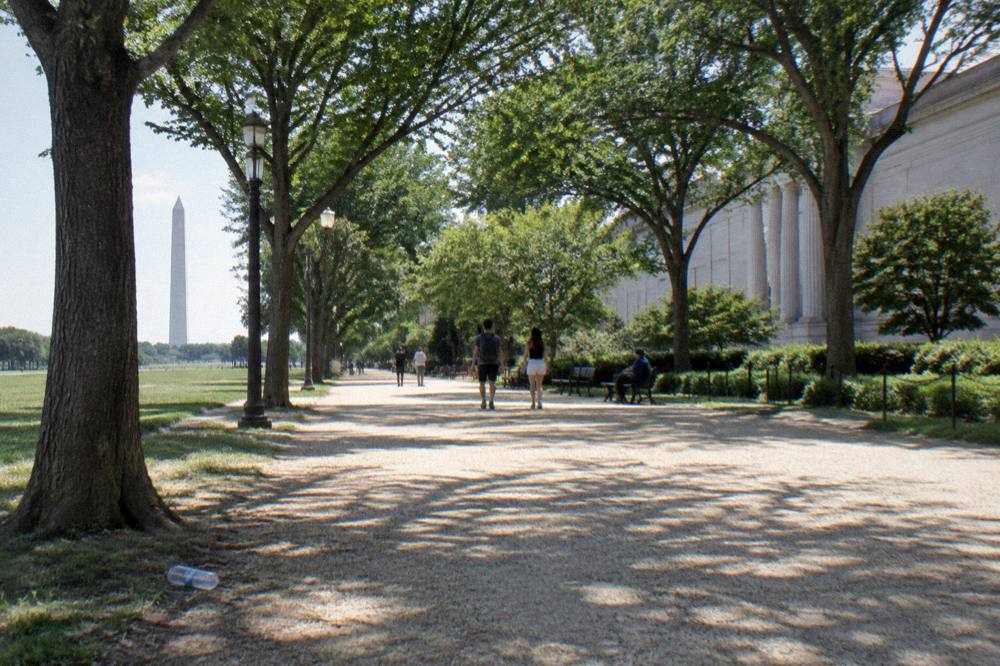
Morning: start at the Lincoln Memorial by 8 a.m., when the steps are quiet and the light comes over the Reflecting Pool. Walk east through the memorial corridor, or join the Daytime Monuments Walk at the World War II Memorial. Midday: pick one museum, not three. Natural History or American History for a first visit, the American Art Museum or the Hirshhorn for a quieter one. Afternoon: the Capitol grounds, the Library of Congress's Great Hall, or the Botanic Garden if your feet want a sit-down. Evening: dinner somewhere cheap, then back to the lit memorials, the moonlight walk, or the Millennium Stage's free show.
A full free weekend builds the same way. The free things to do this weekend guide tracks the recurring free events, the families guide adapts the same corridor for kids, and the free things to do today guide covers the same ground for a shorter visit.
Common Questions About The Best Things To Do For Free In Washington DC
What are the best free things to do in Washington DC?
The National Mall's monuments and memorials, the Smithsonian museums, the free government tours of the Capitol, Library of Congress and Bureau of Engraving and Printing, the National Zoo, and pay-what-you-want walking tours. The monuments are free with no conditions; the timed-pass museums are free but need a pass booked ahead.
Is the Smithsonian really free?
Most of it, yes. The Smithsonian runs 20 museums plus the National Zoo, and most charge no admission. Two venues, the National Museum of African American History and Culture and the Air and Space Museum's DC building, require a free timed-entry pass.
Is the Washington Monument free to go up?
The ascent is free but ticketed. Same-day timed tickets are handed out first-come at the Washington Monument Lodge from about 8:45 a.m., or you can reserve in advance through recreation.gov, where a $1 service fee applies per ticket.
Are free walking tours in DC actually free?
They are free to join and pay what you want at the end. The three walks in this site's roster, two on GuruWalk and one on freetour.com, all work on tips, so you decide the price after the walk.
What is the best free thing to do in DC at night?
The lit monuments on the National Mall. The memorial corridor is public space with no closing time, and the lighting makes it a completely different experience from the daytime version.
Which DC attractions are not free?
The International Spy Museum, which uses dynamic pricing, George Washington's Mount Vernon at $30 for adults, and Washington National Cathedral's sightseeing, whose own page lists prices as variable. Museum of the Bible is normally paid but free on Tuesdays through May 18, 2027.