Free DC For Adults: Monuments, Museums And Night Walks That Cost Nothing
Washington DC is one of the few capital cities where an adult with no ticket budget can spend three full days inside world-class museums, walk past presidential memorials at midnight, and tour the rooms where laws are printed, argued and archived. The catch is that some of the free attractions carry conditions, and knowing which ones do is the difference between a smooth day and a locked door.
Short answer
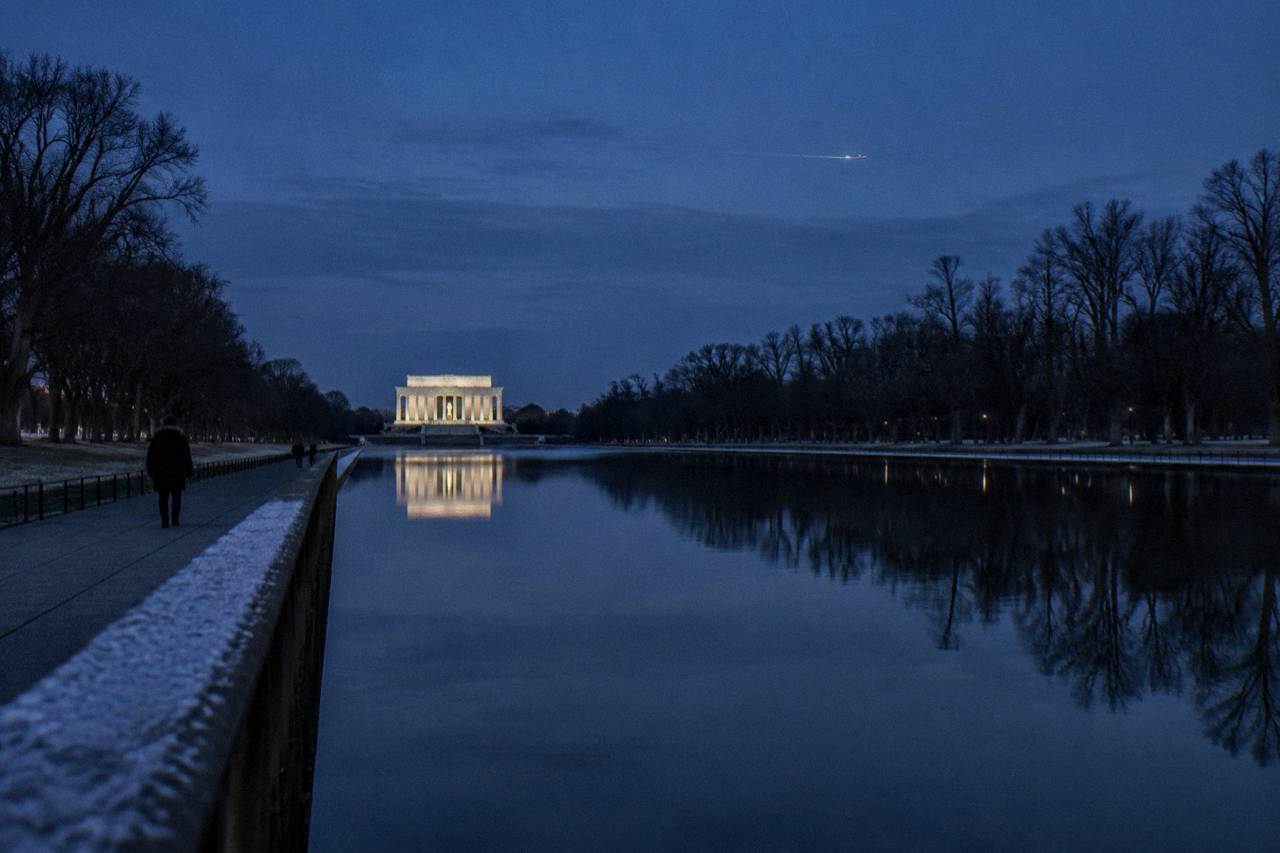
Adults can do an enormous amount in Washington DC for free: the National Mall's monuments are open around the clock, most Smithsonian museums cost nothing to enter, the Capitol, Library of Congress, National Archives and Bureau of Engraving and Printing all run free tours, and three pay-what-you-want walking tours cover the Mall by day and by night. Only a handful of attractions need timed passes.
Adults travel differently. You are not racing between playgrounds or negotiating nap windows; you want an afternoon inside a serious museum, a walk that ends somewhere good to eat, and the option to be standing in front of the Lincoln Memorial at 10 p.m. with nobody between you and the columns. Washington DC happens to be built for exactly that. The federal core of the city is a dense strip of free monuments, free museums and free institutional tours, and the parts that charge are the exception rather than the rule.
The city's scale backs this up. Destination DC counted a record 27.2 million visitors in 2025, and the free infrastructure is a large part of the draw. What follows is a practical map of the free side of the city for grown-up travellers: what is genuinely open to all, what needs a timed pass, what to do after dark, and how the three pay-what-you-want walking tours on this site's roster fit into a day that costs close to nothing.
What Can Adults Do In Washington DC For Free?
Adults can fill entire days in Washington DC at no cost: every monument on the National Mall is free and open around the clock, most Smithsonian museums charge no admission, the Capitol, Library of Congress, National Archives and Bureau of Engraving and Printing all offer free entry or tours, and the city's parks and gardens are free. The only routine costs are Metro fares, food and timed-pass logistics.
That list is not padded with filler. The free tier in DC is the city's actual headline product, not a discount afterthought. The Smithsonian Institution alone operates 20 museums plus the National Zoo, and admission to nearly all of them costs nothing, a policy rooted in the institution's federal funding that the site's own museums directory lays out museum by museum.
The structure of a free adult day usually falls into one of four shapes. A monument day on the Mall. A museum day, often two or three buildings within walking distance of each other. An institution day, touring the Capitol or the Library of Congress. Or an evening, which is where the monuments change character entirely. This guide walks through each of those shapes in turn, then covers the fine print, because DC's fine print is where free trips go sideways.
Which Monuments And Memorials On The National Mall Are Free?
Every monument and memorial on and around the National Mall is free to visit, with no tickets, no passes and no closing time: the Lincoln Memorial, Vietnam Veterans Memorial, Korean War Veterans Memorial, World War II Memorial, Jefferson Memorial, FDR Memorial and Martin Luther King Jr. Memorial are all open 24 hours a day. The grounds of the Washington Monument are free too; only the elevator ride to the top requires a timed ticket. This stop sits on a free walking route, Daytime Monuments Walk, National Mall.
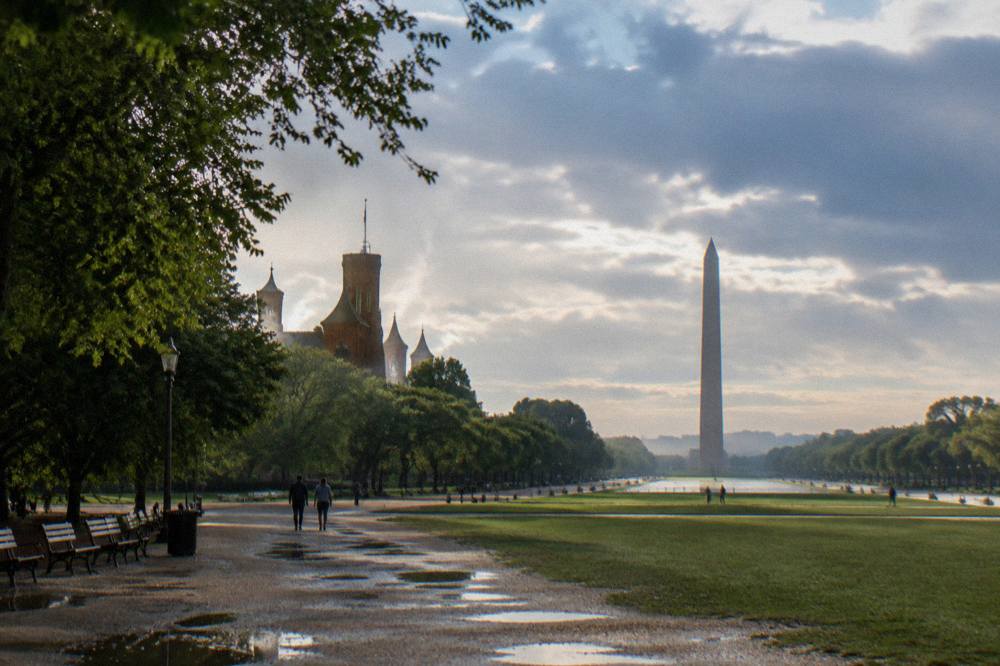
The classic adult move here is the west end of the Mall at golden hour. Start at the World War II Memorial, where the fountains face the Washington Monument down one axis and the Lincoln Memorial's reflecting pool down the other, then walk the length of the pool to Lincoln. From the top of those steps you can loop to the Vietnam Veterans Memorial, the Korean War Veterans Memorial and the Martin Luther King Jr. Memorial in well under an hour, all within a few hundred metres of each other. None of it costs a cent, and none of it closes.
The full monument corridor is the subject of a dedicated guide on this site, free monuments and memorials on the National Mall, which lists each site individually. For adults specifically, the appeal is pacing. You can linger. Reading the full Inscription Wall at the Vietnam Veterans Memorial, or the sequence of rooms at the FDR Memorial, takes time that families with small children rarely have, and both are better for it.
This is also the ground the site's roster of pay-what-you-want walks covers. The Daytime Monuments Walk, National Mall, a GuruWalk listing run by a guide named Lisa, runs about 2 hours in English from the World War II Memorial and is rated 4.4 across 324 GuruWalk reviews. It is free to join, with the tip at the end entirely up to you.
A guided walk is not compulsory here, and plenty of adults prefer to wander the Mall alone with a podcast or nothing at all. But the walks earn their place: the corridor is rich in context that plaques only partly explain, and a local guide compresses two centuries of design arguments, dedications and protests into a couple of hours. If you would rather move at your own pace, the free option is simply to walk the loop described above, in either direction, in about two hours.
What Is There To Do In Washington DC At Night For Free?
DC after dark is one of the best free night-time experiences in the United States: the monuments and memorials stay open 24 hours and are dramatically lit, the Lincoln and World War II Memorials draw their biggest quiet after sunset, and the Tidal Basin around the Jefferson Memorial becomes a floodlit walk. The city's evening walking tours, including a 1 hour and 30 minute moonlight walk, are free to join and tip-based.
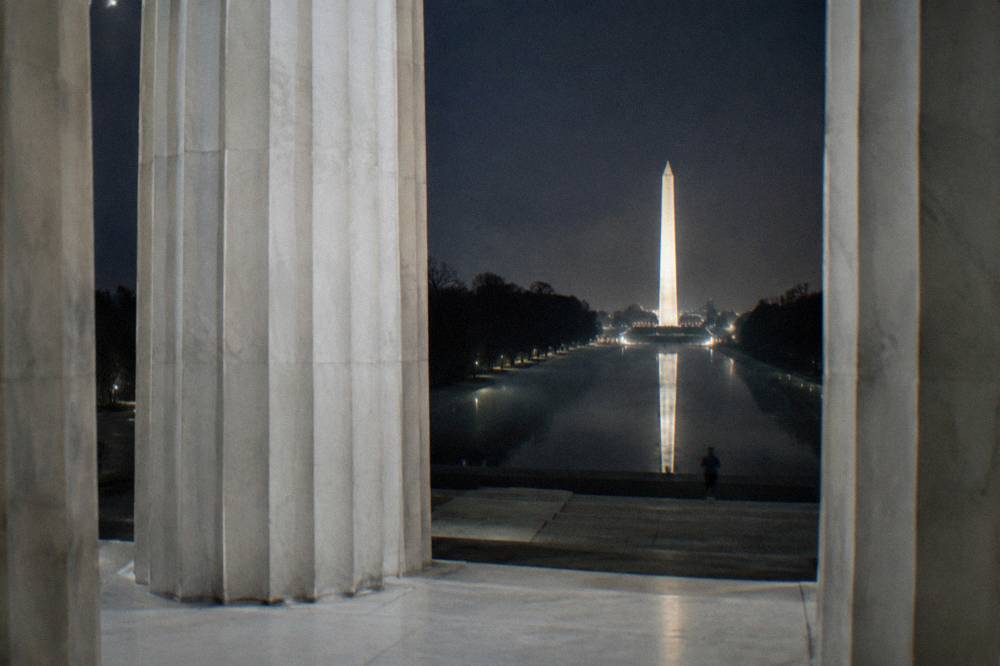
Night is when the Mall belongs to adults. The school groups are gone, the tour buses have left, and the buildings do the work. The Lincoln Memorial lit from within, with the reflecting pool running a dark ribbon toward the Washington Monument, is a genuinely cinematic free sight, and the World War II Memorial's fountains are lit in a way the daytime crowd never sees. The Vietnam Veterans Memorial is a different object entirely at night, low and hushed, with the names catching the low light.
The site's evening option is the Monuments By Moonlight, Evening Walk, the second of guide Lisa's GuruWalk listings. It runs about 1 hour and 30 minutes in English, meeting at the Albert Einstein Statue, and is rated 4.26 across 65 GuruWalk reviews. Like the daytime walk it is free to join; the pay-what-you-want tip happens at the end, at whatever level the walk earned. For adults packing a short trip, an hour and a half of evening walking is an efficient way to see the lit Mall without burning a whole daylight block on it.
The night side of the city goes beyond the memorials, and there is a fuller rundown in free things to do in Washington DC at night. The Kennedy Center's Millennium Stage hosts free performances, the U.S. Botanic Garden's seasonal evening displays are free, and simply walking the Pennsylvania Avenue corridor or the Georgetown waterfront after dinner costs nothing. The monuments remain the headline, but they are a starting point, not the whole list.
Which Smithsonian Museums Are Best For Adults?
Nearly all Smithsonian museums are free to enter, and for adults the standouts are the National Museum of Natural History, the National Museum of American History, the American Art Museum and National Portrait Gallery, the Hirshhorn, and the Freer and National Museum of Asian Art. Two exceptions need a free timed pass: the National Air and Space Museum's DC building and the National Museum of African American History and Culture.
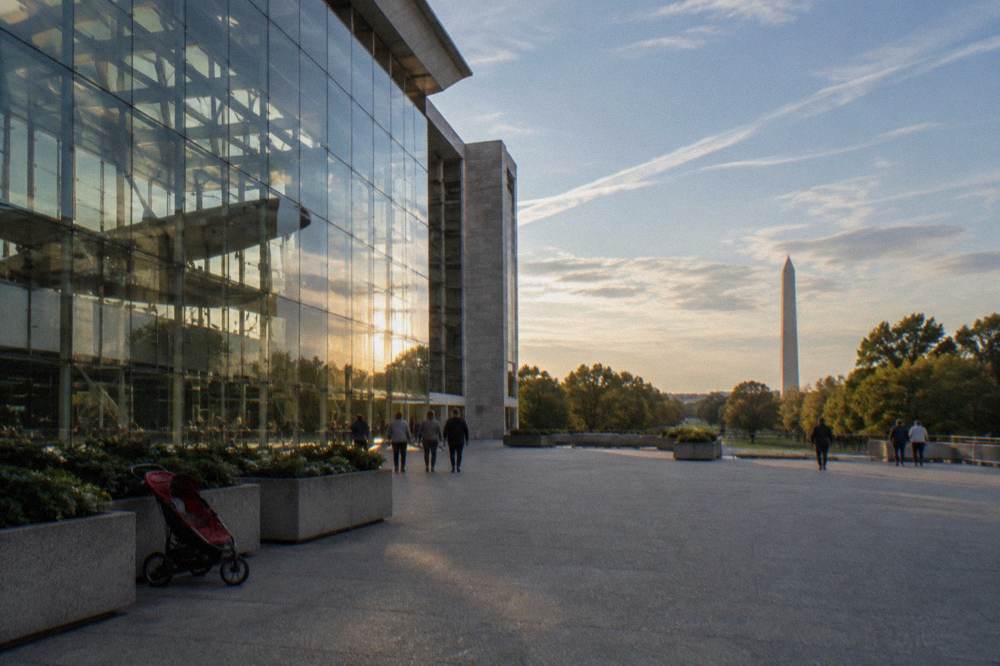
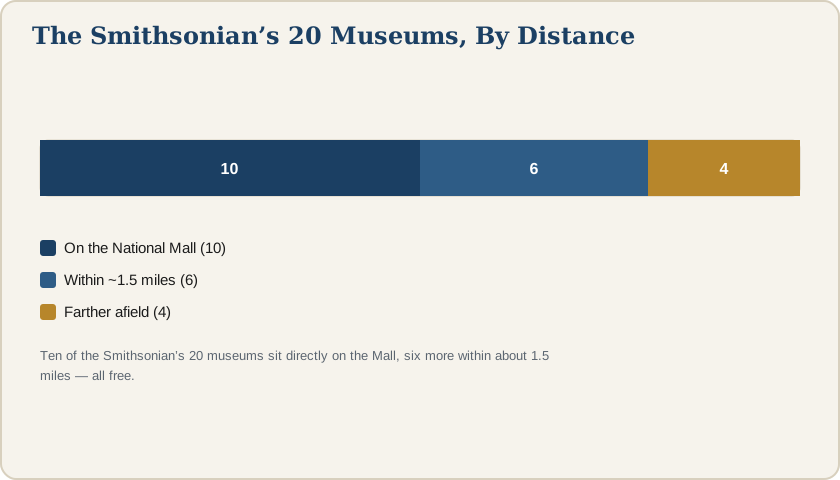
The Smithsonian's scale is hard to overstate, and it is the single biggest reason a no-budget DC trip works. The institution runs 20 museums plus the National Zoo; ten museums sit directly on the National Mall, six more are within about 1.5 miles of it, and the rest sit in DC neighbourhoods, in New York, or at the Udvar-Hazy Center in Virginia. Every one of them is free to enter, with the two timed-pass exceptions noted above and the Zoo's separately paid parking.
For adult visitors, the honest advice is to pick two or three museums per day, not five. The Natural History museum's fossil halls and the Hope Diamond draw the heaviest family traffic, so go early or late. The American History museum rewards adult patience: the transportation and military exhibits have real depth, and the pop-culture collections are best enjoyed with some decades of your own to compare against. The American Art Museum and Portrait Gallery, sharing the old Patent Office building, are calmer, and the Kogod Courtyard inside is one of the best free places in the city to sit for half an hour.
Here is how the main free museums shake out for adult visitors:
| Museum | What adults rate it for | Entry rule |
|---|---|---|
| National Museum of Natural History | Fossil halls, the Hope Diamond, human origins | Free, walk in |
| National Museum of American History | Transport, military and pop-culture collections | Free, walk in |
| American Art Museum and National Portrait Gallery | Serious collections plus the Kogod Courtyard | Free, walk in |
| Hirshhorn Museum and Sculpture Garden | Modern and contemporary art, the outdoor sculpture ring | Free, walk in |
| Freer Gallery and National Museum of Asian Art | Quiet galleries, strong Japanese and Islamic holdings | Free, walk in |
| National Air and Space Museum (DC building) | Flight and space artefacts | Free, but timed pass required |
| NMAAHC | Full African American history narrative across five levels | Free, but timed pass required |
The two timed-pass museums deserve a direct warning, because the Smithsonian's walk-in reputation misleads people here. The Air and Space Museum's DC building and the National Museum of African American History and Culture both require a free timed-entry pass even though both are Smithsonian and both are free. NMAAHC passes open up to 30 days in advance on a rolling basis, with same-day passes released online in the morning. Plan those two first, then fill the rest of the day with walk-ins.
Can You Tour The Capitol, Library Of Congress And Other Government Buildings For Free?
Yes, and the free government tours are among the best adult activities in the city: the U.S. Capitol runs free guided tours, the Library of Congress's Jefferson Building is free to visit and offers free tours, the National Archives Museum is free and holds the Declaration of Independence and Constitution, the Supreme Court offers free lectures and courtroom access when not in session, and the Bureau of Engraving and Printing runs free tours of money being printed.
These are working federal buildings, which changes the experience. You are not walking a heritage site; you are walking through rooms where the business of the country happens, and the free access is a deliberate public policy rather than a tourism loss-leader. The National Archives Museum, on Constitution Avenue, is the easiest of the set: free, walk-in, and holding the Declaration of Independence, the Constitution and the Bill of Rights in the Rotunda. Arriving early is the difference between standing alone with them and queuing behind a school group.
The Capitol tour needs a reservation, booked through the visitor center's official channels, and the Library of Congress's Jefferson Building is widely regarded as the most beautiful interior in the city, free to enter and free to tour. The Bureau of Engraving and Printing, where currency is printed, requires a reserved slot for its tour. The details and booking routes for all of these are collected in the site's dedicated guide, free government tours of the Capitol, Library of Congress and Archives.
| Institution | What you see | Booking requirement |
|---|---|---|
| U.S. Capitol | Rotunda, National Statuary Hall, the Crypt | Free, reservation required |
| Library of Congress, Jefferson Building | The Great Hall, Main Reading Room views, Jefferson's library | Free, no pass needed for the building |
| National Archives Museum | Declaration of Independence, Constitution, Bill of Rights | Free, no ticket needed |
| Supreme Court | Courtroom, exhibitions, free lectures in season | Free, no ticket needed |
| Bureau of Engraving and Printing | Currency printing gallery | Free, reserved tour slot required |
For adults, this cluster is the part of a DC trip that no other American city can replicate. A morning in the Archives, an afternoon Capitol tour, and an evening at the monuments is a full, genuinely free day with a range of experiences most capitals would charge heavily for.
Which Free Parks, Gardens And Neighbourhoods Are Worth An Adult's Time?
Beyond the Mall, DC offers free parks and gardens that reward adult attention: the U.S. Botanic Garden at the foot of Capitol Hill, the U.S. National Arboretum with its bonsai collection and Corinthian columns, Meridian Hill Park's cascading fountain and Sunday drum circle, the Georgetown waterfront, and Arlington National Cemetery, whose entry is free though its tram tour and parking are paid.
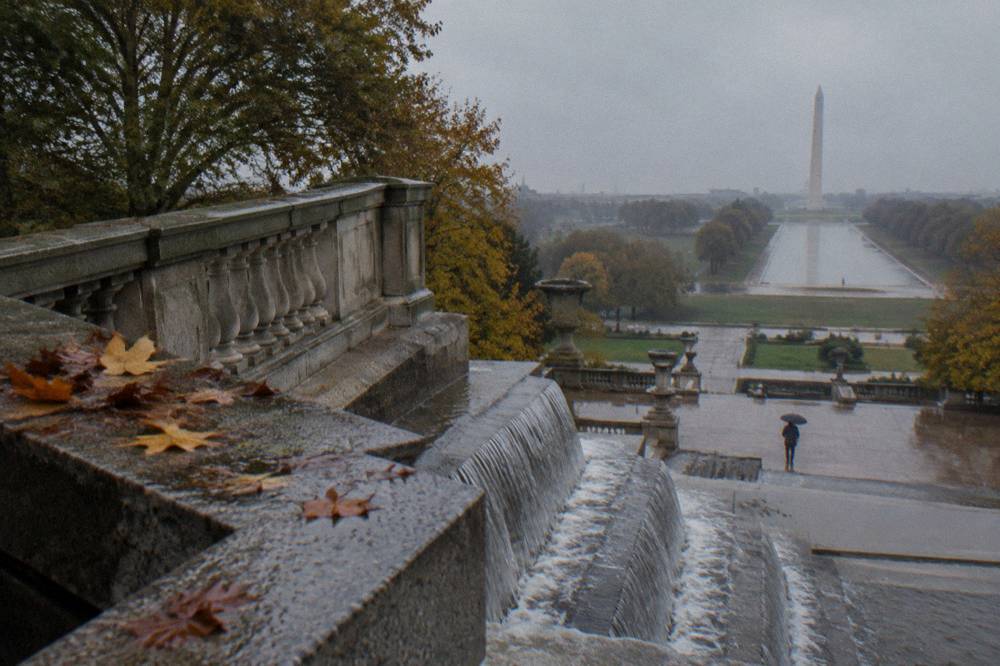
The U.S. Botanic Garden, sitting beside the Capitol, is free, walk-in, and small enough to absorb in an hour, with the conservatory's jungle canopy walk as its centrepiece. The U.S. National Arboretum, in the northeast of the city, is a bigger commitment and a better one: its National Bonsai and Penjing Museum is quietly world-class, and the twenty-two sandstone Corinthian columns from the old Capitol, standing in an open field, are one of DC's strangest free sights. Meridian Hill Park, on the edge of Adams Morgan, pairs a French-style cascade fountain with a long-standing Sunday drum circle, and the surrounding streets are where the city's adult evening life actually happens.
Arlington National Cemetery, across the Potomac, is free to enter, and the walk to the Tomb of the Unknown Soldier for the Changing of the Guard is a substantial, sobering free experience. The strings attached are specific: the interior tram tour is run by a paid concessionaire, and cemetery parking is paid. The quick facts are in is Arlington National Cemetery free?. After a Mall walk, this makes a natural pairing, but it is a separate trip across the river, not something the walks pass.
| Place | The adult appeal | The fine print |
|---|---|---|
| U.S. Botanic Garden | Conservatory canopy walk, seasonal displays | Free, walk in |
| U.S. National Arboretum | Bonsai museum, the old Capitol columns | Free, driving distances inside are large |
| Meridian Hill Park | Cascade fountain, Sunday drum circle | Free, best in daylight and early evening |
| Georgetown waterfront | River views, people-watching, free to stroll | A day-pairing idea, not on any Mall walk's route |
| Arlington National Cemetery | Changing of the Guard, rows of headstones | Entry free; tram tour and parking are paid |
Neighbourhood walking costs nothing and, for many adults, outclasses the monuments. Georgetown's C&O Canal towpath, the rowhouses of Capitol Hill, and the U Street corridor's music history are all free to walk and better with a little background reading. These are places to pair with a Mall walk on the same trip, sequenced before or after it, not stops on any guided route.
Which "Free" DC Attractions Come With Strings Attached?
Several of DC's biggest draws are free only with conditions: the Washington Monument needs a timed ticket for the ascent, free at the walk-up lodge or with a $1 service fee booked in advance; NMAAHC, the Air and Space Museum's DC building and the Holocaust Memorial Museum need free timed passes; White House tours require a request through your member of Congress; and the National Zoo is free while its parking is paid.
This is the section that saves trips. DC's free reputation is broadly accurate, but a handful of sites attach conditions, and travellers who assume a single blanket rule arrive to find doors closed. The National Park Service's Washington Monument page states the mechanics plainly: same-day timed tickets are free and handed out first-come, first-served at the Washington Monument Lodge from about 8:45 a.m., while advance reservations made through recreation.gov carry a $1 non-refundable service fee per ticket, released 30 days or 24 hours ahead. The fee attaches to the booking channel, not the monument.
| Attraction | The condition | The action |
|---|---|---|
| Washington Monument | Ticketed ascent; grounds free | Same-day free ticket at the Lodge, or $1 fee via advance booking |
| NMAAHC | Free timed pass required | Book up to 30 days ahead or try same-day release |
| Air and Space Museum (DC) | Free timed pass required | Book ahead; the Udvar-Hazy Center in Virginia is an alternative |
| Holocaust Memorial Museum | Free timed pass required | Reserve online |
| White House tour | Congressional request only | Apply through your member of Congress, weeks ahead |
| National Zoo | Admission free, parking paid | Arrive by Metro to avoid parking fees |
| Museum of the Bible | Paid, free on Tuesdays through May 18, 2027 | Time a Tuesday visit for the free window |
Two further cautions. The International Spy Museum is confirmed paid, but its own site uses dynamic, date-based pricing with no static figure to quote, so check its ticketing page directly rather than trusting a number from a third-party list. Washington National Cathedral is similar: worship services are open, but sightseeing tickets are priced variably on the cathedral's own page. And two venues this site treats as unresolved rather than free or paid: the Folger Shakespeare Library and Planet Word are both commonly described as free in general travel content, but a confirmed, current admission policy could not be pinned down, so check each operator's own visit page before planning around them.
For the paid comparisons, George Washington's Mount Vernon charges $30 for adults 12 and over, which makes it a useful benchmark: a day at the free Mall versus a paid estate day is a real trade-off for adults with limited time, and the free side of that trade is unusually strong.
How Do You Plan Free Days In DC Without Burning Out?
Plan DC's free side by pairing one anchor per half-day: a museum or monument cluster in the morning, a second anchor or a guided walk in the afternoon, and the lit monuments at night. Book the timed-pass sites first, since those dates dictate everything else, keep walking distances realistic, and reserve the pay-what-you-want walking tours for the stretches where context adds the most.
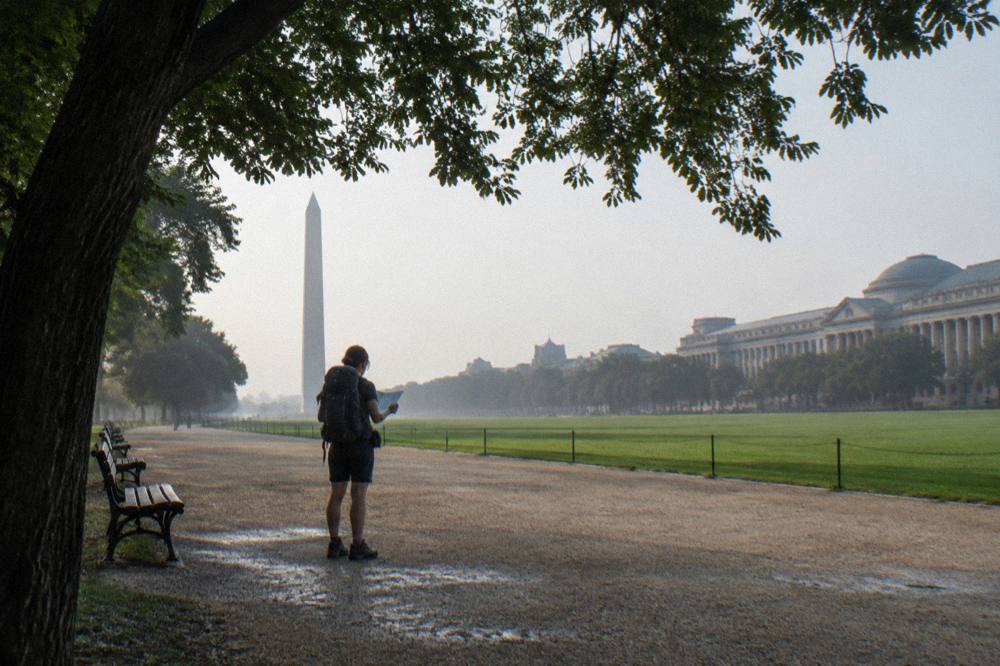
The booking order matters more than the itinerary order. Timed passes for NMAAHC, Air and Space, the Holocaust Memorial Museum, the Capitol tour and the Washington Monument ascent are the scarce items; the walk-in museums and the always-open memorials will absorb whatever gaps remain. A workable three-day adult skeleton looks like this: day one, the west Mall monuments with an evening moonlight walk; day two, two Mall museums plus the Archives; day three, the Capitol and Library of Congress in the morning and the Botanic Garden or Georgetown in the afternoon.
The pay-what-you-want walks slot into this skeleton where a guide adds the most. The Daytime Monuments Walk, National Mall, covers the west Mall corridor from the World War II Memorial over about 2 hours, rated 4.4 across 324 GuruWalk reviews, and works well on day one if you would rather not self-navigate the memorial sequence.
For a second opinion or a different day, Blue Umbrella's Mall Walk, run by a different operator on freetour.com, covers the Mall in about 2 hours and 30 minutes and is rated 8.7 out of 10 across 143 freetour.com reviews. Having both a GuruWalk and a freetour.com option is genuinely useful: the formats differ slightly, and the site's comparison guide, GuruWalk versus freetour.com in Washington DC, lays out the differences. Tipping norms on all of these walks are covered in the site's free walking tour tipping guide.
A note on what "free" means for these walks, because the phrase invites suspicion. The guiding itself costs nothing on all three walks in this site's roster; the model is pay what you want, tipping the guide at the end. There is no verified additional fee on any of them. This site does not operate the walks, employ the guides or take a booking; it is a directory pointing at other people's tours, which is exactly why each walk's platform and operator are named throughout rather than blurred.
If you are building a longer trip around the free core, the site's overall collection is the place to start: Free Things To Do In Washington DC covers the full range from museums to night options, and the adult guide you are reading slots into it alongside the family, couples and weekend roundups.
Common Questions About Free Things To Do In Washington DC For Adults
What can adults do in Washington DC for free?
Adults can visit every monument on the National Mall around the clock, enter most Smithsonian museums at no charge, take free tours of the Capitol, Library of Congress, National Archives and Bureau of Engraving and Printing, and join pay-what-you-want walking tours of the Mall by day or night. Only a handful of sites require free timed passes.
Do you need tickets for the Washington Monument?
Yes, the ascent requires a timed ticket. Same-day tickets are free and handed out first-come, first-served at the Washington Monument Lodge from about 8:45 a.m., while advance reservations through recreation.gov carry a $1 non-refundable service fee per ticket. The monument's grounds are free with no ticket at all.
Are all Smithsonian museums walk-in free?
No. Most Smithsonian museums are free and walk-in, but the Air and Space Museum's DC building and the National Museum of African American History and Culture both require a free timed-entry pass. The National Zoo's admission is free while its parking is paid.
Is the Museum of the Bible free?
It is paid, with an adult ticket at $34.99, but it offers free admission every Tuesday through May 18, 2027, plus a half-price walk-up window late in the day. Time a Tuesday visit and it becomes a free museum.
Are free walking tours in DC actually free?
The guiding is free on all three walks in this site's roster, two on GuruWalk and one on freetour.com. The model is pay what you want: you join without paying and tip the guide at the end at whatever level the walk earned. There is no verified additional fee on any of them.
What is free in DC at night?
The monuments and memorials stay open 24 hours and are dramatically lit after dark, which makes the Lincoln Memorial, the World War II Memorial and the Tidal Basin among the best free night sights in the country. The Kennedy Center's Millennium Stage also hosts free performances, and the evening moonlight walking tour is free to join.